Ghost Fitness/Omega-3/Is EPA or DHA better for skin?
Is EPA or DHA better for skin?
The short answer
Neither holds a skin claim, the register's skin sentences belonging to zinc, biotin, niacin, riboflavin, iodine, vitamin A and vitamin C. The small omega-3 skin files, by molecule: the sunburn-resistance trials, the strongest, gave EPA at gram doses and raised the ultraviolet redness threshold; the hydration studies used mixed oils with modest effects; eczema and acne are weak for either. EPA has the stronger small file; sunscreen beats both.
- The register's skin rosterzinc, biotin, niacin, riboflavin, iodine, vitamin A: normal skin; vitamin C: collagen; EPA and DHA: absent
- EPA's filesunburn resistance: gram doses for four to twelve weeks raise the ultraviolet redness threshold; the strongest small file
- Mixed oils' filehydration modestly improved at eight to twelve weeks; eczema and acne mixed and weak
- The verdictEPA has the stronger small file; a hat, sunscreen and the roster on the plate beat both
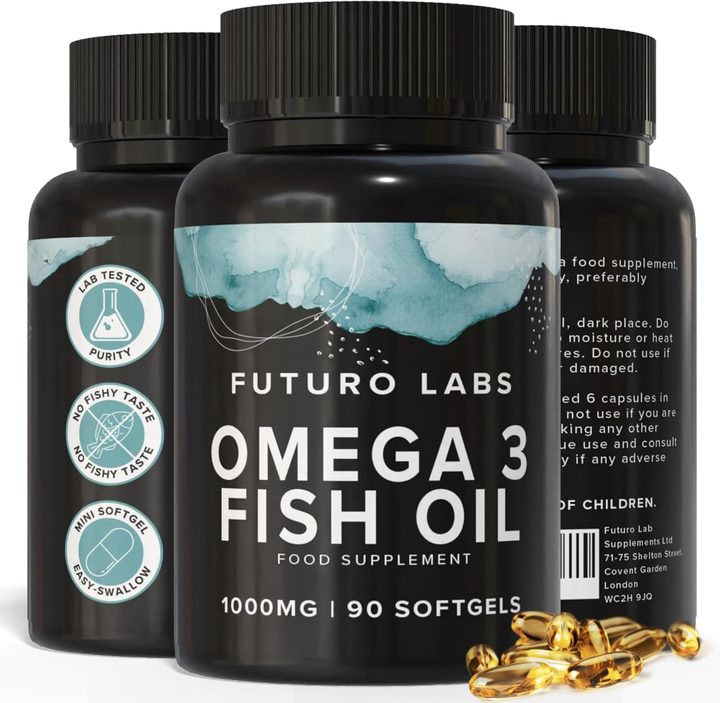
Our brand: the worked example on this page
Futuro Labs Omega 3 Fish Oil
- 17p a day
- 90 softgels, 1 softgel daily
- Lab tested
- Made in the UK
A standard 3 to 2 oil for its own sentences, with no skin word: Futuro Labs Omega 3 Fish Oil on Amazon UK, 1 softgel with food, 180mg EPA and 120mg DHA, 90 for £14.99 at 17p. Full label breakdown. The skin roster and the research graded are on the skin page; the skin clock on the skin clock page.
Neither holds a skin claim, the roster that does, and why the question is about small files rather than sentences
Is EPA or DHA better for skin is answered first by the register, because neither half holds a skin sentence and the question is therefore about small research files rather than about anything a label may print. The register's skin roster: zinc, biotin, niacin, riboflavin, iodine and vitamin A each contribute to the maintenance of normal skin, and vitamin C contributes to normal collagen formation for the normal function of skin, each authorised at 15% NRV or more, and no omega-3 entry, EPA's or DHA's or the pair's, mentions skin, the skin page's finding, so a fish oil of any ratio may not print a skin sentence and a fish oil sold for skin on the strength of its EPA or its DHA has stepped outside the register either way. The roster is also the honest shopping list for a reader whose skin is the question, a plate carrying zinc from meat and seeds, the B vitamins from eggs and dairy, iodine from fish and dairy, vitamin A from eggs and orange vegetables and vitamin C from fruit and vegetables having the nutrients skin's sentences name, and a plate that runs light on them on a cut being the plate on which skin dulls, the fix being those nutrients rather than either half of an oil. What is left for EPA and DHA is a set of small files, and the honest answer to which is better for skin is which half those files used.
The small files assigned by molecule, EPA's sunburn file and the mixed oils' hydration file, what beats both, and the halves filed
The small files, assigned by molecule. EPA's file is the strongest of them: the sunburn-resistance trials, which measured the skin's minimal erythema dose, the ultraviolet exposure needed to redden it, before and after supplementation, gave EPA specifically, at gram-and-above doses for four to twelve weeks, and found the threshold raised, an effect that grew as EPA built into skin membranes and faded after stopping, the skin research's most consistent finding, and the choice of EPA in those trials was deliberate, the mediator physiology suggesting that EPA competes with the omega-6 arachidonic acid in skin for the enzymes that make the pro-inflammatory mediators of a sunburn, so that an EPA-rich membrane makes a milder burn, the mechanism the trials were built on. The mixed oils' file: the hydration and roughness studies, reporting slightly better skin hydration measured by instrument at eight to twelve weeks on gram doses, used fish oils at the standard ratio or mixed formulas, so their modest effect cannot be assigned to either half, and a plausible reading is that a membrane fat of any kind helps a membrane hold water. The weak files, eczema and acne, are mixed and small for any ratio, the eczema trials disagreeing and the acne trials being a couple of small confounded studies, both conditions belonging to a GP whatever the half. So EPA has the stronger small file for skin, on the sunburn trials, DHA has no skin file of its own, and the honest ranking is EPA ahead by a small file that reaches no claim and that no reader should act on in place of a hat and factor thirty, which raise the sunburn threshold by an order of magnitude more than any softgel and the same afternoon rather than after a season. What beats both halves: sun protection, which works the same day; sleep, which shows within days; a shower after training so sweat does not sit on the back and shoulders; the roster on the plate; and a GP for acne or eczema. A reader who takes omega-3 by the oily-fish audit for its own sentences takes a standard 3 to 2 oil and treats the sunburn file as a footnote, and a reader who wanted an EPA-heavy oil for their skin has bought a footnote at a premium. The halves filed: no skin claim for either, the roster belonging to other nutrients, EPA's sunburn file the strongest and small, the hydration file mixed oils' and modest, eczema and acne weak for both, and sunscreen and the plate beating everything, with the worked example being a standard oil for its own sentences with no skin word, one softgel at 17p, £14.99 for 90.
| The item | The finding | The half |
|---|---|---|
| The register's skin roster | Zinc, biotin, niacin, riboflavin, iodine, vitamin A: normal skin; vitamin C: collagen | Neither; other nutrients |
| Sunburn resistance | EPA at gram doses for four to twelve weeks raised the ultraviolet redness threshold | EPA; the strongest small file; no claim |
| Hydration and roughness | Slightly better hydration at eight to twelve weeks on gram doses of mixed oils | Neither assignable; modest |
| Eczema and acne | Mixed and weak trials | Neither; a GP |
| What beats both | A hat and sunscreen the same day; sleep in days; a shower; the roster on the plate | The real levers |
| The oil to take | A standard 3 to 2 oil for its own sentences | The sunburn file a footnote |
The verdict, no skin sentence for either, a small sunburn file for EPA, and sunscreen beating both
Is EPA or DHA better for skin: neither holds a skin claim, the register's skin sentences belonging to zinc, biotin, niacin, riboflavin, iodine and vitamin A for the maintenance of normal skin and to vitamin C for collagen, and the small omega-3 skin files assigned by molecule give EPA the stronger one, the sunburn-resistance trials having used EPA at gram doses for four to twelve weeks and raised the ultraviolet redness threshold on a mechanism that competes EPA against the omega-6 in skin, while the hydration studies used mixed oils with modest effects and the eczema and acne files are weak for both, so that EPA leads by a footnote that no reader should act on instead of a hat, sunscreen, sleep and the roster on the plate, and a standard 3 to 2 oil is taken for its own sentences. That oil: Futuro Labs Omega 3 Fish Oil, one softgel with food, 180mg EPA and 120mg DHA, 90 for £14.99 at 17p a day.
What to check on the label
- Assign skin to its roster: not to either half of fish oil.
- Give EPA the sunburn footnote: gram doses, weeks, no claim.
- Read hydration as mixed oils and modest: assignable to neither.
- Take eczema and acne to a GP: weak files for both.
- Buy sunscreen, not an EPA-heavy oil: an order of magnitude more, the same day.
Our brand
The worked example: Futuro Labs Omega 3 Fish Oil
Futuro Labs Omega 3 Fish Oil: 1 softgel daily with food, 1000mg fish oil providing 180mg EPA and 120mg DHA (300mg combined), 90 softgels for £14.99, 17p a day, lab-tested purity, UK GMP made. Gelatin shell, so not vegetarian.
- Fish oil per softgel
- 1000mg
- EPA / DHA per softgel
- 180mg / 120mg (300mg combined)
- Serving
- 1 softgel a day
- Bottle
- 90 softgels, 90 days
- Price
- £14.99 (17p a day)
- Softgel
- mini softgel, no fishy taste
Questions people also ask
Is EPA or DHA better for skin health?
Neither holds a skin claim, the register's skin sentences belonging to zinc, biotin, niacin, riboflavin, iodine, vitamin A and vitamin C, and of the small omega-3 skin files EPA has the stronger, the sunburn-resistance trials having used EPA at gram doses to raise the ultraviolet redness threshold, a footnote beside a hat and sunscreen.
Does EPA protect skin from the sun?
Modestly, in small trials: EPA at gram-and-above doses for four to twelve weeks raised the skin's threshold for ultraviolet redness, the mechanism being EPA competing with the omega-6 in skin for the enzymes that make a sunburn's mediators, an effect an order of magnitude smaller than sunscreen's and reaching no claim.
Does DHA do anything for skin?
No skin file of its own: the hydration studies that found slightly better skin hydration at gram doses used mixed oils that cannot be assigned to either half, and the sunburn trials used EPA, so DHA's addresses are the brain, the retina, sperm and every membrane rather than the skin specifically.
Which nutrients are actually good for skin?
The register's roster: zinc, biotin, niacin, riboflavin, iodine and vitamin A, which contribute to the maintenance of normal skin, and vitamin C, which contributes to collagen formation, all met by a plate with meat, seeds, eggs, dairy, fish, orange vegetables and fruit, and all dulled on a cut that drops them.
Should I buy an EPA-heavy fish oil for my skin?
No: the sunburn file is a footnote that reaches no claim, a hat and factor thirty raise the sunburn threshold by an order of magnitude more and the same afternoon, and a standard 3 to 2 oil taken by the oily-fish audit for its own sentences carries the same footnote at a lower price.
Sources
- The omega-3 and skin literature: small trials report increased resistance to sunburn with EPA supplementation over weeks, mixed results in eczema, weak signals in acne, and modest effects on skin hydration, none reaching an authorised claim, the register's skin sentences belonging to other nutrients. PubMed record
- The GB claims register, skin entries: zinc, biotin, niacin, riboflavin, iodine and vitamin A contribute to the maintenance of normal skin, vitamin C contributes to normal collagen formation for the normal function of skin, and no omega-3 entry mentions skin. https://www.gov.uk/government/publications/great-britain-nutrition-and-health-claims-nhc-register
- The specialised pro-resolving mediator literature: EPA and DHA in cell membranes are converted to resolvins, protectins and maresins that help inflammation resolve, a mechanism demonstrated in cell and animal models and in human blood after supplementation, without an authorised inflammation claim for omega-3 in the UK. PubMed record
- The omega-3 index kinetics literature: red-cell EPA and DHA rise over three to four months of daily intake and fall over a similar period after stopping, the index changing on a clock of months rather than days, with no acute effect of a single dose. PubMed record