Ghost Fitness/Omega-3/Is EPA or DHA better for brain health?
Is EPA or DHA better for brain health?
The short answer
Brain health has two meanings and each half owns one. Structure and maintenance: DHA, the most abundant omega-3 in grey matter, holding the register's sentence at 250mg of DHA a day. Mood: EPA, the meta-analyses in depression favouring EPA-predominant oils at a gram or more as an adjunct to treatment, a research finding with no claim. Cognition in healthy adults: little for either. A standard 3 to 2 oil serves both.
- Structure: DHAthe most abundant omega-3 in grey matter; the maintenance-of-normal-brain-function sentence at 250mg of DHA
- Mood: EPAformulations 60% or more EPA at a gram or more of EPA as an adjunct in depression: research, no claim, a GP first
- Cognition in healthy adultsthe memory and cognition trials mostly null for either half
- The oil that serves botha standard 3 to 2 fish oil: the DHA sentence at two or three softgels; EPA at the standard share
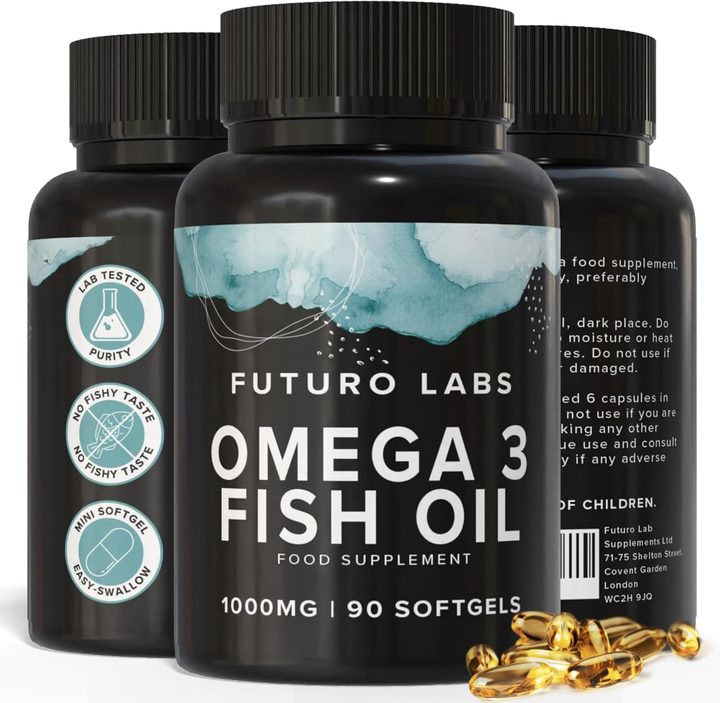
Our brand: the worked example on this page
Futuro Labs Omega 3 Fish Oil
- 17p a day
- 90 softgels, 1 softgel daily
- Lab tested
- Made in the UK
The standard ratio, the DHA sentence at two or three: Futuro Labs Omega 3 Fish Oil on Amazon UK, 1 to 3 softgels with food, 180mg EPA and 120mg DHA each, 90 for £14.99 at 17p. Full label breakdown. DHA's four addresses are on the DHA page; the decision tree on the EPA and DHA page.
Two meanings of brain health, and the first, structure and maintenance, which DHA owns
Is EPA or DHA better for brain health is answered by noticing that brain health means two things to the people who ask it, and that each half of fish oil owns one of them. The first meaning is structure and maintenance, the brain as an organ built of membranes, and DHA owns it outright: DHA is the most abundant omega-3 in the brain, a large share of the fatty acids in grey matter and in the synaptic membranes where signalling happens, accumulated in the last trimester and the first two years of life and maintained by the diet after, the DHA page's first address, and the register's sentence follows the physiology, DHA contributes to the maintenance of normal brain function, at 250mg of DHA a day, a maintenance claim describing what adequate DHA supports and not a memory or cognition-improving one, so a maintained brain feels exactly like the one the reader had. EPA has no such address, being present in the brain at a fraction of DHA's level and holding no brain sentence, so for the first meaning DHA is not merely better but the only half with a role, and the DHA line on a label is the number a reader with this meaning reads, 250mg of DHA reached at two or three standard softgels at the usual 3 to 2 ratio or at one DHA-heavy or algal capsule, the maternal claim's 200mg more in pregnancy being the same address at its most important age.
The second meaning, mood, which EPA owns as research, the cognition file that favours neither, and the meanings filed
The second meaning is mood, the brain as the organ of how a reader feels, and here EPA owns the file, as research rather than as a claim. The meta-analyses of omega-3 trials in depression find that formulations predominant in EPA, 60% or more of the omega-3 as EPA and delivering a gram or more of EPA a day, performed better than DHA-predominant or balanced oils as an adjunct to standard treatment, a consistent pattern across heterogeneous trials with a modest effect, the EPA-per-day page's file, and the reason an EPA-heavy concentrate is the one a reader following the mood literature takes, alongside treatment and never instead of it, with no mood claim on the register for either half and a GP first for any reader whose mood is the question. Why EPA and not DHA for mood, when DHA is the brain's fatty acid, is not settled, the candidate mechanism running through the resolving mediators and inflammation rather than through membrane structure, and the honest page reports the pattern without pretending to explain it. The third thing readers mean, cognition in healthy adults, memory, focus and sharpness, favours neither: the trials of omega-3 for memory and cognition in healthy adults and in older adults without dementia are mostly null, the large prevention trials finding no slowing of cognitive decline from a gram a day, so a reader who buys DHA to think better has bought a maintenance sentence and a reader who buys EPA for focus has bought nothing the trials found, the brain-health shelf's sharper-mind promises belonging to neither half. A standard 3 to 2 fish oil serves both meanings at the right softgel count, the DHA sentence at two or three and EPA at its standard share, with an EPA-heavy concentrate reserved for the reader on the mood literature with a GP and a DHA-heavy or algal oil for the reader who wants the maintenance sentence in one capsule. The meanings filed: structure and maintenance to DHA with the register's sentence at 250mg, mood to EPA as research at a gram or more as an adjunct, cognition in healthy adults to neither, and a standard oil serving both, with the worked example being that ratio with the DHA sentence at two or three, £14.99 for 90 at 17p.
| The meaning | The half | The evidence and the status |
|---|---|---|
| Structure and maintenance | DHA | The most abundant omega-3 in grey matter; the register's sentence at 250mg of DHA |
| Mood | EPA | EPA-predominant oils at a gram or more as an adjunct in depression; research; no claim; a GP first |
| Cognition in healthy adults | Neither | Memory and cognition trials mostly null; no slowing of decline at a gram |
| Pregnancy and infancy | DHA | The maternal claim at 200mg more; the brain's DHA accumulated in infancy |
| The oil for both meanings | A standard 3 to 2 fish oil | The DHA sentence at two or three softgels; EPA at its standard share |
| The special oils | An EPA-heavy concentrate; a DHA-heavy or algal oil | The mood reader with a GP; the maintenance sentence in one capsule |
The verdict, DHA for the brain as an organ, EPA for the brain as a mood, and neither for a sharper mind
Is EPA or DHA better for brain health: it depends which brain health, DHA owning the structure and maintenance meaning as the most abundant omega-3 in grey matter and the holder of the register's sentence that DHA contributes to the maintenance of normal brain function at 250mg a day, EPA owning the mood meaning as research, the meta-analyses in depression favouring EPA-predominant oils at a gram or more of EPA as an adjunct to treatment with no claim and a GP first, and neither owning cognition in healthy adults, the memory and cognition trials being mostly null, so that a standard 3 to 2 fish oil serves both meanings at the right softgel count. The standard ratio: Futuro Labs Omega 3 Fish Oil, one to three softgels with food, 180mg EPA and 120mg DHA each, 90 for £14.99 at 17p.
What to check on the label
- Ask which brain health: structure, mood, or a sharper mind.
- Give structure to DHA: the register's sentence at 250mg of DHA.
- Give mood to EPA, as research: a gram or more, an adjunct, a GP first.
- Give a sharper mind to neither: the cognition trials are null.
- Take the standard ratio: both meanings served at the right count.
Our brand
The worked example: Futuro Labs Omega 3 Fish Oil
Futuro Labs Omega 3 Fish Oil: 1 softgel daily with food, 1000mg fish oil providing 180mg EPA and 120mg DHA (300mg combined), 90 softgels for £14.99, 17p a day, lab-tested purity, UK GMP made. Gelatin shell, so not vegetarian.
- Fish oil per softgel
- 1000mg
- EPA / DHA per softgel
- 180mg / 120mg (300mg combined)
- Serving
- 1 softgel a day
- Bottle
- 90 softgels, 90 days
- Price
- £14.99 (17p a day)
- Softgel
- mini softgel, no fishy taste
Questions people also ask
Is DHA or EPA better for the brain?
DHA for the brain as an organ, being the most abundant omega-3 in grey matter and holding the register's maintenance-of-normal-brain-function sentence at 250mg of DHA a day; EPA for the brain as a mood, the depression meta-analyses favouring EPA-predominant oils at a gram or more as an adjunct to treatment, a research finding with no claim.
Does omega-3 improve memory or focus?
Not on the trials: omega-3 for memory and cognition in healthy adults and in older adults without dementia is mostly null, the large prevention trials finding no slowing of cognitive decline at a gram a day, so DHA's brain sentence is maintenance and neither half sharpens a mind.
Why is EPA used for mood rather than DHA?
The pattern across the depression trials is that formulations 60% or more EPA at a gram or more of EPA a day performed better than DHA-predominant or balanced oils as an adjunct to standard treatment, with the mechanism thought to run through the resolving mediators and inflammation rather than membrane structure, and the honest page reports the pattern without settling the reason.
How much DHA does the brain claim need?
250mg of DHA a day, reached at two or three standard softgels at the usual 3 to 2 ratio or one DHA-heavy or algal capsule, with the maternal claim adding 200mg more in pregnancy and breastfeeding for the foetal and infant brain.
Which fish oil should I take for brain health?
A standard 3 to 2 oil for both meanings at the right softgel count, a DHA-heavy or algal oil for the maintenance sentence in one capsule, and an EPA-heavy concentrate only for a reader following the mood literature alongside a GP's treatment, never for focus, which no half of fish oil has been shown to sharpen.
Sources
- EFSA Panel on Dietetic Products. Scientific opinion on health claims related to DHA: maintenance of normal brain function and normal vision (250mg DHA daily condition of use). EFSA Journal 2010;8(10):1734. https://www.efsa.europa.eu/en/efsajournal/pub/1734
- Meta-analytic evidence on EPA-predominant omega-3 formulations in depression research: better signals for EPA-heavy preparations in clinical trial populations, with no authorised claims arising. PubMed record
- The large cardiovascular outcome trials of omega-3: around a gram a day of EPA and DHA in primary-prevention populations produced no meaningful reduction in major cardiovascular events, while four grams of purified EPA in people with raised triglycerides on statins reduced events in one large trial, so the supplement-dose story is maintenance and the treatment-dose story is a prescription. PubMed record
- Commission Regulation (EU) No 440/2011 authorising the claim that maternal DHA intake contributes to the normal brain and eye development of the foetus and breastfed infant, conditional on 200mg of DHA a day in addition to the adult 250mg of EPA and DHA. https://eur-lex.europa.eu/eli/reg/2011/440/oj