Ghost Fitness/Omega-3/Which is best, EPA or DHA?
Which is best, EPA or DHA?
The short answer
Neither is best: EPA and DHA do different jobs and arrive together in every fish oil. DHA holds the only solo claims, brain and vision at 250mg; EPA alone holds none; the heart claim reads them combined. Buy the pair.
- 2 different jobssignalling precursor versus structural fat: not rivals
- DHA's solo claimsbrain function and vision, at 250mg of DHA daily
- EPA's solo claimsnone authorised, despite the livelier research reputation
- Combinedhow the heart claim reads them: the contest's official verdict
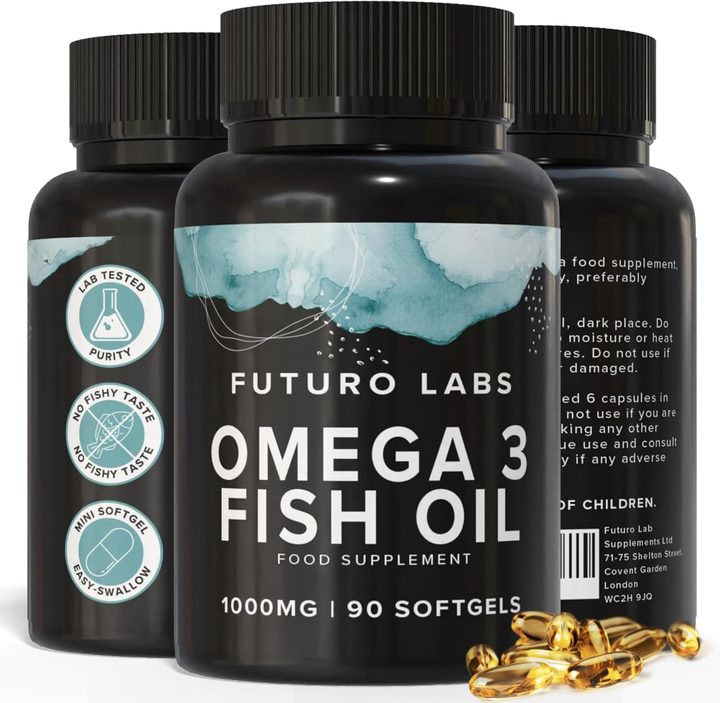
Our brand: the worked example on this page
Futuro Labs Omega 3 Fish Oil
- 17p a day
- 90 softgels, 1 softgel daily
- Lab tested
- Made in the UK
Both, in one softgel: Futuro Labs Omega 3 Fish Oil on Amazon UK, 180mg EPA + 120mg DHA, £14.99 for 90 days. Label breakdown. The ratio question this feeds is settled on the ratio verdict page; the source map on which omega-3 has both.
The two molecules, introduced as colleagues rather than contestants
EPA and DHA are long-chain omega-3 colleagues with different desks. EPA, eicosapentaenoic acid, is the signalling side's raw material: the precursor pool for eicosanoids and part of the resolving-mediator biochemistry, which is why EPA dominates the mood and inflammation research areas and why EPA-forward products carry the livelier marketing. DHA, docosahexaenoic acid, is the structural side: a major membrane fat of the brain and retina, physically built into neural and visual tissue, which is why DHA owns the developmental literature and, decisively for a UK shelf, the only solo authorised claims in the pair, maintenance of normal brain function and of normal vision, each conditioned on 250mg of DHA daily. EPA alone, for all its research charisma, holds no authorised claim at any dose; the flagship heart-function claim reads the two combined at 250mg, the register's way of saying the pair works as a pair; and every fish delivers both anyway, which starts to reveal the contest's real shape.
The scoreboard, the research territories, and who genuinely has to choose
Run the versus honestly and the rounds split. Claims round: DHA wins on solo mandates, two claims to nil, with the combined heart claim scored as a draw by design. Research-reputation round: EPA wins the headlines, depression trials repeatedly favouring EPA-heavy preparations and the purified-EPA prescription product carrying its own cardiovascular trial, but every entry is clinical, patients, diagnoses, gram doses, none of it converted into general-population advice, the extrapolation this section keeps flagging. Structure round: DHA, by anatomy. Availability round: a draw, since fish, cod liver, krill and modern algae oils all deliver both, the split varying, the presence not. So who genuinely has to choose: almost nobody. The DHA-claims shopper, targeting 250mg of DHA for the brain and vision territory, picks DHA-rich or algae products, the one real choice on the shelf; a clinician may choose purified EPA for a specific patient, which is their desk; and everyone else buys the pair at whatever honest split their product carries, because the everyday claim never asked them to referee.
| Round | EPA | DHA | Verdict |
|---|---|---|---|
| Solo authorised claims | None | Brain function and vision, at 250mg DHA | DHA |
| The combined heart claim | Counted | Counted | A draw, by regulatory design |
| Research headlines | Mood and inflammation trials, prescription EPA | Developmental and structural literature | EPA for noise, none for mandates |
| Structural role | Signalling precursor | Brain and retina membrane fat | Different desks |
| Availability | In every marine oil | In every marine oil | A draw: you get both regardless |
| Who must choose | Clinicians, for specific patients | DHA-claims shoppers, at 250mg | Almost nobody else |
The verdict, and the pair bought as a pair
Which is best, EPA or DHA: neither, because the question compares a signalling molecule to a structural one, the register scores their flagship work combined, and the shelf delivers them together whatever you decide, leaving only two real decision points, the 250mg-DHA threshold for anyone genuinely targeting the brain and vision claims, and the clinical EPA territory that belongs to prescribers. For everyone else the versus dissolves into the standard purchase: Futuro Labs Omega 3 Fish Oil, one softgel with dinner carrying both contestants at the shelf's natural split, 180mg EPA and 120mg DHA, 300mg combined for the claim that refuses to pick between them, £14.99 for 90 days at 17p, lab-tested, UK made. EPA vs DHA was always a doubles team billed as a boxing match, and the ticket price is the same either way.
What to check on the label
- Different jobs, not rivals: signalling precursor versus structural membrane fat.
- DHA holds the only solo claims: brain and vision, at 250mg of DHA.
- EPA alone holds none: its research reputation is clinical, not mandated.
- The heart claim reads them combined: the official draw.
- Almost nobody has to choose: buy the pair at an honest split.
Our brand
The worked example: Futuro Labs Omega 3 Fish Oil
Futuro Labs Omega 3 Fish Oil: 1 softgel daily with food, 1000mg fish oil providing 180mg EPA and 120mg DHA (300mg combined), 90 softgels for £14.99, 17p a day, lab-tested purity, UK GMP made. Gelatin shell, so not vegetarian.
- Fish oil per softgel
- 1000mg
- EPA / DHA per softgel
- 180mg / 120mg (300mg combined)
- Serving
- 1 softgel a day
- Bottle
- 90 softgels, 90 days
- Price
- £14.99 (17p a day)
- Softgel
- mini softgel, no fishy taste
Questions people also ask
Is EPA or DHA better for the heart?
The authorised claim declines to choose: normal heart function is conditioned on 250mg of the two combined, deliberately interchangeable.
Is EPA better for mood and DHA better for the brain?
That is the research folklore's shape: EPA leads the mood trials, clinically, without claims; DHA holds the actual brain-function claim, at 250mg of DHA daily.
Can I buy EPA-only or DHA-only supplements?
Both exist: EPA-only concentrates mirroring the prescription products, and DHA-only algae oils. For general use the pair beats either solo.
What are the benefits of DHA over EPA?
The mandated ones: maintenance of normal brain function and normal vision at 250mg of DHA, plus its structural role in neural and retinal membranes.
So which should I actually buy?
A product carrying both at an honest declared split: 300mg combined covers the everyday claim, and only the 250mg-DHA claim target changes the shopping.
Sources
- Futuro Labs Omega 3 Fish Oil listing: 1000mg fish oil per softgel providing 180mg EPA and 120mg DHA, 90 softgels. Amazon UK, accessed 31 August 2026. https://www.amazon.co.uk/dp/B0CP9T3BTN
- EFSA Panel on Dietetic Products. Scientific opinion on health claims related to DHA: maintenance of normal brain function and normal vision (250mg DHA daily condition of use). EFSA Journal 2010;8(10):1734. https://www.efsa.europa.eu/en/efsajournal/pub/1734
- EFSA Panel on Dietetic Products. Scientific opinion on the substantiation of health claims related to EPA and DHA and normal function of the heart (250mg daily condition of use). EFSA Journal 2010;8(10):1796. https://www.efsa.europa.eu/en/efsajournal/pub/1796
- Electronic medicines compendium (emc): Summaries of Product Characteristics for omega-3-acid ethyl esters 1000mg capsules (Omacor and generics) and icosapent ethyl (Vazkepa). https://www.medicines.org.uk/emc/search?q=omega-3-acid+ethyl+esters
- McGlory C, Calder PC, Nunes EA. The influence of omega-3 fatty acids on skeletal muscle protein turnover in health, disuse, and disease. Frontiers in Nutrition 2019;6:144. PubMed record
- Commission Regulation (EU) No 536/2013 authorising health claims for DHA and EPA: maintenance of normal blood triglyceride concentrations (2g DHA+EPA/day) and normal blood pressure (3g DHA+EPA/day), with a supplemental limit note of 5g/day. https://eur-lex.europa.eu/legal-content/EN/TXT/?uri=CELEX%3A32013R0536