Ghost Fitness/Omega-3/Is EPA or DHA better for heart health?
Is EPA or DHA better for heart health?
The short answer
Two answers at two doses. For the register's claim, neither: the heart-function sentence counts EPA and DHA combined at 250mg in any ratio. For the prescription question, the two big trials diverged: four grams of purified EPA reduced events in high-risk patients on statins, while four grams of an EPA and DHA formulation in a similar population did not, a divergence attributed to the placebo oils, the DHA and chance, and unresolved. A cardiologist owns the question above a gram.
- The claimmaintenance of normal heart function at 250mg of EPA and DHA combined, any ratio
- The EPA trialfour grams of purified EPA in high-risk patients on statins: fewer cardiovascular events; the clearest atrial fibrillation signal
- The EPA and DHA trialfour grams of a combined formulation in a similar population: no reduction in events
- The divergenceattributed to the mineral oil placebo, the DHA and chance; unresolved; DHA raises LDL modestly more
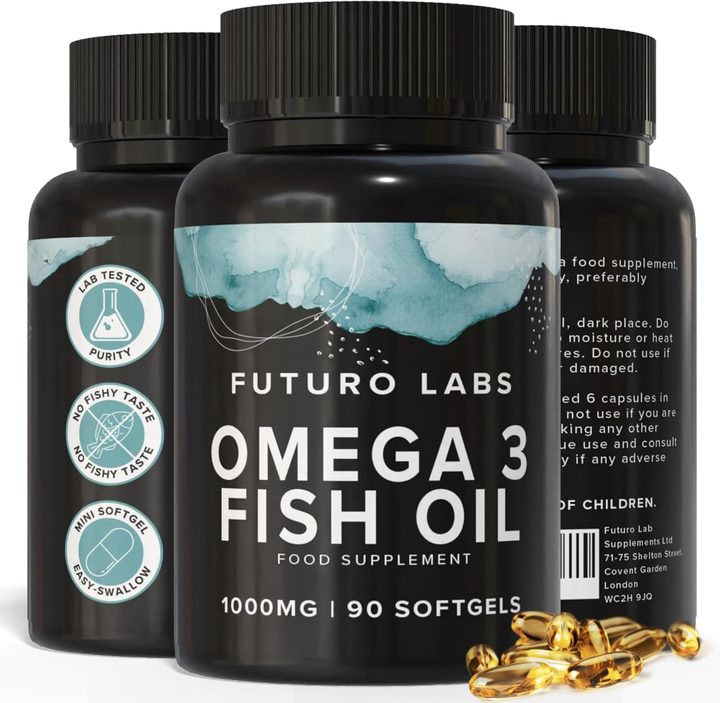
Our brand: the worked example on this page
Futuro Labs Omega 3 Fish Oil
- 17p a day
- 90 softgels, 1 softgel daily
- Lab tested
- Made in the UK
The claim in one softgel, at the standard ratio: Futuro Labs Omega 3 Fish Oil on Amazon UK, 1 softgel with food, 180mg EPA and 120mg DHA, 90 for £14.99 at 17p. Full label breakdown. The heart patient's guideline is on the heart patients page; the atrial fibrillation signal in both numbers on the heart problems page.
Two answers at two doses, the claim's answer first, which is neither, and the guideline that sits with it
Is EPA or DHA better for heart health is a question the careful-claims flag answers at two doses, because at a supplement dose the answer is neither and at a prescription dose the answer is one of the most argued-over divergences in the omega-3 literature. The claim's answer: the register's sentence is that EPA and DHA contribute to the maintenance of normal heart function, at 250mg a day of the two combined in any ratio, so a standard 3 to 2 fish oil, an EPA-heavy concentrate and a DHA-heavy oil all serve it at the right softgel count and the ratio is a matter of indifference to the only heart sentence a label may print, a maintenance sentence describing what adequate intake supports and not a prevention, the register's condition being an amount and never a split. The guideline that sits with it: NICE advises clinicians not to offer omega-3 fatty acid compounds for cardiovascular prevention in primary or secondary prevention, because the large outcome trials at around a gram a day of EPA and DHA together found no meaningful reduction in heart attacks, strokes or deaths, so at supplement doses neither half prevents anything on the trials and the question of which is better for heart health is, for a reader on a standard softgel, a question about a maintenance claim that counts both, answered neither and closed. The interesting answer lives above a gram, in the prescription products, and it belongs to a cardiologist.
The divergence at four grams, the candidate explanations, the LDL point, who owns the question, and the ratio filed
The divergence: two large outcome trials gave four grams a day of prescription omega-3 to high-risk patients with raised triglycerides already on statins and followed them for years, and they disagreed. The first gave four grams of purified EPA ethyl ester and found fewer cardiovascular events, a reduction of around a quarter, alongside the clearest atrial fibrillation signal of any omega-3 trial and more hospitalisation for it. The second gave four grams of a combined EPA and DHA formulation, as free carboxylic acids, to a similar population and found no reduction in events at all, and was stopped early for futility. Three candidate explanations have been argued since, and the divergence is unresolved. The placebo oils: the first trial used mineral oil as its placebo, which raised LDL and inflammatory markers in the placebo group and may have exaggerated the EPA arm's advantage, while the second used corn oil, an inert placebo, so part of the first trial's benefit may be the placebo's harm. The DHA: the second trial's formulation contained DHA and the first's did not, and DHA raises LDL cholesterol modestly more than EPA, which is closer to neutral, the lipid meta-analyses' finding, so a DHA component may have offset a benefit the EPA carried, the explanation the EPA-only product's makers favour. And chance: two trials in overlapping populations disagreeing by more than their confidence intervals comfortably allow, the explanation statisticians favour. Nobody has settled it, and a third trial is what settles such things. Who owns the question: a cardiologist, because four grams of anything is a prescription and never a shelf purchase, the EPA-only product being licensed for a specific high-risk patient group, the trade of fewer events against more atrial fibrillation being weighed per patient, and the reader who has heard the EPA-is-better-for-the-heart story from that trial asking their cardiologist whether the prescription applies to them rather than buying an EPA-heavy concentrate to imitate it, which no trial has tested. The ratio filed: for the claim, neither, 250mg combined in any ratio; for the prescription question, a divergence between an EPA-only trial that reduced events and an EPA and DHA trial that did not, attributed to the placebos, the DHA and chance and unresolved, with DHA's LDL nudge as one candidate and a cardiologist owning the question, with the worked example being the claim in one softgel at the standard ratio, £14.99 for 90 at 17p.
| The item | The finding | The consequence |
|---|---|---|
| The register's claim | Maintenance of normal heart function at 250mg of EPA and DHA combined | Neither; any ratio; one standard softgel |
| The guideline | Do not offer omega-3 for cardiovascular prevention at supplement doses | No prevention from either half at a gram |
| The EPA-only trial | Four grams of purified EPA in high-risk patients on statins: fewer events; the clearest AF signal | A prescription; a cardiologist's trade |
| The EPA and DHA trial | Four grams of a combined formulation in a similar population: no reduction; stopped for futility | The divergence |
| The candidate explanations | The mineral oil placebo; the DHA and its LDL nudge; chance | Unresolved |
| Who owns the question | A cardiologist, above a gram | Ask whether the prescription applies; do not imitate it from the shelf |
The verdict, neither for the claim, an unresolved divergence for the prescription, and a cardiologist above a gram
Is EPA or DHA better for heart health: for the register's claim, neither, the heart-function sentence counting EPA and DHA combined at 250mg in any ratio and UK guidance not offering omega-3 for prevention at supplement doses in any ratio either, and for the prescription question, a divergence, four grams of purified EPA having reduced cardiovascular events in high-risk patients on statins alongside the clearest atrial fibrillation signal while four grams of a combined EPA and DHA formulation in a similar population reduced nothing, a disagreement attributed to the mineral oil placebo in the first trial, the DHA in the second with its modest LDL nudge, and chance, unresolved, and owned by a cardiologist who decides whether the licensed EPA product applies to a patient, never imitated from the shelf. The claim in one softgel: Futuro Labs Omega 3 Fish Oil, one with food, 180mg EPA and 120mg DHA, 90 for £14.99 at 17p a day.
What to check on the label
- Read the claim as combined: 250mg in any ratio.
- Read the guideline: no prevention at supplement doses from either half.
- Know the divergence: EPA-only reduced events; EPA and DHA did not.
- Know the three explanations: the placebo, the DHA, chance; unresolved.
- Leave four grams to a cardiologist: and never imitate a prescription from the shelf.
Our brand
The worked example: Futuro Labs Omega 3 Fish Oil
Futuro Labs Omega 3 Fish Oil: 1 softgel daily with food, 1000mg fish oil providing 180mg EPA and 120mg DHA (300mg combined), 90 softgels for £14.99, 17p a day, lab-tested purity, UK GMP made. Gelatin shell, so not vegetarian.
- Fish oil per softgel
- 1000mg
- EPA / DHA per softgel
- 180mg / 120mg (300mg combined)
- Serving
- 1 softgel a day
- Bottle
- 90 softgels, 90 days
- Price
- £14.99 (17p a day)
- Softgel
- mini softgel, no fishy taste
Questions people also ask
Is EPA better than DHA for the heart?
For the register's claim, neither, the maintenance of normal heart function counting EPA and DHA combined at 250mg in any ratio; for the prescription question, one four-gram trial of purified EPA reduced events in high-risk patients on statins while a four-gram EPA and DHA trial did not, a divergence attributed to the placebos, the DHA and chance and still unresolved.
Why did the two big omega-3 heart trials disagree?
Three explanations are argued: the first trial's mineral oil placebo raised LDL and inflammation in the placebo group and may have exaggerated the EPA arm's advantage, the second trial's formulation contained DHA, which raises LDL modestly more than EPA, and chance, since overlapping trials can disagree by more than their intervals allow, and nobody has settled it.
Should I buy an EPA-only fish oil for my heart?
No: the EPA-only trial used four grams of a licensed prescription product in a specific high-risk group, a cardiologist's trade of fewer events against more atrial fibrillation, and no trial has tested a shelf EPA-heavy concentrate for the same purpose, so a reader who has heard the story asks their cardiologist whether the prescription applies rather than imitating it.
Does the EPA to DHA ratio matter for the heart claim on a label?
No: the register's condition is 250mg of EPA and DHA combined a day, so a standard 3 to 2 oil, an EPA-heavy concentrate and a DHA-heavy oil all earn the maintenance sentence at the right softgel count.
Does DHA raise cholesterol more than EPA?
Modestly, at gram doses: the lipid meta-analyses find both lower triglycerides while DHA raises LDL a little more than EPA, which is closer to neutral, one of the candidate explanations for the two trials' divergence and a lipid panel's note at the higher rungs rather than anything a standard softgel shows.
Sources
- The two prescription omega-3 outcome trials compared: four grams of purified EPA ethyl ester reduced cardiovascular events in high-risk patients on statins in one trial, while four grams of an EPA and DHA carboxylic acid formulation in a similar population did not in another, a divergence attributed variously to the placebo oils used, the DHA component and chance, and unresolved. PubMed record
- NICE guidance on cardiovascular disease risk assessment and lipid modification: do not offer omega-3 fatty acid compounds for the prevention of cardiovascular disease, in primary or secondary prevention, a position based on the outcome trials at supplement doses, with prescription omega-3 for raised triglycerides a separate specialist decision. https://www.nice.org.uk/guidance/ng238
- Meta-analyses comparing EPA and DHA on blood lipids: both lower triglycerides, DHA raises LDL cholesterol modestly more than EPA, which is closer to neutral, and DHA raises HDL slightly, a difference that matters at the gram-and-above doses and not at a standard softgel. PubMed record
- EFSA Panel on Dietetic Products. Scientific opinion on the substantiation of health claims related to EPA and DHA and normal function of the heart (250mg daily condition of use). EFSA Journal 2010;8(10):1796. https://www.efsa.europa.eu/en/efsajournal/pub/1796