Ghost Fitness/Omega-3/Is EPA or DHA better for muscle recovery?
Is EPA or DHA better for muscle recovery?
The short answer
A question with no trial behind it. The soreness trials that found a point less perceived soreness at two to three grams a day used mixed oils at roughly three parts EPA to two parts DHA and reported the combined dose. No trial has given EPA alone against DHA alone and measured recovery. The one head-to-head at matched doses measured inflammatory markers, not soreness. The ratio cannot matter to a footnote no ratio has been tested on.
- The soreness trialsmixed fish oils at roughly three to two; the combined dose reported; a point less soreness at two to three grams
- EPA alone versus DHA alone for recoveryno trial
- The one head-to-headmatched doses, inflammatory markers in adults with low-grade inflammation, DHA at least as active; no recovery measured
- The mechanistic guessEPA to E-series resolvins, DHA to D-series: both ways, untested for soreness
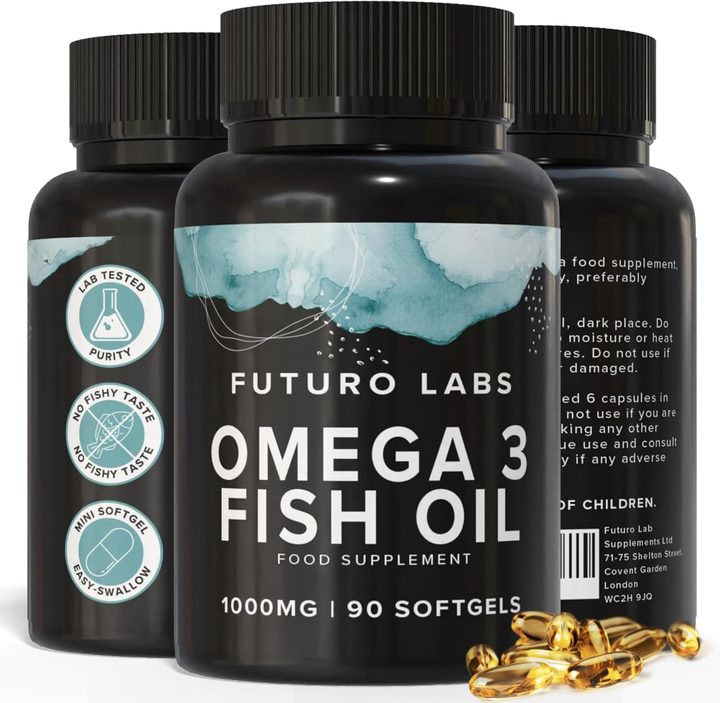
Our brand: the worked example on this page
Futuro Labs Omega 3 Fish Oil
- 17p a day
- 90 softgels, 1 softgel daily
- Lab tested
- Made in the UK
A fresh standard oil at the ratio the trials used: Futuro Labs Omega 3 Fish Oil on Amazon UK, 1 softgel with food, 180mg EPA and 120mg DHA, three to two, 90 for £14.99 at 17p. Full label breakdown. EPA against DHA for muscle more broadly is on the EPA versus DHA muscle page; the recovery timeline on the muscle recovery page.
What the soreness trials used, and why they cannot answer the ratio question
Is EPA or DHA better for muscle recovery is a question the shelf answers with confidence, EPA for inflammation, DHA for the brain, so EPA for recovery, and the honest page's answer is that the question has no trial behind it and cannot be answered from the trials that exist, which is a more useful thing to know than a guess. What the soreness trials used: the review that produces the one recovery footnote, perceived soreness a point or so lower on a ten-point scale at two to three grams of EPA and DHA a day taken for weeks or months before a damaging session, pools trials that gave mixed fish oil, at or near the standard fish oil ratio of three parts EPA to two parts DHA, the ratio a sardine or a salmon supplies and a standard softgel carries, and those trials reported the combined dose of EPA and DHA as their intervention, the DOMS review's methods, so the footnote belongs to the mixture and the trials cannot say which part of the mixture, if either, produced it, any more than a trial of a two-ingredient meal can say which ingredient satisfied the diner. No trial has given EPA alone against DHA alone, or against the mixture, and measured soreness, the return of strength, jump height or any recovery outcome, which is the trial the question needs and which has not been run, because the footnote is small enough that nobody has thought the ratio worth a study, and the sports nutrition trials that tested omega-3 for performance and recovery used mixed oils throughout, the omega-3 and performance literature's designs. So the trials that exist answer a different question, does the mixture help, with a small yes at high rungs, and are silent on this one.
The one head-to-head and what it did not measure, the mechanistic guess that runs both ways, what a lifter does with an unanswerable question, and the ratio filed
The one head-to-head is the closest the literature comes, and it measured the wrong thing for this page: a randomised comparison of EPA and DHA at matched doses in adults with low-grade inflammation found DHA lowering C-reactive protein and some inflammatory markers at least as much as EPA and in some measures more, against the shelf's expectation that EPA is the anti-inflammatory one, the EPA-versus-DHA head-to-head's finding, and it measured no soreness, no strength and no recovery outcome in anyone who had trained, so it says that the shelf's EPA-for-inflammation rule is not what a head-to-head shows and says nothing about recovery, except to warn against reasoning from a rule that did not survive its one test. The mechanistic guess runs both ways: EPA is the precursor of the E-series resolvins and DHA of the D-series resolvins and the protectins, the resolution mediators that help an inflammatory response end once its work is done, the resolvin literature's two families, and both families are made in a muscle after a damaging bout, so a mechanism can be told for either fatty acid and the telling of it is not evidence, the tissue distribution literature adding that a muscle membrane takes up both and sorts them itself, the what-the-body-holds page's finding. What a lifter does with an unanswerable question is stop asking it: the recovery footnote is a point on a ten-point scale at the higher rungs after weeks, small enough that the ratio inside it is a decimal of a footnote, so a lifter who wants the footnote takes the mixture the trials used, two to three grams of a standard oil at three to two, and a lifter who does not wants a fresh standard oil for the plate's heart claim, which the register writes for EPA and DHA combined in any ratio, and neither pays a premium for an EPA-heavy or a DHA-heavy oil on the strength of a recovery difference nobody has measured. The ratio filed: the soreness trials used mixed oils at roughly three to two and reported the combined dose, no trial has separated EPA and DHA for recovery, the one head-to-head measured markers and not recovery and found DHA at least as active, the mechanism runs both ways, and a fresh standard oil at the trials' ratio is the answer to a question with no trial behind it, with the worked example being that oil, £14.99 for 90 at 17p.
| The evidence | What it used or measured | What it says about the ratio |
|---|---|---|
| The soreness trials | Mixed fish oil at roughly three to two; the combined dose | Nothing: the footnote belongs to the mixture |
| EPA alone against DHA alone for recovery | No trial | Nothing |
| The one head-to-head | Matched doses; C-reactive protein and markers in low-grade inflammation; no recovery outcome | DHA at least as active as EPA on markers; silent on recovery |
| The mechanistic guess | EPA to E-series resolvins; DHA to D-series and protectins | Runs both ways; a mechanism is not a result |
| The register's heart claim | EPA and DHA combined, any ratio | The ratio does not matter to the claim either |
| A lifter's purchase | A fresh standard oil at three to two | The trials' oil, with no premium for a ratio nobody has tested |
The verdict, a ratio nobody has tested on a footnote nobody would notice, answered by the mixture the trials used
Is EPA or DHA better for muscle recovery: the question has no trial behind it, the soreness trials that found perceived soreness a point or so lower at two to three grams a day for weeks before a damaging session having used mixed fish oils at roughly three parts EPA to two parts DHA and reported the combined dose, no trial having given EPA alone against DHA alone and measured soreness or strength, and the one head-to-head at matched doses having measured inflammatory markers in adults with low-grade inflammation rather than recovery, finding DHA at least as active as EPA against the shelf's expectation, with the resolvin mechanism running both ways, so that the ratio cannot matter to a footnote no ratio has been tested on and a lifter buys a fresh standard oil at the trials' ratio for the plate's heart claim and stops thinking in ratios. That oil: Futuro Labs Omega 3 Fish Oil, one with food, 180mg EPA and 120mg DHA, 90 for £14.99 at 17p a day.
What to check on the label
- Know what the soreness trials used: a mixture at three to two, the combined dose.
- Know no trial separated them for recovery: the question is untested.
- Read the one head-to-head for what it measured: markers, not recovery; DHA at least as active.
- Distrust the mechanism story: it runs both ways.
- Buy the trials' oil: a fresh standard three-to-two, no ratio premium.
Our brand
The worked example: Futuro Labs Omega 3 Fish Oil
Futuro Labs Omega 3 Fish Oil: 1 softgel daily with food, 1000mg fish oil providing 180mg EPA and 120mg DHA (300mg combined), 90 softgels for £14.99, 17p a day, lab-tested purity, UK GMP made. Gelatin shell, so not vegetarian.
- Fish oil per softgel
- 1000mg
- EPA / DHA per softgel
- 180mg / 120mg (300mg combined)
- Serving
- 1 softgel a day
- Bottle
- 90 softgels, 90 days
- Price
- £14.99 (17p a day)
- Softgel
- mini softgel, no fishy taste
Questions people also ask
Is EPA better than DHA for inflammation?
Not in the one head-to-head: a randomised comparison at matched doses in adults with low-grade inflammation found DHA lowering C-reactive protein and some inflammatory markers at least as much as EPA and in some measures more, against the shelf's rule, which is worth remembering before reasoning from that rule to recovery.
What ratio of EPA to DHA did the muscle soreness studies use?
Mixed fish oils at or near the standard three parts EPA to two parts DHA, the ratio a sardine or a salmon supplies and a standard softgel carries, with the trials reporting the combined dose of two to three grams a day and never separating the two fatty acids.
Should I buy a high-EPA fish oil for recovery?
No: no trial has given EPA alone against DHA alone and measured soreness or the return of strength, so a premium for an EPA-heavy oil buys a difference nobody has measured on a footnote of a point on a ten-point scale, and a fresh standard oil at three to two is the oil the trials used.
Does DHA help muscle recovery?
As part of the mixture, in the same footnote: the soreness trials used mixed oils and cannot say which part produced the point-lower shift, DHA makes the D-series resolvins and protectins that help a response resolve as EPA makes the E-series, and neither has been tested alone for recovery.
Does the EPA to DHA ratio matter for the heart claim?
No: the register's heart claim is written for 250mg of EPA and DHA combined in any ratio, so a standard softgel at 180mg EPA and 120mg DHA meets it as a DHA-heavy algal oil or an EPA-heavy concentrate would, and the ratio matters to neither the claim nor the recovery footnote.
Sources
- Review evidence on omega-3 supplementation and exercise-induced muscle damage and soreness: small positive findings mainly in untrained participants, mixed-to-null results in trained populations. PubMed record
- A randomised head-to-head comparison of EPA and DHA supplementation at matched doses in adults with low-grade inflammation found DHA lowered C-reactive protein and some inflammatory markers at least as much as EPA and in some measures more, against the assumption that EPA is the anti-inflammatory half, with neither reaching an authorised claim. PubMed record
- The specialised pro-resolving mediator literature: EPA and DHA in cell membranes are converted to resolvins, protectins and maresins that help inflammation resolve, a mechanism demonstrated in cell and animal models and in human blood after supplementation, without an authorised inflammation claim for omega-3 in the UK. PubMed record
- The tissue fatty acid literature: DHA outweighs EPA many times over in the brain, the retina and most cell membranes, the body converting a little EPA to DHA and retaining DHA preferentially, while a standard fish oil supplies EPA and DHA at about 3 to 2, the tissues selecting what they hold from what the diet supplies. PubMed record