Ghost Fitness/Omega-3/Is EPA or DHA better for inflammation?
Is EPA or DHA better for inflammation?
The short answer
Neither wins, and the assumption is wrong. The forum assumption is that EPA is the anti-inflammatory half. But DHA feeds its own resolving mediators, and the randomised head-to-head trial at matched doses found DHA lowered inflammatory markers at least as much as EPA and in some measures more. No inflammation claim exists for either, both need gram doses over months, and the question does not change the dose, the clock or the register.
- The assumptionEPA is the anti-inflammatory half, feeding the E-series resolvins
- The physiologyDHA feeds the D-series resolvins, protectins and maresins: each has its own family
- The head-to-headmatched doses in adults with low-grade inflammation: DHA lowered C-reactive protein at least as much as EPA, in some measures more
- The registerno inflammation claim for either; gram doses over months for a marker; a standard 3 to 2 oil serves both
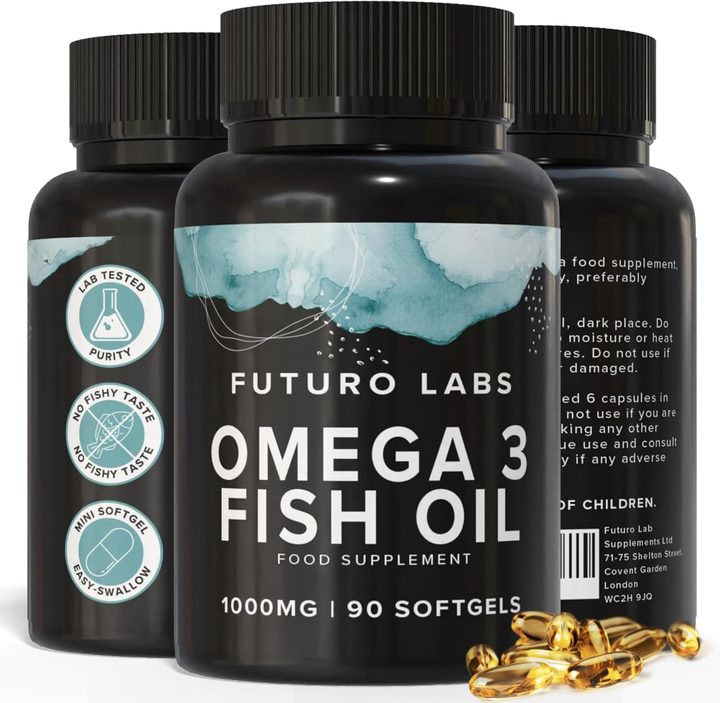
Our brand: the worked example on this page
Futuro Labs Omega 3 Fish Oil
- 17p a day
- 90 softgels, 1 softgel daily
- Lab tested
- Made in the UK
A standard 3 to 2 oil that serves both, for its own sentences: Futuro Labs Omega 3 Fish Oil on Amazon UK, 1 softgel with food, 180mg EPA and 120mg DHA, 90 for £14.99 at 17p. Full label breakdown. The four kinds of inflammation are on the inflammation page; the decision tree on the EPA and DHA page.
The assumption, the physiology that undermines it, and the head-to-head trial that tested it
Is EPA or DHA better for inflammation is a question the careful-claims flag answers with a trial rather than an assumption, because the assumption is common, plausible and wrong. The assumption: EPA is the anti-inflammatory half of fish oil, the forum wisdom running that EPA feeds the resolving mediators the inflammation literature studies while DHA is the brain's fatty acid and a passenger in the inflammation story, so an EPA-heavy concentrate is bought for inflammation and a DHA-heavy oil for the brain. The physiology undermines it before any trial does: EPA in membranes is converted to the E-series resolvins, true, but DHA in membranes is converted to the D-series resolvins and to two further families, the protectins and the maresins, that have no EPA equivalent, so DHA feeds more resolving families than EPA does and the mediator literature gives each fatty acid its own set rather than assigning inflammation to one, the specialised pro-resolving mediator research's map. The head-to-head trial tested the assumption directly: a randomised comparison gave adults with low-grade inflammation, raised C-reactive protein with excess weight, matched daily doses of purified EPA and purified DHA for ten weeks each, in a crossover design, and measured the inflammatory markers, finding that DHA lowered C-reactive protein and interleukin-18 at least as much as EPA and in some measures more, and that the two differed little on the rest, the comparison literature's finding and the reason the assumption should be retired, DHA being at least EPA's equal for the markers the assumption said were EPA's.
What the trial does not change, the register, the dose and the clock, the reader who still needs an answer, and the question filed
What the trial does not change is everything that matters more than the ratio. The register: no inflammation claim exists for EPA, for DHA or for the pair, the omega-3 sentences being heart, brain, vision, triglycerides and blood pressure, so neither half may print anti-inflammatory and a fish oil sold for inflammation on the strength of its EPA has stepped outside the register whichever half it favours. The dose: the marker effects in the trials, the head-to-head included, appear at gram-and-above doses, two grams a day and more in the C-reactive protein meta-analyses, with a fraction of a milligram per litre as the size of the change and lifestyle moving the same marker by multiples, so the question of which half is better is a question about grams that a standard softgel does not reach at either ratio. The clock: the mediators are made from EPA and DHA already built into membranes over three to four months, so neither half works faster than the membrane clock and the fastest anything happens is eight to twelve weeks for a marker in the already inflamed. The reader who still needs an answer gets one: for the inflammatory arthritis file, the trials used fish oils at the standard ratio and mixed concentrates, so a standard 3 to 2 or a balanced concentrate is what the evidence used; for the low-grade marker file, the head-to-head says either or both; and for a lifter's post-session inflammation, neither, since it is repair and not a target, the four-kinds page's first kind. So the answer to which is better for inflammation is that the question does not change the dose, the clock or the register, and a standard 3 to 2 fish oil serves both halves at whatever rung a reader has a reason for. The question filed: the assumption that EPA is the anti-inflammatory half retired by the mediator physiology and by the head-to-head trial in which DHA matched or beat it, no claim for either, gram doses over months for a marker, and a standard oil serving both, with the worked example being that oil taken for its own sentences, one softgel at 17p, £14.99 for 90.
| The item | The finding | The consequence |
|---|---|---|
| The assumption | EPA is the anti-inflammatory half | Common, plausible, wrong |
| The mediator physiology | EPA feeds the E-series resolvins; DHA feeds the D-series, the protectins and the maresins | DHA feeds more families |
| The head-to-head trial | Matched doses for ten weeks each: DHA lowered C-reactive protein and interleukin-18 at least as much, in some measures more | DHA at least EPA's equal |
| The register | No inflammation claim for either | Neither may print the word |
| The dose and the clock | Grams a day; eight to twelve weeks for a marker; months for membranes | Unchanged by the ratio |
| The instruction | A standard 3 to 2 oil serves both | At whatever rung there is a reason for |
The verdict, an assumption retired by a trial, and a question that changes nothing a reader does
Is EPA or DHA better for inflammation: neither, the forum assumption that EPA is the anti-inflammatory half being undermined by the mediator physiology, DHA feeding the D-series resolvins, the protectins and the maresins to EPA's E-series, and retired by the randomised head-to-head trial in which matched doses of purified DHA lowered C-reactive protein and some inflammatory markers at least as much as EPA and in some measures more, with no inflammation claim existing for either half, the marker effects needing gram doses over months at a fraction of a milligram per litre, and the question changing nothing about the dose, the clock or the register, so that a standard 3 to 2 fish oil serves both at whatever rung a reader has a reason for. That oil for its own sentences: Futuro Labs Omega 3 Fish Oil, one softgel with food, 180mg EPA and 120mg DHA, 90 for £14.99 at 17p a day.
What to check on the label
- Retire the assumption: EPA is not the anti-inflammatory half.
- Read the physiology: DHA feeds more resolving families.
- Read the head-to-head: DHA matched or beat EPA on the markers.
- Hold the register: no inflammation claim for either.
- Buy the standard ratio: the question changes nothing.
Our brand
The worked example: Futuro Labs Omega 3 Fish Oil
Futuro Labs Omega 3 Fish Oil: 1 softgel daily with food, 1000mg fish oil providing 180mg EPA and 120mg DHA (300mg combined), 90 softgels for £14.99, 17p a day, lab-tested purity, UK GMP made. Gelatin shell, so not vegetarian.
- Fish oil per softgel
- 1000mg
- EPA / DHA per softgel
- 180mg / 120mg (300mg combined)
- Serving
- 1 softgel a day
- Bottle
- 90 softgels, 90 days
- Price
- £14.99 (17p a day)
- Softgel
- mini softgel, no fishy taste
Questions people also ask
Is EPA more anti-inflammatory than DHA?
No: the assumption rests on EPA feeding the E-series resolvins, but DHA feeds the D-series resolvins, the protectins and the maresins, and the randomised head-to-head trial at matched doses found DHA lowered C-reactive protein and some inflammatory markers at least as much as EPA and in some measures more, with no inflammation claim existing for either.
What did the EPA versus DHA inflammation trial find?
In adults with low-grade inflammation given matched daily doses of purified EPA and purified DHA for ten weeks each in a crossover design, DHA lowered C-reactive protein and interleukin-18 at least as much as EPA and in some measures more, and the two differed little on the other markers.
Should I buy an EPA-heavy fish oil for inflammation?
No: the head-to-head says DHA is at least EPA's equal, the inflammatory arthritis trials used standard-ratio oils and balanced concentrates, no inflammation claim exists for any ratio, and the dose and the clock that matter, grams a day over months, are the same whichever half the tub favours.
How much EPA or DHA is needed to affect inflammation markers?
Two grams of the pair a day and more in the meta-analyses, over eight to twelve weeks, for a fraction of a milligram per litre off C-reactive protein in people whose marker was raised, a dose a standard softgel does not reach at either ratio and a change lifestyle moves by multiples.
Does the EPA to DHA ratio matter for a lifter's inflammation?
No, because a lifter's post-session inflammation is repair rather than a target, and the register's omega-3 sentences are the same for any ratio, so a lifter takes a standard 3 to 2 oil by the oily-fish audit for the heart claim and the index and leaves the ratio question to the trials.
Sources
- A randomised head-to-head comparison of EPA and DHA supplementation at matched doses in adults with low-grade inflammation found DHA lowered C-reactive protein and some inflammatory markers at least as much as EPA and in some measures more, against the assumption that EPA is the anti-inflammatory half, with neither reaching an authorised claim. PubMed record
- The specialised pro-resolving mediator literature: EPA and DHA in cell membranes are converted to resolvins, protectins and maresins that help inflammation resolve, a mechanism demonstrated in cell and animal models and in human blood after supplementation, without an authorised inflammation claim for omega-3 in the UK. PubMed record
- Meta-analyses of omega-3 supplementation and C-reactive protein: small reductions in CRP with EPA and DHA at around two grams a day or more over weeks to months, larger where CRP was raised at baseline, a marker effect rather than a treatment of any condition. PubMed record
- Goldberg RJ, Katz J. A meta-analysis of the analgesic effects of omega-3 polyunsaturated fatty acid supplementation for inflammatory joint pain. Pain 2007;129(1-2):210-223. PubMed record