Ghost Fitness/Omega-3/Does fish oil help with inflammation?
Does fish oil help with inflammation?
The short answer
Inflammation is four things and omega-3's file differs for each. Acute repair after a session is not a target, resolving in days. Chronic low-grade inflammation, a raised C-reactive protein, moves modestly at two grams a day and more over months, only where it was raised. Autoimmune inflammation, rheumatoid arthritis, moves in symptoms at higher doses alongside treatment. Infection's inflammation is untouched. No inflammation claim exists.
- Acute repairthe inflammation after a session: rebuilds muscle, resolves in days; not a target
- Chronic low-gradeC-reactive protein: modestly lower at two grams and more over months, only where raised; weight loss and activity move it more
- Autoimmunerheumatoid arthritis: less pain and stiffness at 2.7 to 4 grams over months, alongside a rheumatologist's treatment
- Infectionuntouched; and no inflammation claim for any of the four
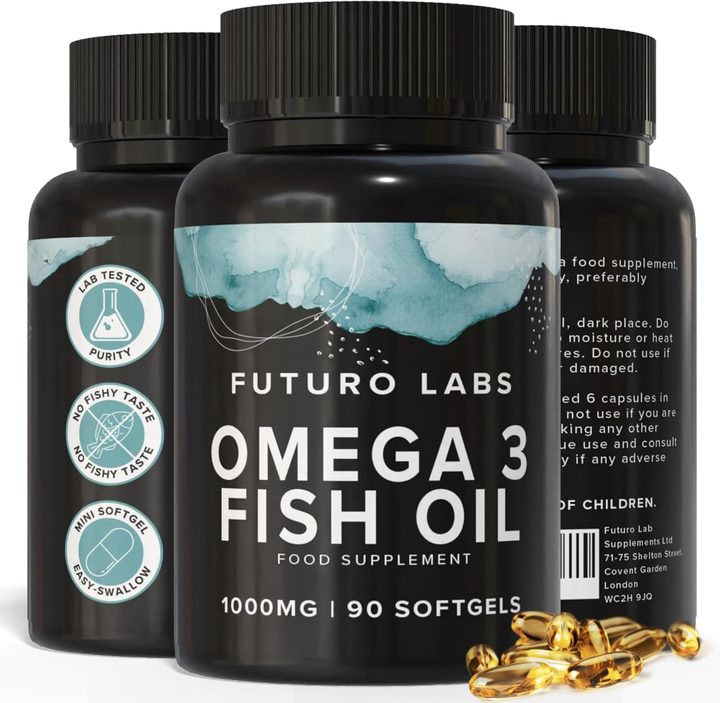
Our brand: the worked example on this page
Futuro Labs Omega 3 Fish Oil
- 17p a day
- 90 softgels, 1 softgel daily
- Lab tested
- Made in the UK
Omega-3 for its own sentences, with no inflammation word: Futuro Labs Omega 3 Fish Oil on Amazon UK, 1 softgel with food, 180mg EPA and 120mg DHA, 90 for £14.99 at 17p. Full label breakdown. The inflammation dose is on the inflammation dose page; the speed ladder on the how-fast page.
Four kinds of inflammation, and omega-3's file for the first two, acute repair and chronic low-grade
Does fish oil help with inflammation, and the variant asking about omega-3 supplements for it, is a question the careful-claims flag answers by splitting inflammation into its four kinds, because the word covers processes that have nothing to do with each other and omega-3's file is different for each. The first kind, acute repair: the inflammation after a session, the swelling, tenderness and soreness of the days after unfamiliar work, is the first stage of the process that rebuilds trained muscle, resolving on its own in days on the soreness timeline, and it is not a target to suppress, the DOMS review finding at most a modest reduction in perceived soreness at gram doses taken for months before and the register holding no soreness or recovery claim, so a lifter who wants their post-session inflammation reduced is asking for less repair and should ask for sleep, protein and progression instead. The second kind, chronic low-grade: the persistent mild inflammation of a poor diet, excess weight, inactivity and short sleep, measured by C-reactive protein and associated in the cohorts with long-term cardiovascular risk, and here omega-3 has a marker file, meta-analyses finding C-reactive protein modestly lower with EPA and DHA at around two grams a day and more over weeks to months, larger in people whose marker was raised at baseline and absent in people whose marker was normal, the CRP literature's finding, with the honest note that weight loss, activity and sleep move the same marker more, that the mechanism runs through resolving mediators made from membrane EPA and DHA built over months, and that a marker moving is not a condition treated.
The third and fourth kinds, autoimmune and infection, the missing claim, what a lifter does with the four, and the inflammations filed
The third kind, autoimmune: the inflammation of rheumatoid arthritis and its relatives, in which the immune system attacks the joints, and here omega-3 has its one symptomatic file, the meta-analysis of randomised trials finding reduced joint pain, shorter morning stiffness and fewer tender joints at 2.7 to 4 grams of EPA and DHA a day for three months and more, alongside the disease-modifying treatment a rheumatologist prescribes and never instead of it, a modest adjunct in a specialist's condition and the only place on this page where a symptom rather than a marker moved. The fourth kind, infection: the inflammation of a cold, a flu or an infected wound, the immune system's response to a pathogen, and omega-3 does nothing for it and should not, the theoretical concern that very high intakes might blunt immune responses being one of the four the regulator weighed and found no evidence for below five grams, so a fish oil neither helps nor hinders an infection and the honest advice is rest, fluids and a GP for what needs one. The missing claim covers all four: no inflammation, anti-inflammatory, joint, immune or recovery claim exists for omega-3 on the register, whose sentences are heart, brain, vision, triglycerides and blood pressure, so a fish oil label may not print the word and a fish oil sold as anti-inflammatory has stepped outside the register whatever kind of inflammation it means. What a lifter does with the four: leaves acute repair alone, moves chronic low-grade inflammation with weight, activity, sleep and a diet with oily fish in it, takes autoimmune inflammation to a GP and a rheumatologist and discusses the trials' dose there, and treats infection as infection, with omega-3 taken by the oily-fish audit for its own sentences and its inflammation files left as what they are. The inflammations filed: acute repair not a target, chronic low-grade a marker moving modestly at two grams in the already inflamed, autoimmune a symptom moving at higher doses with treatment, infection untouched, and no claim for any, with the worked example being omega-3 for its own sentences with no inflammation word, one softgel at 17p, £14.99 for 90.
| The inflammation | What it is | Omega-3's file |
|---|---|---|
| Acute repair | The days after a session; rebuilds trained muscle; resolves on its own | Not a target; at most modestly less soreness at gram doses over months |
| Chronic low-grade | A raised C-reactive protein from diet, weight, inactivity and short sleep | Modestly lower at two grams and more over months, only where raised; weight and activity move it more |
| Autoimmune | Rheumatoid arthritis and its relatives | Less pain and stiffness at 2.7 to 4 grams over months alongside treatment; the one symptomatic file |
| Infection | The immune response to a pathogen | Untouched; no evidence of blunting below five grams |
| The claim | None for any kind | A fish oil may not print the word |
| The lifter's routes | Leave repair alone; move the marker with lifestyle; a rheumatologist; rest | Omega-3 for its own sentences |
The verdict, four inflammations, two modest files, no target in the one a lifter has, and no claim
Does fish oil help with inflammation: it depends which of the four kinds, acute repair after a session being not a target and resolving on its own, chronic low-grade inflammation being a marker that moves modestly at two grams of EPA and DHA a day and more over months only where it was raised and moves more with weight loss and activity, autoimmune inflammation in rheumatoid arthritis being the one symptomatic file, less pain and stiffness at 2.7 to 4 grams over months alongside a rheumatologist's treatment, and infection's inflammation being untouched, with no inflammation claim existing for any of the four on the register and a lifter's inflammation being almost always the first kind. Omega-3 for its own sentences: Futuro Labs Omega 3 Fish Oil, one softgel with food, 180mg EPA and 120mg DHA, 90 for £14.99 at 17p a day.
What to check on the label
- Name the inflammation: repair, low-grade, autoimmune, or infection.
- Leave repair alone: it is the rebuild.
- Move low-grade inflammation with lifestyle: omega-3 a modest marker effect at two grams.
- Take autoimmune inflammation to a rheumatologist: the trials' dose beside treatment.
- Hold the register: no inflammation claim for any kind.
Our brand
The worked example: Futuro Labs Omega 3 Fish Oil
Futuro Labs Omega 3 Fish Oil: 1 softgel daily with food, 1000mg fish oil providing 180mg EPA and 120mg DHA (300mg combined), 90 softgels for £14.99, 17p a day, lab-tested purity, UK GMP made. Gelatin shell, so not vegetarian.
- Fish oil per softgel
- 1000mg
- EPA / DHA per softgel
- 180mg / 120mg (300mg combined)
- Serving
- 1 softgel a day
- Bottle
- 90 softgels, 90 days
- Price
- £14.99 (17p a day)
- Softgel
- mini softgel, no fishy taste
Questions people also ask
Is fish oil good for inflammation?
For two of four kinds, modestly: chronic low-grade inflammation's marker, C-reactive protein, falls a little at two grams of EPA and DHA a day and more over months where it was raised, and rheumatoid arthritis symptoms ease at 2.7 to 4 grams alongside treatment, while post-session repair is not a target and infection is untouched, with no inflammation claim for any.
Does fish oil reduce inflammation after exercise?
Post-session inflammation is repair, the first stage of rebuilding trained muscle, resolving on its own in days and not something to suppress; the DOMS review finds at most a modest reduction in perceived soreness at gram doses taken for months before, and sleep, protein and progression move recovery more.
Does omega-3 lower CRP?
Modestly, in the meta-analyses, at around two grams of EPA and DHA a day and more over weeks to months, larger in people whose C-reactive protein was raised at baseline and absent where it was normal, a marker effect that weight loss, activity and sleep move more.
Can fish oil help autoimmune inflammation?
In rheumatoid arthritis and its relatives, modestly: the meta-analysis of trials at 2.7 to 4 grams a day for three months and more finds less joint pain, shorter morning stiffness and fewer tender joints alongside a rheumatologist's disease-modifying treatment, an adjunct and never a replacement.
Does fish oil weaken the immune system?
No evidence says so below five grams a day: the theoretical concern that very high intakes might blunt immune responses was one of four the regulator weighed and found unsupported, so a fish oil neither helps nor hinders an infection, which is treated as an infection.
Sources
- The specialised pro-resolving mediator literature: EPA and DHA in cell membranes are converted to resolvins, protectins and maresins that help inflammation resolve, a mechanism demonstrated in cell and animal models and in human blood after supplementation, without an authorised inflammation claim for omega-3 in the UK. PubMed record
- Meta-analyses of omega-3 supplementation and C-reactive protein: small reductions in CRP with EPA and DHA at around two grams a day or more over weeks to months, larger where CRP was raised at baseline, a marker effect rather than a treatment of any condition. PubMed record
- Goldberg RJ, Katz J. A meta-analysis of the analgesic effects of omega-3 polyunsaturated fatty acid supplementation for inflammatory joint pain. Pain 2007;129(1-2):210-223. PubMed record
- EFSA Panel on Dietetic Products. Scientific opinion on the tolerable upper intake level of EPA, DHA and DPA: supplemental intakes of EPA and DHA combined up to about 5g/day do not raise safety concerns for adults. EFSA Journal 2012;10(7):2815. https://www.efsa.europa.eu/en/efsajournal/pub/2815