Ghost Fitness/Omega-3/How fast does fish oil work for inflammation?
How fast does fish oil work for inflammation?
The short answer
Not fast. The ladder of the fastest anything happens: nothing in days, since the resolving mediators come from EPA and DHA already built into membranes over months; a blood marker moving at eight to twelve weeks at two grams and more, only where it was raised; symptoms in inflammatory arthritis at twelve weeks and beyond at higher doses alongside treatment; and post-session inflammation not a target. No inflammation claim exists.
- Daysnothing: the mediators need membrane EPA and DHA, built over months
- Eight to twelve weeksC-reactive protein moves at two grams and more, only where it was raised
- Twelve weeks and beyondinflammatory arthritis symptoms at 2.7 to 4 grams alongside treatment
- Neverpost-session inflammation, which is repair; and any claim, since none exists
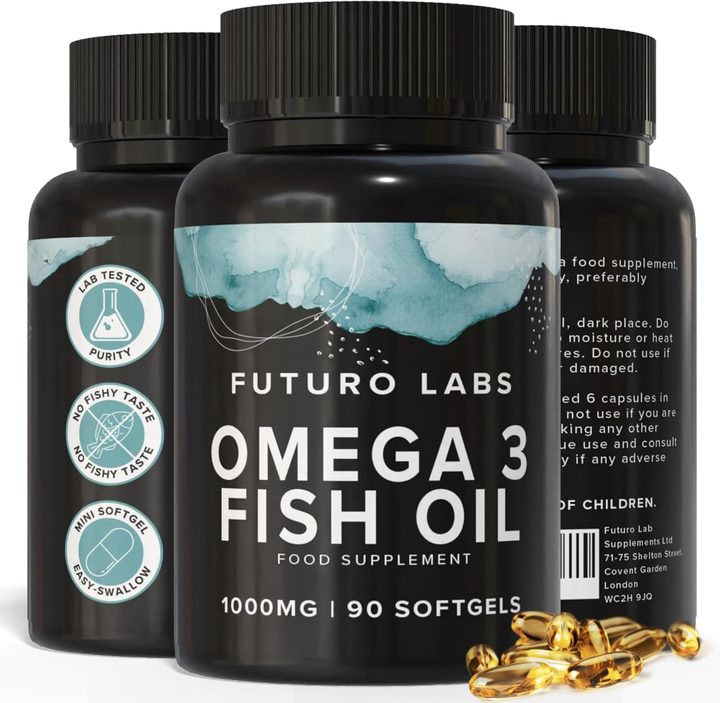
Our brand: the worked example on this page
Futuro Labs Omega 3 Fish Oil
- 17p a day
- 90 softgels, 1 softgel daily
- Lab tested
- Made in the UK
Omega-3 for its own sentences, on its own slow clock: Futuro Labs Omega 3 Fish Oil on Amazon UK, 1 softgel with food, 180mg EPA and 120mg DHA, 90 for £14.99 at 17p. Full label breakdown. The inflammation dose page is here; the three pools and their clocks on the how-long page.
Not fast, and the reason, because the mechanism runs through membranes that take months to build
How fast fish oil works for inflammation, and the variant asking how long it takes, is answered not fast by the careful-claims flag and by the mechanism, and the mechanism explains every rung of the ladder that follows. The mechanism: the anti-inflammatory story for omega-3 rests on the specialised pro-resolving mediators, resolvins, protectins and maresins, that help an inflammatory response switch off, and those mediators are made from EPA and DHA that are already sitting in cell membranes when inflammation occurs, so the raw material has to be built into membranes first, a process the index kinetics literature clocks at three to four months to a plateau, and a softgel swallowed today contributes to a membrane pool that will be supplying mediators next season, not this afternoon, the resolvin literature's mechanism and its timing. That is why nothing happens in days: a reader with a swollen joint, a hot tendon or a raised marker who starts fish oil on Monday has, by Friday, a slightly higher plasma omega-3 and membranes unchanged, and the fastest anything can happen is the fastest the membranes can change, which is weeks at the leading edge and months at the plateau, and only at doses that raise the membrane pool substantially, the gram-and-above rungs, a standard softgel raising it slowly and modestly. The register is consistent with the slowness: no inflammation claim exists for omega-3 at any dose or duration, its sentences being heart, brain, vision, triglycerides and blood pressure, so a fish oil label may not promise to reduce inflammation in a week, a month or ever.
The ladder of the fastest anything happens, rung by rung, the inflammation that is not a target, and the clock filed
The ladder of the fastest anything happens, rung by rung, with each rung's dose and the honest note beside it. Days: nothing, for the reason above. Eight to twelve weeks: a blood marker, C-reactive protein, the marker of low-grade inflammation, moves in the meta-analyses at two grams of EPA and DHA a day and more, a small reduction, larger in people whose marker was raised at baseline and absent in people whose marker was normal, a change a blood test shows and a reader does not feel, and a marker that weight loss, sleep and activity move more, the CRP literature's finding. Twelve weeks and beyond: symptoms, in one condition, inflammatory arthritis, where the meta-analysis of trials at 2.7 to 4 grams a day for at least three months finds reduced pain, morning stiffness and tender joints alongside a rheumatologist's treatment, the symptomatic rung and the slowest, at the highest dose, in a specialist's condition. Never, for two things: post-session inflammation, the ache after training, which is repair, the first stage of rebuilding trained muscle, resolving on its own in days and not a target to suppress, the DOMS review finding at most a modest reduction in perceived soreness at gram doses over weeks of prior intake; and a claim, since none exists at any speed. A reader who wants inflammation to move faster than the ladder allows has the levers that do move it faster, sleep, weight, activity and the treatment of whatever is inflamed, and a reader with inflammation of the medical kind, a hot joint, a chronic condition or a raised marker on a blood test, has a GP and a diagnosis before a clock, with the omega-3 decision made with the prescriber at the trials' doses if at all. The clock filed: nothing in days because the mediators need membranes built over months, a marker at eight to twelve weeks at two grams and more in the already inflamed, symptoms at twelve weeks and beyond in inflammatory arthritis at higher doses with treatment, post-session inflammation and any claim never, with the worked example being omega-3 for its own sentences on its own slow clock, one softgel at 17p, £14.99 for 90.
| The rung | What happens | The dose and the note |
|---|---|---|
| Days | Nothing: membranes unchanged; mediators not yet supplied | Any dose; the mechanism runs through months |
| Eight to twelve weeks | C-reactive protein moves, only where it was raised | Two grams and more; a blood test shows it; not felt |
| Twelve weeks and beyond | Inflammatory arthritis symptoms: less pain and stiffness | 2.7 to 4 grams alongside treatment; a rheumatologist's |
| Post-session inflammation | Not a target: repair resolving in days | Sleep, protein and progression move soreness more |
| A claim | Never | No inflammation claim at any dose or duration |
| The medical kind | A GP and a diagnosis before a clock | The dose decided with the prescriber, if at all |
The verdict, a ladder whose bottom rung is weeks and whose top rung is a season, at doses above a softgel
How fast does fish oil work for inflammation: not fast, on a ladder of the fastest anything happens, nothing in days because the resolving mediators come from EPA and DHA already built into membranes over months, a blood marker moving at eight to twelve weeks at two grams a day and more and only where it was raised, symptoms in inflammatory arthritis at twelve weeks and beyond at 2.7 to 4 grams alongside a rheumatologist's treatment, and post-session inflammation not a target at all, being repair that resolves on its own, with no inflammation claim existing at any speed and a reader with inflammation of the medical kind having a GP and a diagnosis before a clock. Omega-3 for its own sentences on its own slow clock: Futuro Labs Omega 3 Fish Oil, one softgel with food, 180mg EPA and 120mg DHA, 90 for £14.99 at 17p a day.
What to check on the label
- Expect nothing in days: the mediators need membranes built over months.
- Expect a marker at eight to twelve weeks: at two grams and more, only if it was raised.
- Expect symptoms at a season: in inflammatory arthritis, at high doses, with treatment.
- Leave post-session inflammation alone: it is repair.
- Take the medical kind to a GP first: a diagnosis before a clock.
Our brand
The worked example: Futuro Labs Omega 3 Fish Oil
Futuro Labs Omega 3 Fish Oil: 1 softgel daily with food, 1000mg fish oil providing 180mg EPA and 120mg DHA (300mg combined), 90 softgels for £14.99, 17p a day, lab-tested purity, UK GMP made. Gelatin shell, so not vegetarian.
- Fish oil per softgel
- 1000mg
- EPA / DHA per softgel
- 180mg / 120mg (300mg combined)
- Serving
- 1 softgel a day
- Bottle
- 90 softgels, 90 days
- Price
- £14.99 (17p a day)
- Softgel
- mini softgel, no fishy taste
Questions people also ask
How long does it take fish oil to reduce inflammation?
Not days: the resolving mediators come from EPA and DHA already built into membranes over months, so the fastest anything moves is a blood marker at eight to twelve weeks at two grams and more in the already inflamed, and symptoms in inflammatory arthritis at twelve weeks and beyond at higher doses alongside treatment.
Why doesn't fish oil reduce inflammation quickly?
Because its mechanism runs through membranes: the resolvins and related mediators are made from EPA and DHA already sitting in cell membranes when inflammation occurs, and building that pool takes three to four months, so a softgel swallowed today supplies mediators next season rather than this afternoon.
Does fish oil reduce inflammation after a workout?
Post-session inflammation is repair, the first stage of rebuilding trained muscle, resolving on its own in days and not a target to suppress; the DOMS review finds at most a modest reduction in perceived soreness at gram doses over weeks of prior intake, with sleep, protein and progression moving soreness more.
What dose of fish oil is needed to affect inflammation markers?
Two grams of EPA and DHA a day and more in the meta-analyses, over eight to twelve weeks, for a small reduction in C-reactive protein that is larger where the marker was raised and absent where it was normal, a dose a standard softgel does not reach and a change a blood test shows rather than a reader feels.
Can a fish oil supplement claim to be anti-inflammatory?
No: no inflammation claim exists for omega-3 on the register at any dose or duration, its sentences being heart, brain, vision, triglycerides and blood pressure, so a label promising to reduce inflammation in any timeframe has stepped outside the register.
Sources
- The specialised pro-resolving mediator literature: EPA and DHA in cell membranes are converted to resolvins, protectins and maresins that help inflammation resolve, a mechanism demonstrated in cell and animal models and in human blood after supplementation, without an authorised inflammation claim for omega-3 in the UK. PubMed record
- Meta-analyses of omega-3 supplementation and C-reactive protein: small reductions in CRP with EPA and DHA at around two grams a day or more over weeks to months, larger where CRP was raised at baseline, a marker effect rather than a treatment of any condition. PubMed record
- Goldberg RJ, Katz J. A meta-analysis of the analgesic effects of omega-3 polyunsaturated fatty acid supplementation for inflammatory joint pain. Pain 2007;129(1-2):210-223. PubMed record
- The omega-3 index kinetics literature: red-cell EPA and DHA rise over three to four months of daily intake and fall over a similar period after stopping, the index changing on a clock of months rather than days, with no acute effect of a single dose. PubMed record