Ghost Fitness/Omega-3/Does fish oil bring down inflammation?
Does fish oil bring down inflammation?
The short answer
By the number that would show it, C-reactive protein, and what moves it. Most: weight and visceral fat loss, aerobic exercise, sleep, stopping smoking, moderating alcohol. On prescription: statins. Omega-3: small reductions at two grams or more over eight to twelve weeks in people who start with a raised level, a research finding with no claim. A healthy lifter with a CRP already under one has nothing to bring down at any dose.
- The numberC-reactive protein on a blood test; under one milligram per litre is low; over three is raised
- What moves it mostweight and visceral fat loss, aerobic exercise, sleep, stopping smoking, moderating alcohol; statins on prescription
- Omega-3's linesmall reductions at two grams a day or more over eight to twelve weeks in the already-raised; no claim
- The healthy liftera CRP under one: nothing to bring down at any dose
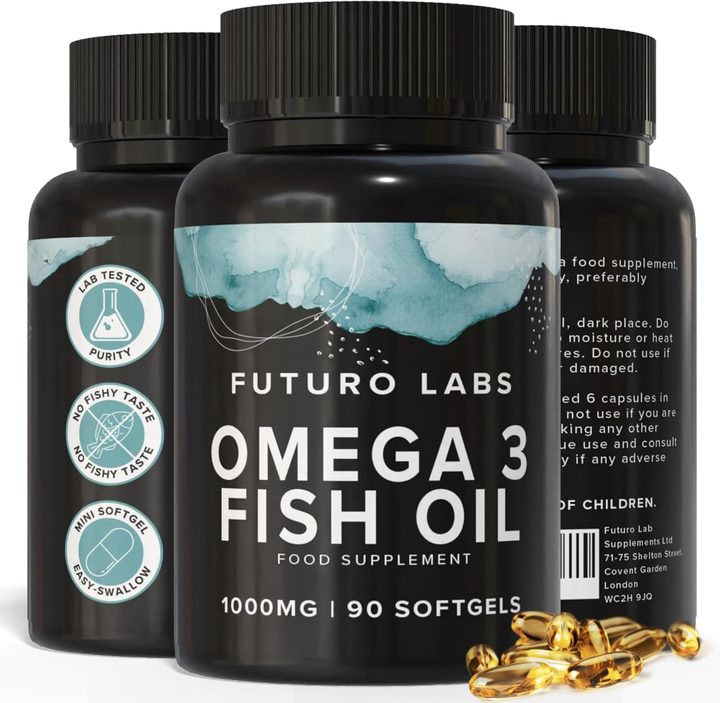
Our brand: the worked example on this page
Futuro Labs Omega 3 Fish Oil
- 17p a day
- 90 softgels, 1 softgel daily
- Lab tested
- Made in the UK
A standard softgel for the register's claims, with no inflammation claim among them: Futuro Labs Omega 3 Fish Oil on Amazon UK, 1 softgel with food, 180mg EPA and 120mg DHA, 90 for £14.99 at 17p. Full label breakdown. Resolve versus suppress is on the take-away-inflammation page; how fast it works for inflammation on the how-fast page.
The number that would show inflammation coming down, and the ledger of what moves it most
Does fish oil bring down inflammation is a question the honest page answers with the number that would show it, because bring down implies a measurement, and the measurement exists. The number: C-reactive protein, CRP, a protein the liver makes in response to inflammation anywhere in the body, measured on a blood test, under one milligram per litre being low, one to three average and above three raised in the absence of an infection, the high-sensitivity assay that the cardiovascular risk literature uses, and it is the number every trial of an anti-inflammatory supplement measures and the only one a reader can have measured, so bringing down inflammation, honestly read, means bringing down CRP. The ledger of what moves it is known and ranked, the CRP and lifestyle literature's list. Most: weight loss, above all visceral fat loss, since adipose tissue is a source of the signals that raise CRP and a few kilos of visceral fat lost lowers it more than any supplement; regular aerobic exercise, which lowers CRP over months independently of weight; sleep, short and poor sleep raising it; stopping smoking, which raises it substantially; and moderating alcohol. On prescription: statins, which lower CRP alongside cholesterol and are the reason the number is on a cardiologist's panel. Those are the levers that move a raised number by a large fraction, and a reader whose CRP is raised has them before any shelf, most of them free and most of them the things a gym already does.
Omega-3's line on the ledger, the healthy lifter with nothing to bring down, the register, and the ledger filed
Omega-3's line on the ledger is a real line and a small one. The meta-analyses of omega-3 and CRP find small reductions, a fraction of a milligram per litre, at doses of around two grams of EPA and DHA a day or more taken for eight to twelve weeks or longer, in people who start with a raised level, the people with metabolic syndrome, obesity, diabetes or an inflammatory condition who make up most of those trials, the omega-3 and CRP literature's finding, and no reduction at a standard softgel or in the short term, so omega-3 sits below every lifestyle lever on the ledger, moves a raised number a little at the two-gram rung over months, and is a research finding rather than a claim, since the register authorises no inflammation sentence for omega-3 or for any supplement and bringing down inflammation is not a thing a tub may say. The healthy lifter is the reader who most often asks, and has the shortest answer: a lifter who trains, sleeps, does not smoke and carries a normal amount of fat has a CRP already under one milligram per litre in most cases, the trials in healthy adults finding no change on omega-3 at any dose because there is nothing to change, so bringing down inflammation in that reader is bringing down a number that is already on the floor, and the post-session soreness they call inflammation is a different thing with a different page, a point or so less at gram doses over months and a curve shifted down rather than left. The reader with a raised CRP, on a test they had for another reason, has the ledger in order: the weight and the visceral fat, the aerobic minutes, the sleep, the smoking and the drink, a GP for the number and its cause, and omega-3 at the two-gram rung as a small addition with the GP knowing, never as the lever. The ledger filed: CRP as the number, weight, exercise, sleep, smoking and alcohol as the levers that move it most and statins on prescription, omega-3 as a small line at two grams over months in the already-raised with no claim, and the healthy lifter with nothing to bring down, with the worked example being a standard softgel for the register's claims, £14.99 for 90 at 17p.
| The lever | The effect on CRP | The note |
|---|---|---|
| Weight and visceral fat loss | The largest | Adipose tissue is a source of the signal |
| Aerobic exercise | Large, over months, independent of weight | What a gym already does |
| Sleep; stopping smoking; moderating alcohol | Large | Free |
| Statins | Substantial | On prescription; a cardiologist's panel |
| Omega-3 at two grams or more, eight to twelve weeks | Small, in people who start raised | A research finding; no claim |
| A healthy lifter with a CRP under one | Nothing to bring down at any dose | The trials in the healthy find no change |
The verdict, a number that lifestyle moves most, that omega-3 moves a little at grams in the raised, and that a healthy lifter cannot lower further
Does fish oil bring down inflammation: read off the number that would show it, C-reactive protein, weight and visceral fat loss, aerobic exercise, sleep, stopping smoking and moderating alcohol move it most and statins move it on prescription, while omega-3 produces small reductions at two grams of EPA and DHA a day or more over eight to twelve weeks in people who start with a raised level, a research finding with no register claim since no supplement may say it brings down inflammation, and a healthy lifter whose CRP is already under one milligram per litre has nothing to bring down at any dose, the trials in the healthy finding no change and post-session soreness being a different thing with a footnote of its own. A standard softgel for the register's claims: Futuro Labs Omega 3 Fish Oil, one with food, 180mg EPA and 120mg DHA, 90 for £14.99 at 17p a day.
What to check on the label
- Name the number: CRP on a blood test.
- Pull the big levers first: visceral fat, aerobic minutes, sleep, smoking, drink.
- Place omega-3 on the ledger honestly: small, at two grams, over months, in the raised.
- Expect nothing at a normal CRP: a healthy lifter has nothing to bring down.
- Take a raised CRP to a GP: for the number and its cause.
Our brand
The worked example: Futuro Labs Omega 3 Fish Oil
Futuro Labs Omega 3 Fish Oil: 1 softgel daily with food, 1000mg fish oil providing 180mg EPA and 120mg DHA (300mg combined), 90 softgels for £14.99, 17p a day, lab-tested purity, UK GMP made. Gelatin shell, so not vegetarian.
- Fish oil per softgel
- 1000mg
- EPA / DHA per softgel
- 180mg / 120mg (300mg combined)
- Serving
- 1 softgel a day
- Bottle
- 90 softgels, 90 days
- Price
- £14.99 (17p a day)
- Softgel
- mini softgel, no fishy taste
Questions people also ask
Does fish oil lower CRP?
A little, at the right dose in the right person: meta-analyses find small reductions in C-reactive protein at around two grams of EPA and DHA a day or more over eight to twelve weeks in people who start with a raised level, and no change at a standard softgel or in healthy adults whose CRP is already low.
What is the best way to reduce inflammation in the body?
By the CRP ledger: losing visceral fat, regular aerobic exercise, seven to nine hours of sleep, stopping smoking and moderating alcohol move the number most, statins move it on prescription, and supplements including omega-3 at gram doses sit below all of them with small effects in people who start raised.
I am a healthy gym-goer, will fish oil reduce my inflammation?
No: a lifter who trains, sleeps, does not smoke and carries a normal amount of fat usually has a CRP under one milligram per litre, and the trials in healthy adults find no change on omega-3 at any dose because there is nothing to bring down, post-session soreness being a different thing with its own small footnote at grams over months.
Is there a health claim that fish oil reduces inflammation?
No: the register authorises no inflammation sentence for omega-3 or for any supplement, its omega-3 claims being heart, brain function, vision, triglycerides and blood pressure, and bringing down inflammation is a research finding at gram doses in the already-inflamed rather than anything a tub may say.
My blood test showed raised CRP, should I take fish oil?
See the GP first for the number and its cause, then work the ledger, visceral fat, aerobic minutes, sleep, smoking and alcohol, and consider omega-3 at the two-gram rung as a small addition with the GP knowing, never as the lever, since the lifestyle levers move a raised CRP by far more than a supplement does.
Sources
- The C-reactive protein and lifestyle literature: CRP falls most with weight and visceral fat loss, regular aerobic exercise, sleep, stopping smoking and moderating alcohol, and with statins, while in healthy adults with a CRP already under one milligram per litre there is little to lower, and supplements including omega-3 at gram doses produce at most small reductions in people who start with a raised level. PubMed record
- Meta-analyses of omega-3 supplementation and C-reactive protein: small reductions in CRP with EPA and DHA at around two grams a day or more over weeks to months, larger where CRP was raised at baseline, a marker effect rather than a treatment of any condition. PubMed record
- The specialised pro-resolving mediator literature: EPA and DHA in cell membranes are converted to resolvins, protectins and maresins that help inflammation resolve, a mechanism demonstrated in cell and animal models and in human blood after supplementation, without an authorised inflammation claim for omega-3 in the UK. PubMed record
- Retained Regulation (EC) No 1924/2006 on nutrition and health claims made on foods, and the Great Britain nutrition and health claims register. https://www.gov.uk/government/publications/great-britain-nutrition-and-health-claims-nhc-register