Ghost Fitness/Omega-3/Does omega-3 take away inflammation?
Does omega-3 take away inflammation?
The short answer
Not in the sense the verb implies. An anti-inflammatory drug suppresses inflammation, blocking the enzymes that make its mediators. Omega-3 does something different in kind: EPA and DHA built into membranes over months become the resolving mediators that help an inflammatory response end properly once it has done its work, resolution rather than suppression, which is why the effect is slow and modest. No inflammation claim exists. Post-session inflammation is repair.
- Suppressan anti-inflammatory drug blocks the enzymes that make inflammation's mediators: a smaller response from the start, within hours
- Resolveomega-3's mediators help a response end properly once it has done its work: months of membrane building first
- The sizea fraction off a marker at two grams and more over months; arthritis symptoms modestly at higher doses with treatment
- The claim and the targetno inflammation claim at any verb; post-session inflammation is repair and should not be taken away
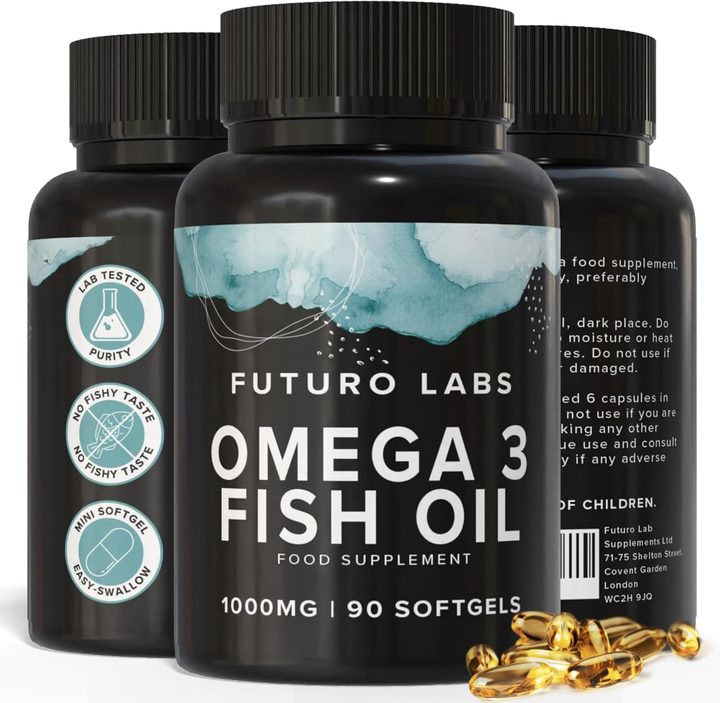
Our brand: the worked example on this page
Futuro Labs Omega 3 Fish Oil
- 17p a day
- 90 softgels, 1 softgel daily
- Lab tested
- Made in the UK
Omega-3 for its own sentences, with no inflammation verb: Futuro Labs Omega 3 Fish Oil on Amazon UK, 1 softgel with food, 180mg EPA and 120mg DHA, 90 for £14.99 at 17p. Full label breakdown. The four kinds of inflammation are on the inflammation page; by how much and by when on the how-long page.
Resolve versus suppress, the distinction that explains everything else on the omega-3 inflammation pages
Does omega-3 take away inflammation is a question the careful-claims flag answers by correcting the verb, because take away implies the thing an anti-inflammatory drug does and omega-3 does something different in kind, and the difference explains why every omega-3 inflammation page on this site reads as slow, modest and hedged. Suppress: an anti-inflammatory drug, ibuprofen or a steroid, blocks the enzymes that make inflammation's mediators, so the response is smaller from the start, within hours of a tablet, the swelling, heat and pain damped because the signals that produce them were never made, a genuine taking-away that works on the day and stops when the tablet wears off, with the costs of suppression, a slower repair, a gut and a kidney at risk, that the drug labels carry. Resolve: inflammation is not only switched on but switched off, by a second set of mediators made once the response has done its work, and EPA and DHA built into cell membranes over three to four months are the raw material of that second set, the resolvins, protectins and maresins that signal the immune cells to stand down, clear the debris and return the tissue to normal, the specialised pro-resolving mediator literature's discovery, so omega-3 does not stop an inflammatory response from happening and does not make it smaller from the start, it helps the response end properly once it is underway, resolution rather than suppression, a different verb acting at a different point on a different clock. Nothing about that is taking away, and everything about it explains the size and the speed of what the trials find.
What resolution looks like in the trials, the claim that does not exist at any verb, the inflammation that should not be taken away, and the verb filed
What resolution looks like in the trials is small and slow because it is resolution: a fraction of a milligram per litre off C-reactive protein at two grams of EPA and DHA a day and more over eight to twelve weeks, only in people whose marker was raised, the CRP meta-analyses' finding, and modestly less pain and stiffness in rheumatoid arthritis at 2.7 to 4 grams for three months and more alongside the disease-modifying treatment that does the suppressing, the one symptomatic file, with nothing in days at any dose because the mediators come from membranes that take months to build, the how-fast page's ladder. A drug that suppresses can be dosed for an effect that afternoon; a fat that resolves can only be built into membranes and left to help each response end a little better over a season, which is why omega-3 will never be an anti-inflammatory in the sense the shelf borrows and why the honest verb for what it does is help resolve rather than take away. The claim does not exist at any verb: no inflammation, anti-inflammatory, resolving, calming or soothing sentence exists for omega-3 on the register, whose entries are heart, brain, vision, triglycerides and blood pressure, so a fish oil may not print any of them and a fish oil sold to take away inflammation has stepped outside the register in the strongest possible wording. The inflammation that should not be taken away is the one a lifter has: post-session inflammation is repair, the first stage of rebuilding trained muscle, and suppressing it with an anti-inflammatory drug around training is now discouraged for exactly that reason, so a reader who wants their post-session inflammation taken away wants less repair, and omega-3, which helps a response resolve rather than suppressing it, is if anything the gentler of the two ideas and still not a target the register or the trials support. A reader with inflammation of the medical kind, a hot joint, a chronic condition or a raised marker, has a GP and a diagnosis before a verb. The verb filed: suppress is a drug's within hours, resolve is omega-3's over months, the trials show resolution's small slow size, no claim exists at any verb, and post-session inflammation is repair to be left alone, with the worked example being omega-3 for its own sentences and no inflammation verb, one softgel at 17p, £14.99 for 90.
| The item | An anti-inflammatory drug | Omega-3 |
|---|---|---|
| The verb | Suppress: block the enzymes that make the mediators | Resolve: supply the mediators that end the response |
| The clock | Hours; stops when the tablet wears off | Months of membrane building; then each response ends a little better |
| The size | A smaller response from the start | A fraction off a marker at two grams and more; modest arthritis symptoms at higher doses with treatment |
| The point of action | Before the response is made | After the response has done its work |
| The claim | A licensed medicine's indications | None at any verb on the register |
| Post-session inflammation | Suppressing it is discouraged: it is repair | Not a target; repair left to resolve on its own |
The verdict, a fat that helps inflammation end rather than stops it starting, and no verb the register allows
Does omega-3 take away inflammation: not in the sense the verb implies, taking away being what an anti-inflammatory drug does by suppressing the enzymes that make inflammation's mediators within hours of a tablet, while omega-3 does something different in kind, EPA and DHA built into membranes over months becoming the resolving mediators that help an inflammatory response end properly once it has done its work, resolution rather than suppression, which is why the trials find a fraction off a marker at two grams over months and modest arthritis symptoms at higher doses with treatment rather than an anti-inflammatory effect on the day, with no inflammation claim existing at any verb and post-session inflammation being repair that should not be taken away by anything. Omega-3 for its own sentences: Futuro Labs Omega 3 Fish Oil, one softgel with food, 180mg EPA and 120mg DHA, 90 for £14.99 at 17p a day.
What to check on the label
- Separate the verbs: suppress is a drug's, resolve is omega-3's.
- Expect resolution's clock: months of membranes, not hours.
- Expect resolution's size: a fraction off a marker; modest symptoms in one disease.
- Hold the register: no claim at any verb.
- Leave post-session inflammation alone: it is repair, and suppressing it is discouraged.
Our brand
The worked example: Futuro Labs Omega 3 Fish Oil
Futuro Labs Omega 3 Fish Oil: 1 softgel daily with food, 1000mg fish oil providing 180mg EPA and 120mg DHA (300mg combined), 90 softgels for £14.99, 17p a day, lab-tested purity, UK GMP made. Gelatin shell, so not vegetarian.
- Fish oil per softgel
- 1000mg
- EPA / DHA per softgel
- 180mg / 120mg (300mg combined)
- Serving
- 1 softgel a day
- Bottle
- 90 softgels, 90 days
- Price
- £14.99 (17p a day)
- Softgel
- mini softgel, no fishy taste
Questions people also ask
Is omega-3 an anti-inflammatory?
Not in the sense a drug is: an anti-inflammatory drug suppresses inflammation by blocking the enzymes that make its mediators within hours, while omega-3 built into membranes over months supplies the resolving mediators that help a response end properly once it has done its work, resolution rather than suppression, slower, smaller and different in kind, with no inflammation claim at any verb.
What are resolvins?
Mediators made from EPA and DHA already in cell membranes once an inflammatory response has done its work, the resolvins, protectins and maresins signalling immune cells to stand down, clear the debris and return the tissue to normal, the mechanism behind omega-3's slow and modest inflammation files and the reason a softgel cannot act like a tablet.
Can fish oil replace ibuprofen for inflammation?
No: ibuprofen suppresses a response within hours and stops when it wears off, omega-3 helps responses resolve a little better after months of membrane building, and the two act at different points on different clocks, so a reader with inflammation of the medical kind has a GP and a diagnosis rather than a substitution.
Should I take away the inflammation after a workout?
No: post-session inflammation is repair, the first stage of rebuilding trained muscle, and suppressing it with an anti-inflammatory drug around training is discouraged for that reason, while omega-3, which helps a response resolve rather than suppressing it, is still not a target the register or the trials support for it.
Why is omega-3's effect on inflammation so small in the trials?
Because it is resolution: a fraction of a milligram per litre off C-reactive protein at two grams and more over eight to twelve weeks in the already inflamed, and modest arthritis symptoms at higher doses alongside treatment, the size and the slowness following from a fat that helps responses end rather than a drug that stops them starting.
Sources
- The specialised pro-resolving mediator literature: EPA and DHA in cell membranes are converted to resolvins, protectins and maresins that help inflammation resolve, a mechanism demonstrated in cell and animal models and in human blood after supplementation, without an authorised inflammation claim for omega-3 in the UK. PubMed record
- Meta-analyses of omega-3 supplementation and C-reactive protein: small reductions in CRP with EPA and DHA at around two grams a day or more over weeks to months, larger where CRP was raised at baseline, a marker effect rather than a treatment of any condition. PubMed record
- Goldberg RJ, Katz J. A meta-analysis of the analgesic effects of omega-3 polyunsaturated fatty acid supplementation for inflammatory joint pain. Pain 2007;129(1-2):210-223. PubMed record
- The delayed-onset muscle soreness time-course literature: soreness after unfamiliar or eccentric exercise begins at eight to twenty-four hours, peaks at twenty-four to seventy-two hours and resolves over five to seven days, with the repeated-bout effect reducing subsequent episodes. PubMed record