Ghost Fitness/Omega-3/Does omega-3 help inflammation after exercise?
Does omega-3 help inflammation after exercise?
The short answer
Probably not usefully: no anti-inflammatory claim exists, the soreness trials show small inconsistent effects, and post-exercise inflammation is partly the adaptation signal training exists to send. Recovery runs on sleep, protein and food; the softgel keeps its heart claim.
- 0 claimsno anti-inflammatory or recovery claim is authorised at any dose
- Small, inconsistentthe soreness and marker trials, at gram doses
- The adaptation questionpost-exercise inflammation partly IS the training signal
- The real leverssleep, protein, food, programming: the recovery desk
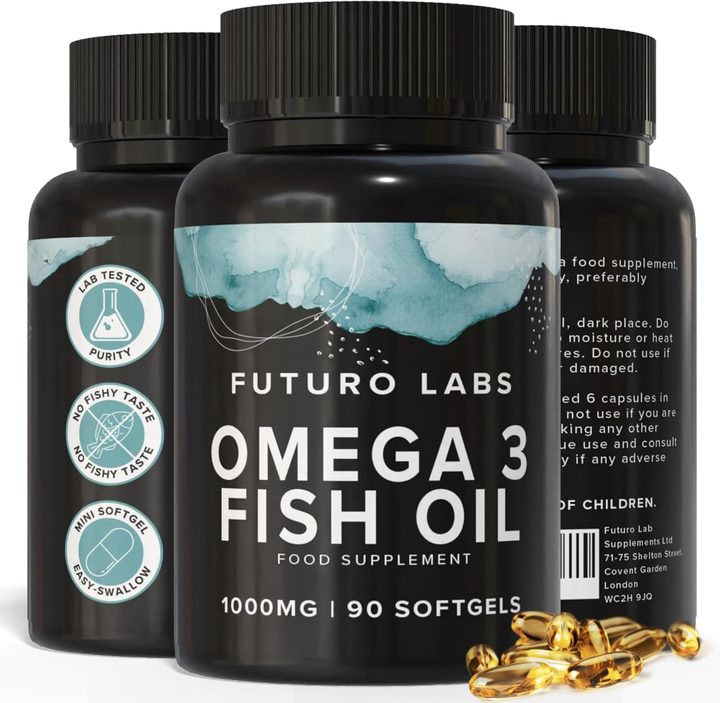
Our brand: the worked example on this page
Futuro Labs Omega 3 Fish Oil
- 17p a day
- 90 softgels, 1 softgel daily
- Lab tested
- Made in the UK
Kept for the claim it holds: Futuro Labs Omega 3 Fish Oil on Amazon UK, 300mg EPA+DHA with dinner, £14.99 for 90 days. Label breakdown. The recovery versus is on EPA vs DHA for recovery; the guide-level framing on the complete guide.
What the evidence actually shows, stated carefully
Three layers of evidence bear on the question and none of them supports a purchase. The regulatory layer: no anti-inflammatory, recovery or soreness claim is authorised for EPA, DHA or fish oil at any dose, the register's silence that this site treats as the first fact on every hopeful page. The trial layer: the exercise studies, mostly gram-scale doses against soreness ratings and inflammatory markers after damaging protocols, return the pattern the recovery pages grade, small effects in some trials, nothing in others, marker changes that do not reliably translate into feeling or performing better, a literature interesting enough to continue and thin enough to promise nothing. And the mechanistic layer, often quoted as if it settled things, runs the other way as evidence: EPA and DHA genuinely feed the body's inflammation-resolving chemistry, which explains the research interest and licenses no shelf expectation, mechanism being the start of a case rather than its verdict, the distinction this site's careful-claims pages exist to hold. Stack the layers and the honest reading is a firm probably not usefully, at everyday doses very probably not at all.
The adaptation question, and where the recovery money honestly goes
The deeper reason to hesitate is that the question's premise, inflammation after exercise is an enemy, is itself under review. The post-exercise inflammatory response is part of the signalling that drives repair and adaptation, the very process training exists to provoke, and the recovery literature carries a live, unresolved question about whether blunting that signal with supplements, the concern first raised around high-dose antioxidants, might trim the adaptation along with the discomfort. For omega-3 at shelf doses the honest position is that neither the benefit nor the blunting is demonstrated, which cuts both ways: no purchase case, and no alarm either, the everyday softgel sitting far below the trial doses and bought for a different claim entirely. So the recovery money goes where every recovery page here sends it: sleep, the largest trainable lever; protein at 1.6-to-2.2g per kilogram, the mandated repair substrate; food and fluid refilling what sessions spent; and programming that fits capacity, since inflammation that never settles is usually a volume problem in a supplement costume. Genuinely unusual responses, severe swelling, one-sided heat, dark urine, are same-day medical matters, not aisle ones. The softgel stays in the routine for its 250mg heart claim, indifferent to the training diary, exactly as the evidence describes it.
| The layer | What it shows | The reading |
|---|---|---|
| Authorised claims | None: no anti-inflammatory or recovery mandate | The first fact, as always |
| Soreness and marker trials | Small, inconsistent effects at gram doses | Interesting, unpromising |
| Mechanism (resolution chemistry) | Real, and not a verdict | The start of a case, never the end |
| The adaptation question | Inflammation partly IS the training signal | Blunting it may not even be the goal |
| Everyday 300mg doses | Far below anything the trials tested | No purchase case, and no alarm either |
| The recovery desk | Sleep, protein, food, programming | Where the money and attention belong |
The verdict, and the softgel's honest role on training days
Does omega-3 help inflammation after exercise: probably not usefully, on a record with no authorised claim, thin and inconsistent trials at doses several times the everyday softgel, and a premise, that the inflammation needs fighting, which the adaptation literature itself questions. The honest training-day protocol is unchanged from any other day: recover on sleep, protein, food and sensible programming, escalate unusual responses to a professional, and keep the capsule for the job it verifiably does. The worked example is priced for exactly that indifference: Futuro Labs Omega 3 Fish Oil, one mini softgel with dinner, 300mg of EPA and DHA maintaining the heart-function claim at 17p, £14.99 for 90 days, lab-tested, UK made, taken after leg day and rest day alike, for reasons that never mentioned either.
What to check on the label
- No anti-inflammatory or recovery claim exists: the register is silent.
- The trials are small and inconsistent: at gram doses, on markers and soreness.
- Mechanism is not a verdict: resolution chemistry starts a case, never ends one.
- Inflammation is partly the adaptation signal: blunting it may not be the goal.
- Recovery runs on sleep, protein, food, programming: the softgel keeps its heart claim.
Our brand
The worked example: Futuro Labs Omega 3 Fish Oil
Futuro Labs Omega 3 Fish Oil: 1 softgel daily with food, 1000mg fish oil providing 180mg EPA and 120mg DHA (300mg combined), 90 softgels for £14.99, 17p a day, lab-tested purity, UK GMP made. Gelatin shell, so not vegetarian.
- Fish oil per softgel
- 1000mg
- EPA / DHA per softgel
- 180mg / 120mg (300mg combined)
- Serving
- 1 softgel a day
- Bottle
- 90 softgels, 90 days
- Price
- £14.99 (17p a day)
- Softgel
- mini softgel, no fishy taste
Questions people also ask
Is omega-3 anti-inflammatory?
It feeds the body's inflammation-resolving chemistry, which is real mechanism and no authorised claim: at shelf doses, no useful anti-inflammatory effect is demonstrated.
Should I take fish oil after hard sessions to reduce inflammation?
The trials at gram doses show small, inconsistent effects, and everyday doses sit far below them: the recovery levers that work are sleep, protein, food and programming.
Could omega-3 blunt my training adaptations?
Not demonstrated either: the blunting concern is established for high-dose antioxidants and open for omega-3. At everyday doses, neither benefit nor blunting has evidence.
What actually reduces soreness between sessions?
Time, sleep, adequate protein and food, and programming that fits your capacity: soreness that never settles is usually a volume problem, not a supplement gap.
When is post-exercise inflammation a medical matter?
When it is unusual for you: severe swelling, one-sided heat, or dark urine are same-day medical conversations, never aisle ones.
Sources
- Review evidence on omega-3 supplementation and exercise-induced muscle damage and soreness: small positive findings mainly in untrained participants, mixed-to-null results in trained populations. PubMed record
- Research on exercise-induced inflammation as part of the adaptive training signal, and whether blunting it with supplements is desirable: an open question in the recovery literature. PubMed record
- McGlory C, Calder PC, Nunes EA. The influence of omega-3 fatty acids on skeletal muscle protein turnover in health, disuse, and disease. Frontiers in Nutrition 2019;6:144. PubMed record
- EFSA Panel on Dietetic Products, Nutrition and Allergies. Scientific Opinion on the substantiation of health claims related to magnesium. EFSA Journal 2010;8(10):1807. https://efsa.onlinelibrary.wiley.com/doi/10.2903/j.efsa.2010.1807
- EFSA Panel on Dietetic Products. Scientific opinion on the substantiation of health claims related to EPA and DHA and normal function of the heart (250mg daily condition of use). EFSA Journal 2010;8(10):1796. https://www.efsa.europa.eu/en/efsajournal/pub/1796