Ghost Fitness/Omega-3/Does omega-3 help muscle recovery?
Does omega-3 help muscle recovery?
The short answer
Modestly, on one measure, and the review is best read by what it measured. Perceived soreness: small reductions with omega-3 at around two to three grams a day taken for weeks before the damaging session. Damage markers: modest reductions in some trials. Function, strength loss and range of motion: not consistently restored. The effect depends on months of prior intake, not a softgel after training, and no recovery claim exists.
- Perceived sorenesssmall reductions at two to three grams a day taken for weeks before the session
- Damage and inflammatory markersmodest reductions in creatine kinase and some markers in some trials
- Functionstrength loss and range of motion not consistently restored: the measure that matters and the one that did not move
- The conditionsprior intake over weeks to months; not a post-training softgel; no recovery claim
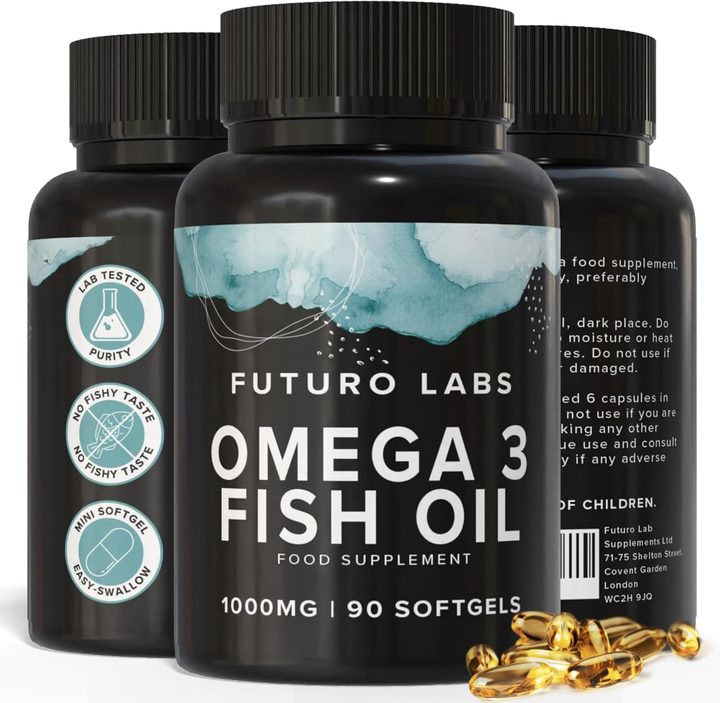
Our brand: the worked example on this page
Futuro Labs Omega 3 Fish Oil
- 17p a day
- 90 softgels, 1 softgel daily
- Lab tested
- Made in the UK
Omega-3 by the oily-fish audit, with the soreness bonus at higher rungs: Futuro Labs Omega 3 Fish Oil on Amazon UK, 1 softgel with food, 180mg EPA and 120mg DHA, 90 for £14.99 at 17p. Full label breakdown. The after-workout clock is on the after-workout page; the gym flagship on the gym page.
Modestly, on one measure, and the review read by what it measured, soreness, markers and function
Does omega-3 help muscle recovery, and the thirteen variants asking about fish oil for recovery, repair and workout recovery, are answered modestly and on one measure, and the honest way to say it is to read the review by what it measured, because recovery is three things and omega-3 moved one of them. The review pools the randomised trials that gave omega-3 before an exercise session designed to damage muscle, eccentric contractions, downhill running, an unfamiliar heavy session, and measured recovery over the days after. Perceived soreness: the trials found small reductions in how sore participants rated themselves at twenty-four to seventy-two hours after the session with omega-3 against placebo, at doses around two to three grams of EPA and DHA a day, taken for weeks and in some trials months before the session, the DOMS review's most consistent finding and a modest one, a point or so on a soreness scale. Damage and inflammatory markers: creatine kinase, the enzyme that leaks from damaged fibres, and some inflammatory markers were modestly lower in some trials and unchanged in others, a mixed signal that leans toward less measured damage. Function: the recovery of strength, jump height and range of motion over the days after the session, the measure a lifter actually cares about because it decides when the next hard session can happen, was not consistently restored faster with omega-3, the trials that measured it finding the same strength loss and the same return whether or not the participants had taken fish oil, the review's honest limit and the reason recovery here is one measure rather than three.
The conditions the effect depends on, what recovery actually runs on, the forum reports, and the review filed
The conditions the effect depends on narrow it further. Prior intake: every trial that found something gave omega-3 for weeks or months before the damaging session, because the mechanism runs through EPA and DHA already built into muscle membranes, the index kinetics literature's months-long clock, so a softgel swallowed after a session does nothing for that session's recovery and a habit of weeks does a little for the sessions to come, the after-workout page's finding. Dose: two to three grams a day in the trials, seven to ten standard softgels or two or three concentrate softgels, not the standard softgel a rung-one reader takes, so the soreness bonus belongs to the higher rungs and a reader on 300mg should expect none of it. Population: untrained or unaccustomed participants doing an unfamiliar damaging session, in whom soreness is largest, rather than trained lifters doing their usual work, in whom the repeated-bout effect has already blunted it. What recovery actually runs on is the recovery scorecard's list, in order of effect: the repeated-bout effect from gradual progression, sleep, protein at around 1.6 grams per kilogram across the day, carbohydrate to restore glycogen, a deload after stacked weeks, less alcohol, hydration and light movement on sore days, with omega-3 a line at the bottom scored only at the higher rungs after months, and no recovery, repair or soreness claim existing for it on the register. The forum reports, since the variants ask, describe the soreness measure felt by a reader on a gram or more for months, or the post-training meal the softgel was taken with, or expectation, and never a faster return of strength, which the trials did not find. The review filed: perceived soreness modestly reduced, some markers modestly reduced, function not consistently restored, at two to three grams a day for weeks before rather than a softgel after, in the unaccustomed more than the trained, with no claim, and the worked example being omega-3 by the oily-fish audit with the soreness bonus reserved for the higher rungs, one softgel at 17p, £14.99 for 90.
| The measure | The finding | The note |
|---|---|---|
| Perceived soreness | Small reductions at twenty-four to seventy-two hours | The most consistent finding; a point or so on a scale |
| Creatine kinase and inflammatory markers | Modestly lower in some trials, unchanged in others | Leans toward less measured damage |
| Strength, jump and range of motion | Not consistently restored faster | The measure that decides the next session; did not move |
| The dose and timing | Two to three grams a day for weeks or months before the session | Not a standard softgel; not a post-training softgel |
| The population | Unaccustomed participants doing an unfamiliar damaging session | Trained lifters have the repeated-bout effect already |
| The claim | None for recovery, repair or soreness | Omega-3 by the oily-fish audit; the bonus at higher rungs |
The verdict, a little less sore, no faster back to strength, and months of grams to get even that
Does omega-3 help muscle recovery: modestly and on one measure, the review of omega-3 and exercise-induced muscle damage finding small reductions in perceived soreness at two to three grams a day taken for weeks or months before the damaging session, modest and mixed reductions in creatine kinase and some inflammatory markers, and no consistent faster recovery of strength, jump height or range of motion, the measure that decides the next session, with the effect depending on prior intake through the months-long membrane clock rather than a softgel after training, appearing in unaccustomed participants more than trained lifters, and carrying no recovery claim, so that recovery runs on the repeated-bout effect, sleep, protein, carbohydrate and a deload and omega-3 is a small bonus at the higher rungs. Omega-3 by the audit: Futuro Labs Omega 3 Fish Oil, one softgel with food, 180mg EPA and 120mg DHA, 90 for £14.99 at 17p a day.
What to check on the label
- Read recovery as three measures: soreness, markers, function.
- Credit omega-3 with the first: modestly, at grams, over months.
- Expect nothing on function: strength returns on its own clock.
- Take it before the months, not after the session: the membrane clock.
- Run recovery on its real levers: progression, sleep, protein, carbohydrate, a deload.
Our brand
The worked example: Futuro Labs Omega 3 Fish Oil
Futuro Labs Omega 3 Fish Oil: 1 softgel daily with food, 1000mg fish oil providing 180mg EPA and 120mg DHA (300mg combined), 90 softgels for £14.99, 17p a day, lab-tested purity, UK GMP made. Gelatin shell, so not vegetarian.
- Fish oil per softgel
- 1000mg
- EPA / DHA per softgel
- 180mg / 120mg (300mg combined)
- Serving
- 1 softgel a day
- Bottle
- 90 softgels, 90 days
- Price
- £14.99 (17p a day)
- Softgel
- mini softgel, no fishy taste
Questions people also ask
Does fish oil reduce muscle soreness?
Modestly: the review of omega-3 and exercise-induced muscle damage finds small reductions in perceived soreness at twenty-four to seventy-two hours after a damaging session, a point or so on a scale, at two to three grams of EPA and DHA a day taken for weeks or months before, in unaccustomed participants more than trained lifters.
Does fish oil help you recover strength faster after training?
Not on the trials: the recovery of strength, jump height and range of motion over the days after a damaging session was not consistently faster with omega-3, the measure that decides when the next hard session can happen being the one that did not move.
Should I take fish oil after a workout for recovery?
The hour makes no difference: the effect the trials found depends on EPA and DHA already built into muscle membranes over weeks to months, so a softgel after a session does nothing for that session and a habit of months does a little for the sessions to come, with the post-training meal a fine anchor for its fat.
How much fish oil did the muscle recovery studies use?
Around two to three grams of EPA and DHA a day, seven to ten standard softgels or two or three concentrate softgels, for weeks or months before the damaging session, so the soreness bonus belongs to the higher rungs and a reader on one standard softgel should expect none of it.
What actually helps muscle recovery most?
The repeated-bout effect from gradual progression, sleep, protein at around 1.6 grams per kilogram across the day, carbohydrate to restore glycogen, a deload after stacked weeks, less alcohol, hydration and light movement on sore days, with omega-3 a line at the bottom of the scorecard.
Sources
- Review evidence on omega-3 supplementation and exercise-induced muscle damage and soreness: small positive findings mainly in untrained participants, mixed-to-null results in trained populations. PubMed record
- Reviews of omega-3 supplementation and exercise performance: no consistent improvement in strength, power, endurance or performance tests in trained adults, with the more consistent findings being modest reductions in perceived soreness and inflammatory markers at gram-and-above doses over weeks. PubMed record
- The delayed-onset muscle soreness time-course literature: soreness after unfamiliar or eccentric exercise begins at eight to twenty-four hours, peaks at twenty-four to seventy-two hours and resolves over five to seven days, with the repeated-bout effect reducing subsequent episodes. PubMed record
- The protein intake and resistance training literature: meta-analyses support intakes around 1.6g per kilogram of body weight daily for maximising resistance-training gains, with diminishing returns above. PubMed record