Ghost Fitness/Omega-3/Is omega-3 good for gym?
Is omega-3 good for gym?
The short answer
Four questions. Does it build muscle: no, the four-gram trial raised protein synthesis without measuring size and the review finds no hypertrophy in the trained. Does it help recovery: modestly at best, at gram-and-above doses over weeks. Does it improve performance: no. Should a lifter take it: most should, not for the gym but because a training diet rarely holds two fish portions a week, so the heart claim and the index are reached by a softgel.
- Muscleno: synthesis raised at four grams in a laboratory; size unmeasured; no hypertrophy in trained young adults; protein holds the growth claim
- Recoverymodest at best: small reductions in perceived soreness at gram-and-above doses over weeks in the DOMS review
- Performanceno: no consistent strength, power or endurance effect in the reviews
- Should a lifter take itmost should, by the oily-fish audit: 250mg for the heart claim in one softgel, a gram for the index in three
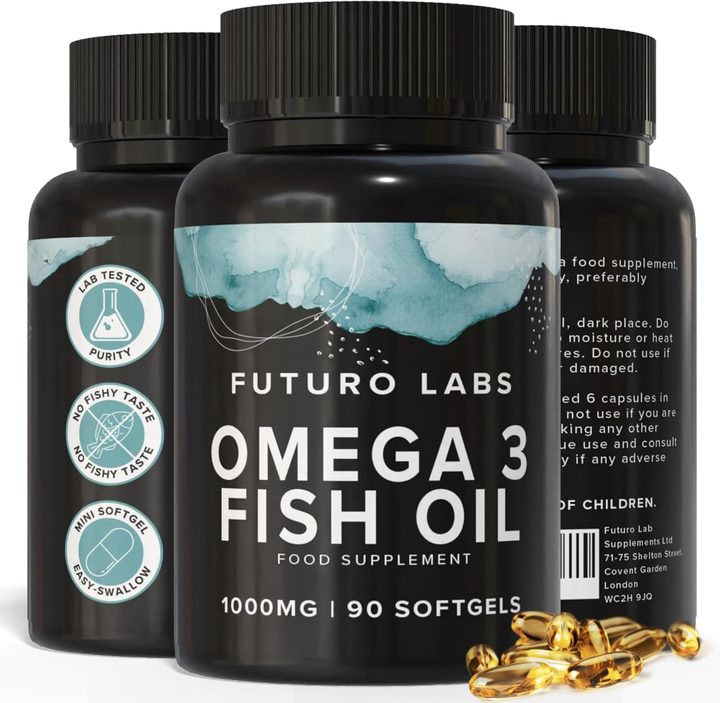
Our brand: the worked example on this page
Futuro Labs Omega 3 Fish Oil
- 17p a day
- 90 softgels, 1 softgel daily
- Lab tested
- Made in the UK
The lifter's standard softgel, by the oily-fish audit: Futuro Labs Omega 3 Fish Oil on Amazon UK, 1 softgel with food, 180mg EPA and 120mg DHA, lab-tested purity, UK GMP made, 90 for £14.99 at 17p. Full label breakdown. The muscle growth dose is on the muscle growth page; the athletes dose ladder on the athletes dose page.
The four questions a lifter asks, and the first three answered, muscle, recovery and performance
Is omega-3 good for the gym, and the long list of variants asking whether fish oil helps lifting, bodybuilding, athletes and sport, all reduce to four questions a lifter asks, and the honest page answers each. Does it build muscle: no. The trial the growth story rests on gave four grams of EPA and DHA a day for eight weeks and found the rate of muscle protein synthesis raised in response to a simulated meal, in a laboratory, without measuring muscle size, strength or composition, a mechanism rather than an outcome, and the review that pulls the muscle trials together finds no consistent gain in muscle size or strength from omega-3 in trained young adults, the clearer signals being in older adults losing muscle and in people immobilised or ill, so a lifter taking fish oil for size is taking a dose whose mechanism is real and whose outcome, in their population, the evidence does not find, and protein holds the register's only growth claim. Does it help recovery: modestly at best. The review of omega-3 and exercise-induced muscle damage finds small reductions in perceived soreness and in some damage markers at gram-and-above doses taken for weeks before the session, not from a softgel after it, a bonus rather than a reason, with sleep, protein, carbohydrate and the repeated-bout effect moving recovery far more, the recovery scorecard's finding. Does it improve performance: no. The reviews of omega-3 and exercise performance find no consistent improvement in strength, power, endurance or performance tests in trained adults, the consistent findings being the modest soreness and inflammatory-marker effects above, so a lifter expecting a heavier bar or a longer run from a softgel has expected something the evidence has looked for and not found, and no performance claim exists for omega-3 on the register.
The fourth question, which is the one that matters, the audit that answers it, the honest yield, and the gym filed
Should a lifter take it is the fourth question and the one that matters, and the answer is that most lifters should, for a reason that has nothing to do with the gym: a training diet rarely holds the two portions of fish a week, one oily, that UK advice sets, the plate of rice, chicken, eggs and whey being high in protein and empty of EPA and DHA, so most lifters sit at a low omega-3 status permanently and miss the 250mg of EPA and DHA a day that the register's heart-function claim needs, and the gram a day that the omega-3 index research associates with a red-cell EPA and DHA level the observational studies favour. The audit that answers it is the oily-fish audit: a lifter who eats salmon, mackerel, sardines or herring twice a week needs no softgel and takes none, and a lifter who eats fish rarely, which is most, takes one standard softgel for the 250mg heart claim or three, or one concentrate, for the gram of the index, at the fattiest meal, for those reasons and not for the gym. The honest yield of that habit is the register's sentences, the maintenance of normal heart function at 250mg, of normal brain function and vision at 250mg of DHA, and of normal triglycerides and blood pressure at two and three grams for a reader with those reasons, an index built over three to four months, and, as a small bonus at the higher rungs, a little less soreness, with nothing on the bar and nothing in the mirror. The gym-specific notes: the softgel goes with the post-training or evening meal for its fat and never fasted before a session, where it refluxes under a bar; a competitor in a tested sport takes only a certified product; and a lifter chasing the four-gram research rung takes a concentrate with the atrial fibrillation signal and the antiplatelet note in mind and a reason beyond muscle. The gym filed: omega-3 does not build muscle, helps recovery modestly at most, does not improve performance, and is worth taking for most lifters because their diets leave the heart claim and the index unbuilt, with the worked example being the lifter's standard softgel by the oily-fish audit, one at 17p, £14.99 for 90.
| The question | The evidence | The answer |
|---|---|---|
| Does it build muscle? | Synthesis raised at four grams; size unmeasured; no hypertrophy in the trained; protein holds the growth claim | No |
| Does it help recovery? | Small reductions in soreness at gram-and-above doses over weeks | Modestly at best; a bonus, not a reason |
| Does it improve performance? | No consistent strength, power or endurance effect in the reviews | No |
| Should a lifter take it? | A training diet rarely holds two fish portions a week; the heart claim and the index sit unbuilt | Most should, by the oily-fish audit |
| The honest yield | The register's sentences; an index built over months | Nothing on the bar or in the mirror |
| The gym notes | With the post-training or evening meal, never fasted before a session; certified if tested | The softgel's place |
The verdict, not good for the gym and worth taking anyway
Is omega-3 good for the gym: not in the sense the question means, since it does not build muscle, the four-gram trial having raised protein synthesis in a laboratory without measuring size and the review finding no hypertrophy in trained young adults, helps recovery modestly at best at gram-and-above doses over weeks, and does not improve strength, power or endurance on the reviews, and worth taking for most lifters anyway, because a training diet rarely holds two fish portions a week and leaves the register's 250mg heart claim and the omega-3 index unbuilt, which one standard softgel or three at the fattiest meal reaches, taken for those reasons and not for the bar. The lifter's standard softgel: Futuro Labs Omega 3 Fish Oil, one with food, 180mg EPA and 120mg DHA, lab-tested purity, 90 for £14.99 at 17p a day.
What to check on the label
- Drop the muscle expectation: synthesis in a lab, not size in a lifter.
- Count recovery as a small bonus: at gram-and-above doses over weeks.
- Expect nothing on the bar: no performance effect in the reviews.
- Run the oily-fish audit: two portions a week, or a softgel.
- Take it with the post-training or evening meal: never fasted before a session.
Our brand
The worked example: Futuro Labs Omega 3 Fish Oil
Futuro Labs Omega 3 Fish Oil: 1 softgel daily with food, 1000mg fish oil providing 180mg EPA and 120mg DHA (300mg combined), 90 softgels for £14.99, 17p a day, lab-tested purity, UK GMP made. Gelatin shell, so not vegetarian.
- Fish oil per softgel
- 1000mg
- EPA / DHA per softgel
- 180mg / 120mg (300mg combined)
- Serving
- 1 softgel a day
- Bottle
- 90 softgels, 90 days
- Price
- £14.99 (17p a day)
- Softgel
- mini softgel, no fishy taste
Questions people also ask
Should I take omega-3 as an athlete or lifter?
Most should, by the oily-fish audit rather than for the gym: a training diet rarely holds two fish portions a week, so the 250mg heart claim and the omega-3 index sit unbuilt, reached by one standard softgel or three at the fattiest meal, while a lifter who eats oily fish twice a week takes none.
Does fish oil help with lifting or bodybuilding?
Not on the outcomes a lifter wants: the four-gram trial raised muscle protein synthesis in a laboratory without measuring size, the review finds no hypertrophy or strength gain in trained young adults, and protein holds the register's only growth claim.
Does omega-3 help recovery after training?
Modestly at best: the review of omega-3 and exercise-induced muscle damage finds small reductions in perceived soreness at gram-and-above doses taken for weeks before the session, a bonus beside sleep, protein, carbohydrate and gradual progression, which move recovery far more.
Does omega-3 improve athletic performance?
No: the reviews find no consistent improvement in strength, power, endurance or performance tests in trained adults, and no performance claim exists for omega-3 on the register.
What are the actual benefits of fish oil for someone who trains?
The register's sentences, the maintenance of normal heart function at 250mg of EPA and DHA, of normal brain function and vision at 250mg of DHA, and of normal triglycerides and blood pressure at two and three grams for those with the reason, plus an omega-3 index built over months, none of it visible on the bar.
Sources
- Smith GI, Atherton P, Reeds DN, et al. Dietary omega-3 fatty acid supplementation increases the rate of muscle protein synthesis in older adults: a randomized controlled trial. American Journal of Clinical Nutrition 2011;93(2):402-412. PubMed record
- McGlory C, Calder PC, Nunes EA. The influence of omega-3 fatty acids on skeletal muscle protein turnover in health, disuse, and disease. Frontiers in Nutrition 2019;6:144. PubMed record
- Reviews of omega-3 supplementation and exercise performance: no consistent improvement in strength, power, endurance or performance tests in trained adults, with the more consistent findings being modest reductions in perceived soreness and inflammatory markers at gram-and-above doses over weeks. PubMed record
- Scientific Advisory Committee on Nutrition and Committee on Toxicity. Advice on fish consumption: benefits and risks (two portions of fish a week, one oily). TSO, 2004. https://www.gov.uk/government/publications/sacn-advice-on-fish-consumption-benefits-and-risks