Ghost Fitness/Omega-3/Is omega-3 good for working out?
Is omega-3 good for working out?
The short answer
The session and the softgel are strangers, in both directions. A workout does nothing to omega-3: no meaningful sweat loss, no extra demand, no depletion. Omega-3 does nothing to a workout: no performance effect, no energy, no acute recovery. So whether to take fish oil if you work out is the oily-fish audit, with two notes: never a fasted softgel before training, and the post-training meal as an anchor.
- What a workout does to omega-3nothing: no meaningful sweat loss, no extra demand, no depletion of a membrane pool
- What omega-3 does to a workoutnothing: no performance, energy or acute recovery effect; modest soreness at grams over months only
- The decisionthe oily-fish audit: fewer than two fish portions a week, one oily, a softgel
- The two session notesnever fasted before training; the post-training meal as an anchor for its fat
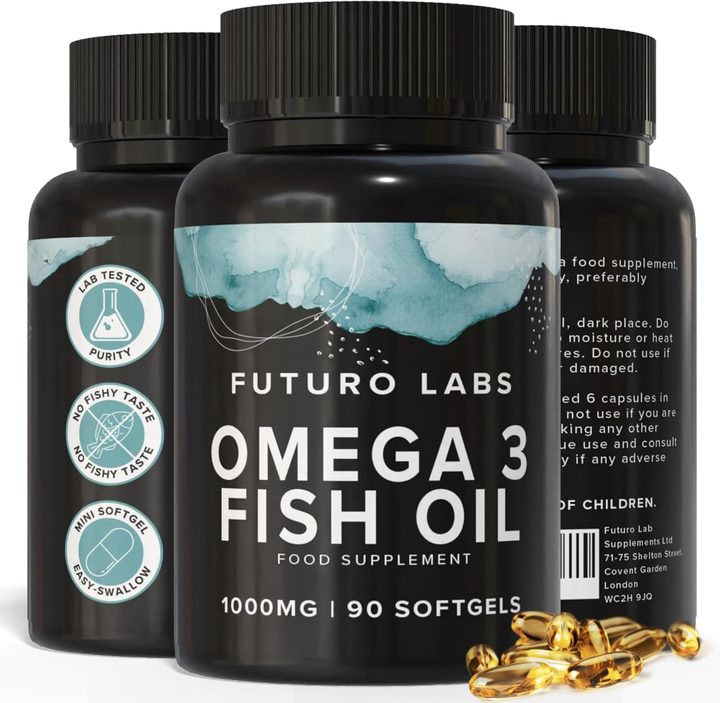
Our brand: the worked example on this page
Futuro Labs Omega 3 Fish Oil
- 17p a day
- 90 softgels, 1 softgel daily
- Lab tested
- Made in the UK
The softgel that ignores the session and is taken for the plate: Futuro Labs Omega 3 Fish Oil on Amazon UK, 1 softgel with the post-training or evening meal, 180mg EPA and 120mg DHA, 90 for £14.99 at 17p. Full label breakdown. The gym flagship is here; the before-workout stomach on the before-workout page.
Two directions of indifference, what a workout does to omega-3 and what omega-3 does to a workout
Is omega-3 good for working out, and the variants asking whether it is good when working out and whether to take fish oil if you work out, are answered by noticing that the session and the softgel are strangers in both directions, and the two directions are worth walking separately. What a workout does to omega-3: nothing. Sweat carries no meaningful EPA and DHA, so a session loses none, the contrast with magnesium's tens of milligrams a session and sodium's grams; training raises no demand for omega-3, no fibre spending it the way a set spends magnesium-ATP; and the membrane pool that omega-3 lives in changes over months on average intake and is indifferent to whether any given day held a session, the depletes page's you-do-not-lose-it, so a lifter who trains five times a week and one who trains none have the same omega-3 status on the same plate, the plate and not the programme deciding it. What omega-3 does to a workout: nothing acute and nothing chronic on performance. No energy, since a fat that builds into membranes over months has no effect on the hour; no strength, power or endurance, the reviews of omega-3 and exercise performance finding no consistent improvement in trained adults; no acute recovery, the modest reduction in perceived soreness in the review needing two to three grams a day for months before the session and reaching neither a standard softgel nor a faster return of strength; and no muscle, the gym flagship's first answer. Two directions, both empty, and a question that has no gym-specific answer at all.
The decision that is left, which is the audit, the two notes that touch the session, and the strangers filed
The decision that is left is the same one everybody makes, the oily-fish audit: a reader who eats fewer than the two fish portions a week UK advice sets, one of them oily, misses the 250mg of EPA and DHA a day the register's heart-function claim needs and sits at a low omega-3 status, and takes a standard softgel for the claim or three for the index, while a reader who eats oily fish twice a week takes none, working out changing neither side of the audit, and a training diet of rice, chicken and whey being the reason most people who work out end up on the softgel side, the bodybuilder's ledger's two standing reasons. Two notes touch the session, and they are the only place the softgel and the workout meet. Never fasted before training: a softgel swallowed on an empty stomach an hour before a session floats in the stomach and refluxes as the reader bends, braces and lies flat on a bench, the fishy burp mid-set, and a softgel with a fatty meal near a session slows the stomach through it, so the pre-workout hour is the worst slot on the clock for a fish oil, the before-workout page's two reasons. The post-training meal as an anchor: it is fatty, reliably eaten and followed by an upright hour, so a softgel beside it absorbs well, burps little and is remembered, with dinner covering rest days since a months-long pool needs every day, the after-workout page's finding that the anchor is the meal's virtue and not the session's. A reader who wants a supplement that does something for a workout has the ranked shelf, protein, creatine and, in winter, vitamin D, with omega-3 fourth for the plate's sake. The strangers filed: a workout doing nothing to omega-3 and omega-3 doing nothing to a workout, the decision being the oily-fish audit, and the session touched only by the never-fasted-before rule and the post-training anchor, with the worked example being the softgel that ignores the session and is taken for the plate, one at 17p, £14.99 for 90.
| The direction | The finding | The consequence |
|---|---|---|
| A workout on omega-3 | No sweat loss, no extra demand, no depletion of a months-long pool | The plate decides status, not the programme |
| Omega-3 on a workout | No energy, performance or acute recovery; modest soreness at grams over months | Nothing in the session |
| The decision | The oily-fish audit: two fish portions a week, one oily, or a softgel | The same as anyone's |
| Before training | A fasted softgel refluxes under a bar; a fatty meal near a session slows the stomach | Never in the pre-workout hour |
| After training | A fatty, reliable meal with an upright hour | A good anchor; dinner on rest days |
| The shelf for the session | Protein, creatine, vitamin D in winter | Omega-3 fourth, for the plate's sake |
The verdict, a softgel and a session that never meet, and an audit that ignores the gym
Is omega-3 good for working out: neither good nor bad for it, the session and the softgel being strangers in both directions, a workout doing nothing to omega-3 since sweat carries none, training demands none and the membrane pool changes over months on the plate alone, and omega-3 doing nothing to a workout since it has no energy, performance or acute recovery effect and its modest soreness effect needs grams over months, so that whether to take fish oil if you work out is the oily-fish audit like anyone's, with the only two places the softgel and the session meet being the rule against a fasted softgel before training and the post-training meal's usefulness as an anchor. The softgel taken for the plate: Futuro Labs Omega 3 Fish Oil, one with the post-training or evening meal, 180mg EPA and 120mg DHA, 90 for £14.99 at 17p a day.
What to check on the label
- Expect the session to do nothing to omega-3: no loss, no demand.
- Expect omega-3 to do nothing to the session: no energy, no performance.
- Run the oily-fish audit: the gym is not a factor.
- Never take a fasted softgel before training: it refluxes under a bar.
- Anchor to the post-training meal: for its fat, with dinner on rest days.
Our brand
The worked example: Futuro Labs Omega 3 Fish Oil
Futuro Labs Omega 3 Fish Oil: 1 softgel daily with food, 1000mg fish oil providing 180mg EPA and 120mg DHA (300mg combined), 90 softgels for £14.99, 17p a day, lab-tested purity, UK GMP made. Gelatin shell, so not vegetarian.
- Fish oil per softgel
- 1000mg
- EPA / DHA per softgel
- 180mg / 120mg (300mg combined)
- Serving
- 1 softgel a day
- Bottle
- 90 softgels, 90 days
- Price
- £14.99 (17p a day)
- Softgel
- mini softgel, no fishy taste
Questions people also ask
Should I take fish oil if I work out?
By the oily-fish audit, not because of the workout: a reader who eats fewer than two fish portions a week, one oily, takes a softgel for the 250mg heart claim a low-fish diet leaves unmet, and a reader who eats oily fish twice a week takes none, the session changing neither side of the audit.
Does working out use up omega-3?
No: sweat carries no meaningful EPA and DHA, training raises no demand for it, and the membrane pool omega-3 lives in changes over months on average intake, indifferent to whether any day held a session, so the plate and not the programme decides status.
Does omega-3 improve workouts?
No: the reviews of omega-3 and exercise performance find no consistent strength, power or endurance improvement in trained adults, a fat that builds into membranes over months has no effect on the hour, and the modest soreness effect needs two to three grams a day for months before a session.
When should I take fish oil around a workout?
Never fasted in the hour before, when it floats and refluxes as you bend, brace and bench, and never with a fatty meal near a session, which slows the stomach; with the post-training meal, which is fatty, reliable and followed by an upright hour, or with dinner on rest days.
What supplements actually help workouts?
Protein for the growth claim, creatine for the one performance claim at three grams a day, and vitamin D through the UK winter for muscle function, with omega-3 fourth on the shelf for the plate's sake rather than the session's.
Sources
- Reviews of omega-3 supplementation and exercise performance: no consistent improvement in strength, power, endurance or performance tests in trained adults, with the more consistent findings being modest reductions in perceived soreness and inflammatory markers at gram-and-above doses over weeks. PubMed record
- Maughan RJ, Shirreffs SM. Muscle cramping during exercise: causes, solutions, and questions remaining. Sports Medicine 2019;49(Suppl 2):115-124. PubMed record
- The omega-3 index kinetics literature: red-cell EPA and DHA rise over three to four months of daily intake and fall over a similar period after stopping, the index changing on a clock of months rather than days, with no acute effect of a single dose. PubMed record
- The gastric emptying literature: fat slows gastric emptying more than carbohydrate or protein, so a fatty meal or an oil taken shortly before exercise leaves more in the stomach during the session and is the usual advice to avoid before training. PubMed record