Ghost Fitness/Omega-3/Is omega-3 good for muscles?
Is omega-3 good for muscles?
The short answer
Not on the register: the muscle sentences belong to protein, which contributes to a growth in muscle mass, creatine, which improves performance in repeated short bursts, and magnesium and vitamin D, which contribute to normal muscle function, and omega-3 holds none of them. What omega-3 does in a fibre is real and claimless: membrane fluidity over months, a raised synthesis response at four grams in a laboratory, and protection in those losing muscle.
- The muscle rosterprotein: growth in muscle mass; creatine: performance in repeated short bursts; magnesium and vitamin D: normal muscle function; omega-3: none
- In the fibreEPA and DHA build into membranes over months: fluidity and signalling change
- The laboratory findingfour grams for eight weeks: a raised synthesis response to a simulated meal; no size measured
- Where it protectsolder adults and immobilised limbs at two to four grams; nothing in trained young adults
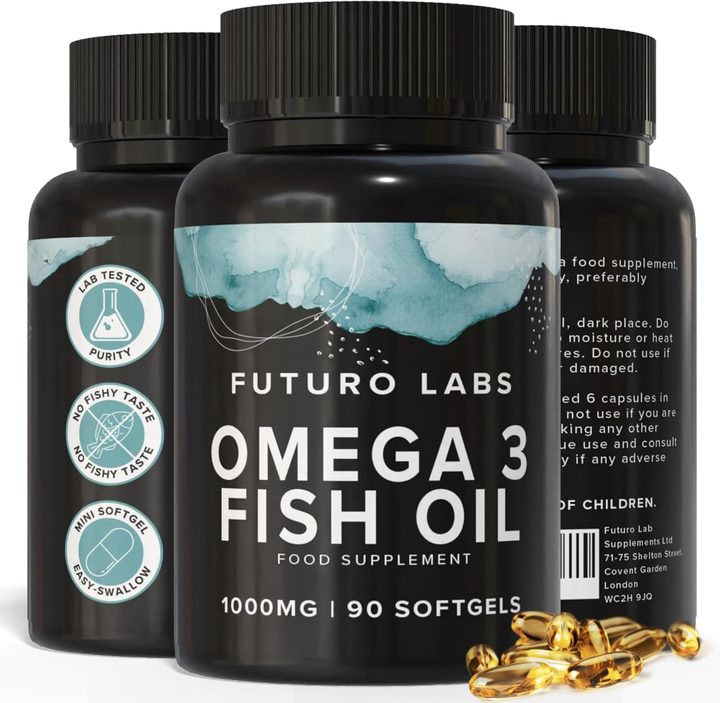
Our brand: the worked example on this page
Futuro Labs Omega 3 Fish Oil
- 17p a day
- 90 softgels, 1 softgel daily
- Lab tested
- Made in the UK
Omega-3 for its own sentences beside the muscle roster: Futuro Labs Omega 3 Fish Oil on Amazon UK, 1 softgel with food, 180mg EPA and 120mg DHA, 90 for £14.99 at 17p. Full label breakdown. The magnesium muscle-function dossier is on the muscle function page; protect versus build on the build muscle page.
The muscle roster, which holds four nutrients' sentences and none of omega-3's
Is omega-3 good for muscles, and the variants asking whether fish oil is good for muscle, are answered first by the muscle roster, the register's sentences that mention muscle, because muscle, like skin and hair, is a word whose claims belong to particular nutrients and omega-3 is not among them. Protein: contributes to a growth in muscle mass and to the maintenance of muscle mass, the register's only growth sentences, at the intakes the protein pages set out. Creatine: improves physical performance in successive bursts of short-term, high-intensity exercise, at three grams a day, the one performance claim on the shelf. Magnesium: contributes to normal muscle function, on the dossier the muscle function page dissects, the ATP cofactor, calcium regulation and neuromuscular transmission. Vitamin D: contributes to the maintenance of normal muscle function, alongside its bone and calcium sentences. Four nutrients, five sentences, and omega-3 holding none of them, its register entries being heart, brain, vision, triglycerides and blood pressure and the maternal claim, so a fish oil label may not mention muscle and a fish oil sold for muscle has stepped outside the register. The roster is also the honest shopping list for a lifter whose muscles are the question: protein at around 1.6 grams per kilogram from the plate and a shake, creatine at three to five grams daily, magnesium by the plate audit and vitamin D through the UK winter, each holding a muscle sentence and each cheap, with omega-3 beside them for its own sentences rather than for muscle.
What omega-3 actually does in a muscle fibre, described honestly, where it protects and where it does nothing, and the roster filed
What omega-3 does in a muscle fibre is real and deserves an honest description that does not reach a claim. The membrane: EPA and DHA build into the fibre's phospholipid membranes over three to four months of daily intake at gram doses, the index kinetics literature's clock, changing the membrane's fluidity and the behaviour of the receptors and transporters that sit in it, including the insulin and amino acid signalling that runs through the membrane into the synthesis machinery, a plausible route by which a fibre becomes more responsive to a protein meal. The laboratory finding: the four-gram trial gave four grams of EPA and DHA a day for eight weeks and found the rate of muscle protein synthesis in response to an amino acid and insulin infusion raised, in older and then younger adults, without measuring muscle size, strength or composition, a mechanism demonstrated and an outcome not, the muscle growth page's dissection. Where it protects: in older adults losing muscle, trials at two to four grams a day over months report preserved or modestly increased muscle mass and function, and in immobilised limbs less muscle is lost during the cast, an anti-catabolic effect in populations with a catabolic state to work against, the muscle-preservation literature's consistent shape. Where it does nothing: in trained young adults, the review finding no consistent hypertrophy or strength gain, the anabolic machinery of a lifter who trains and eats protein already running at a rate a fat does not raise, so a healthy lifter's muscles are neither built nor made stronger by omega-3 and are, if the lifter trains hard on a gram or more for months, a little less sore. Good for muscles, then, in the sense that a membrane fat has a place in every fibre and protects the fibres of those who are losing them, and not in the sense a lifter means, which is the roster's sense of growth, performance and function. The roster filed: protein, creatine, magnesium and vitamin D holding the muscle sentences and omega-3 none, its fibre effects being membrane fluidity over months, a raised synthesis response at four grams in a laboratory and protection in the populations that lose muscle, with the worked example being omega-3 for its own sentences beside the roster, one softgel at 17p, £14.99 for 90.
| The item | The finding | The grade |
|---|---|---|
| Protein | A growth in muscle mass; maintenance of muscle mass | The register's growth sentences |
| Creatine | Improved performance in repeated short bursts at three grams | The register's performance sentence |
| Magnesium and vitamin D | Normal muscle function | The register's function sentences |
| Omega-3 on the register | Heart, brain, vision, triglycerides, blood pressure; no muscle sentence | A fish oil may not mention muscle |
| Omega-3 in the fibre | Membrane fluidity over months; a raised synthesis response at four grams in a lab | Real; claimless; no size measured |
| Omega-3 by population | Protection in older adults and immobilised limbs; nothing in trained young adults | Good for the muscles of those losing them |
The verdict, four nutrients hold the muscle sentences and omega-3 holds a membrane
Is omega-3 good for muscles: not on the register, whose muscle sentences belong to protein for a growth in muscle mass, creatine for performance in repeated short bursts, and magnesium and vitamin D for normal muscle function, with omega-3 holding none of them, and only in a limited physiological sense, EPA and DHA building into a fibre's membranes over months and changing fluidity and signalling, a four-gram trial finding the synthesis response to a simulated meal raised in a laboratory without measuring size, and trials in older adults and immobilised limbs finding muscle protected, while in trained young adults the review finds no hypertrophy or strength gain, so a lifter's muscles are served by the roster and omega-3 is taken beside it for its own sentences. Omega-3 for its own sentences: Futuro Labs Omega 3 Fish Oil, one softgel with food, 180mg EPA and 120mg DHA, 90 for £14.99 at 17p a day.
What to check on the label
- Read the muscle roster: protein, creatine, magnesium, vitamin D.
- Note omega-3's absence from it: no muscle sentence on the register.
- Understand the fibre effect honestly: membranes over months, a lab finding at four grams.
- Credit protection in those losing muscle: older adults, immobilised limbs.
- Expect nothing as a trained lifter: and take omega-3 for its own reasons.
Our brand
The worked example: Futuro Labs Omega 3 Fish Oil
Futuro Labs Omega 3 Fish Oil: 1 softgel daily with food, 1000mg fish oil providing 180mg EPA and 120mg DHA (300mg combined), 90 softgels for £14.99, 17p a day, lab-tested purity, UK GMP made. Gelatin shell, so not vegetarian.
- Fish oil per softgel
- 1000mg
- EPA / DHA per softgel
- 180mg / 120mg (300mg combined)
- Serving
- 1 softgel a day
- Bottle
- 90 softgels, 90 days
- Price
- £14.99 (17p a day)
- Softgel
- mini softgel, no fishy taste
Questions people also ask
Which supplements are actually good for muscles?
The ones holding the register's muscle sentences: protein, which contributes to a growth in muscle mass, creatine, which improves performance in repeated short bursts at three grams a day, and magnesium and vitamin D, which contribute to normal muscle function, with omega-3 holding no muscle sentence at all.
What does omega-3 do to muscle cells?
EPA and DHA build into the fibre's membranes over three to four months at gram doses, changing fluidity and the behaviour of the receptors and transporters in the membrane, and a four-gram trial found the synthesis response to a simulated protein meal raised in a laboratory, a mechanism demonstrated without any muscle size measured.
Is fish oil good for muscle in older people?
In the protective sense, yes: trials in older adults losing muscle report preserved or modestly increased muscle mass and function at two to four grams a day over months, and trials in immobilised limbs report less muscle lost, an anti-catabolic effect with no growth claim behind it.
Does omega-3 make muscles stronger?
No: the review of omega-3 and muscle finds no consistent strength or size gain in trained young adults, no performance claim exists for omega-3, and creatine holds the only performance sentence on the shelf.
Should a lifter take omega-3 for muscle at all?
No, for its own sentences instead: the muscle roster, protein, creatine, magnesium and vitamin D, covers growth, performance and function, and omega-3 sits beside it by the oily-fish audit for the heart claim and the index, with a little less soreness at gram doses over months as a bonus.
Sources
- The GB claims register, protein entries: protein contributes to a growth in muscle mass and to the maintenance of muscle mass and of normal bones, authorised for foods that are at least a source of protein. https://www.gov.uk/government/publications/great-britain-nutrition-and-health-claims-nhc-register
- Kreider RB, et al. International Society of Sports Nutrition position stand: safety and efficacy of creatine supplementation in exercise, sport, and medicine. Journal of the International Society of Sports Nutrition 2017;14:18. PubMed record
- The GB claims register, magnesium entries: magnesium contributes to a reduction of tiredness and fatigue, normal psychological function, normal nervous system function, normal muscle function and electrolyte balance, among others. https://www.gov.uk/government/publications/great-britain-nutrition-and-health-claims-nhc-register
- The omega-3 and muscle-preservation literature: trials in older adults report preserved or modestly increased muscle mass and function with omega-3 at two to four grams a day over months, and trials in immobilised limbs report reduced muscle loss, a protective rather than a building effect, absent in trained young adults. PubMed record