Ghost Fitness/Omega-3/Does omega-3 help build muscle?
Does omega-3 help build muscle?
The short answer
Keep protect and build apart. Omega-3 protects muscle in the populations that lose it: trials in older adults report preserved or modestly increased muscle mass at two to four grams a day over months, and trials in immobilised limbs report less muscle lost. It does not build muscle in trained young adults, the review finding no consistent hypertrophy. The four-gram synthesis trial measured a mechanism, not a size. No growth claim exists.
- Protectolder adults: muscle preserved or modestly increased at two to four grams over months; immobilised limbs: less muscle lost
- Buildtrained young adults: no consistent hypertrophy or strength gain in the review
- The synthesis trialfour grams for eight weeks: muscle protein synthesis raised; size not measured
- The claimnone for growth; protein holds the register's only growth claim; boost has no evidence
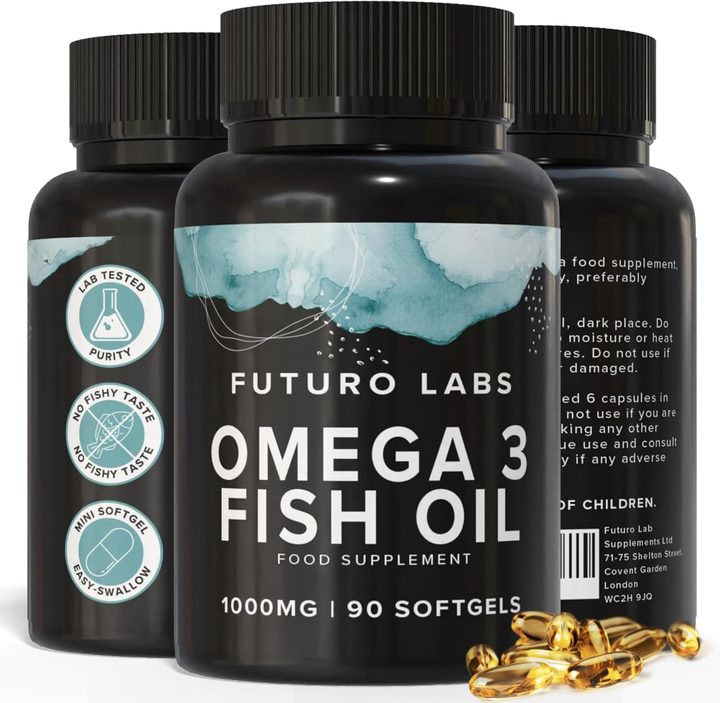
Our brand: the worked example on this page
Futuro Labs Omega 3 Fish Oil
- 17p a day
- 90 softgels, 1 softgel daily
- Lab tested
- Made in the UK
Omega-3 by the oily-fish audit, not by the muscle story: Futuro Labs Omega 3 Fish Oil on Amazon UK, 1 softgel with food, 180mg EPA and 120mg DHA, 90 for £14.99 at 17p. Full label breakdown. The four-gram trial dissected is on the muscle growth dose page; the gym flagship on the gym page.
Protect and build kept apart, and the populations in which omega-3 protects muscle
Does omega-3 help build muscle, and the twenty-five variants asking the same thing about fish oil, muscle growth, muscle gain and mass, are answered by keeping two verbs apart, protect and build, because the research supports one in some populations and the other in none. Protect: the populations that lose muscle are where omega-3 has a file. Older adults, who lose muscle with age, have been given two to four grams of EPA and DHA a day for months in randomised trials that report preserved or modestly increased muscle mass and better function, grip and walking, against placebo, an effect that is real, small and consistent enough to appear in reviews of sarcopenia. Immobilised limbs, a leg in a cast or a knee after surgery, lose muscle fast, and trials giving omega-3 before and during the immobilisation report less muscle lost, an anti-catabolic effect that slows the wasting rather than adding tissue. Hospitalised and ill people, whose muscle wastes under illness, show similar signals. In each of those populations the mechanism the four-gram trial demonstrated, a muscle more responsive to protein and insulin, has something to work against, a catabolic state, and the effect that emerges is protection of what was there, the muscle-preservation literature's consistent shape, which is why a clinician might give omega-3 to an older patient or a surgical one and why a bodybuilder should not confuse that with growth.
The population in which it does not build, the synthesis trial as a mechanism without a size, the missing claim and the word boost, and the verbs filed
Build is the verb a lifter means, and the population a lifter is in has no file for it: the review that pulls the omega-3 and muscle trials together finds no consistent gain in muscle size or strength from omega-3 in trained young adults, the anabolic machinery of a young lifter who trains and eats protein already running at a rate that a fat does not raise further, so the mechanism that protects an older or immobilised muscle adds nothing to a young one being built by load and leucine. The four-gram trial is the source of the growth story and is a mechanism without a size: it gave four grams of EPA and DHA a day for eight weeks and found the rate of muscle protein synthesis raised in response to an amino acid and insulin infusion, first in older and then in younger adults, without measuring muscle mass, strength or composition in either, so it shows the machinery more responsive in a laboratory and does not show anyone bigger, the muscle growth dose page's dissection, and thirteen standard softgels a day for a mechanism is a poor trade. The claim is absent: omega-3 holds no growth, muscle, strength or recovery sentence on the register, and protein holds the only growth claim there is, a contribution to a growth in muscle mass at the intakes the protein pages set out, so a fish oil label may not print muscle and a lifter who buys it for muscle has bought it for a reason the register does not recognise. The word boost, since the variants use it, has no evidence behind it at all, no trial showing omega-3 raising muscle growth above what training and protein produce in anyone. What builds muscle is the four things that always have, a progressive stimulus, protein at around 1.6 grams per kilogram, sufficient energy and sleep, with creatine the one supplement holding a performance claim for repeated short bursts, and omega-3 beside them by the oily-fish audit, for the heart sentence and the index and, at gram doses over weeks, a little less soreness. The verbs filed: protect in older adults and immobilised limbs at two to four grams, build in nobody, the synthesis trial a mechanism without a size, no claim and no boost, with the worked example being omega-3 by the oily-fish audit and not by the muscle story, one softgel at 17p, £14.99 for 90.
| The population | The finding | The verb |
|---|---|---|
| Older adults losing muscle | Muscle preserved or modestly increased at two to four grams over months | Protect |
| Immobilised limbs | Less muscle lost during the cast | Protect |
| Hospitalised and ill people | Similar signals under illness | Protect |
| Trained young adults | No consistent hypertrophy or strength gain in the review | Neither |
| The four-gram synthesis trial | Muscle protein synthesis raised; size not measured | A mechanism without a size |
| The register | No growth claim for omega-3; protein holds the only one | No boost |
The verdict, a fat that protects muscle in those losing it and builds it in nobody
Does omega-3 help build muscle: no, with protect and build kept apart, omega-3 protecting muscle in the populations that lose it, older adults and immobilised limbs at two to four grams a day over months, where an anti-catabolic effect slows the wasting, and building muscle in nobody, the review finding no consistent hypertrophy or strength gain in trained young adults, the four-gram trial that raised muscle protein synthesis having measured a mechanism and not a size, no growth claim existing for omega-3 while protein holds the only one, and the word boost having no evidence behind it, so a lifter builds muscle with the stimulus, protein, energy and sleep and takes omega-3 by the oily-fish audit for its own sentences. Omega-3 by the audit: Futuro Labs Omega 3 Fish Oil, one softgel with food, 180mg EPA and 120mg DHA, 90 for £14.99 at 17p a day.
What to check on the label
- Separate protect from build: the research supports one, in some populations.
- Read the protection files: older adults and immobilised limbs at two to four grams.
- Read the trained young adult file: no hypertrophy, no strength gain.
- Read the synthesis trial as a mechanism: no size measured.
- Build muscle with the four things that do: stimulus, protein, energy, sleep.
Our brand
The worked example: Futuro Labs Omega 3 Fish Oil
Futuro Labs Omega 3 Fish Oil: 1 softgel daily with food, 1000mg fish oil providing 180mg EPA and 120mg DHA (300mg combined), 90 softgels for £14.99, 17p a day, lab-tested purity, UK GMP made. Gelatin shell, so not vegetarian.
- Fish oil per softgel
- 1000mg
- EPA / DHA per softgel
- 180mg / 120mg (300mg combined)
- Serving
- 1 softgel a day
- Bottle
- 90 softgels, 90 days
- Price
- £14.99 (17p a day)
- Softgel
- mini softgel, no fishy taste
Questions people also ask
Does fish oil help muscle growth?
No: the review of omega-3 and muscle finds no consistent gain in size or strength in trained young adults, the four-gram trial that raised muscle protein synthesis measured a mechanism without a size, and omega-3 holds no growth claim, protein holding the register's only one.
Does omega-3 boost muscle growth?
No evidence says so: no trial shows omega-3 raising muscle growth above what training and protein produce in anyone, the word boost being a marketing word with nothing behind it, and a young lifter's anabolic machinery already running at a rate a fat does not raise further.
Who does omega-3 help with muscle?
The populations that lose it: older adults, in whom trials at two to four grams a day over months report preserved or modestly increased muscle mass and function, and immobilised limbs, in which less muscle is lost during the cast, an anti-catabolic effect that protects rather than builds.
What did the omega-3 muscle protein synthesis study show?
That four grams of EPA and DHA a day for eight weeks raised the rate of muscle protein synthesis in response to an amino acid and insulin infusion in a laboratory, in older and then younger adults, without measuring muscle mass, strength or composition, a mechanism the growth story mistakes for an outcome.
Should a bodybuilder take fish oil?
By the oily-fish audit rather than for muscle: a bodybuilding diet rarely holds two fish portions a week, so one softgel reaches the 250mg heart claim and three the index, with a little less soreness at gram doses over weeks as a bonus, while muscle is built by the stimulus, protein, energy and sleep.
Sources
- The omega-3 and muscle-preservation literature: trials in older adults report preserved or modestly increased muscle mass and function with omega-3 at two to four grams a day over months, and trials in immobilised limbs report reduced muscle loss, a protective rather than a building effect, absent in trained young adults. PubMed record
- McGlory C, Calder PC, Nunes EA. The influence of omega-3 fatty acids on skeletal muscle protein turnover in health, disuse, and disease. Frontiers in Nutrition 2019;6:144. PubMed record
- Smith GI, Atherton P, Reeds DN, et al. Dietary omega-3 fatty acid supplementation increases the rate of muscle protein synthesis in older adults: a randomized controlled trial. American Journal of Clinical Nutrition 2011;93(2):402-412. PubMed record
- The GB claims register, protein entries: protein contributes to a growth in muscle mass and to the maintenance of muscle mass and of normal bones, authorised for foods that are at least a source of protein. https://www.gov.uk/government/publications/great-britain-nutrition-and-health-claims-nhc-register