Ghost Fitness/Omega-3/Does omega-3 benefits help with skin?
Does omega-3 benefits help with skin?
The short answer
No skin claim: the register's skin sentences belong to zinc, biotin, niacin, riboflavin, iodine and vitamin A, which contribute to the maintenance of normal skin, and vitamin C for collagen formation, with no omega-3 entry mentioning skin. The research is graded: small trials report increased resistance to sunburn with EPA, the strongest file; eczema mixed; acne weak; hydration modest. A lifter's skin is helped by what usually helps it.
- The register's skin rosterzinc, biotin, niacin, riboflavin, iodine, vitamin A: normal skin; vitamin C: collagen formation; omega-3: absent
- The strongest small fileincreased resistance to sunburn with EPA over weeks: small trials, no claim
- The weaker fileseczema mixed; acne weak; hydration modest
- What helps a lifter's skinsleep, sun protection, enough zinc and vitamin C on the plate, a GP for acne or eczema
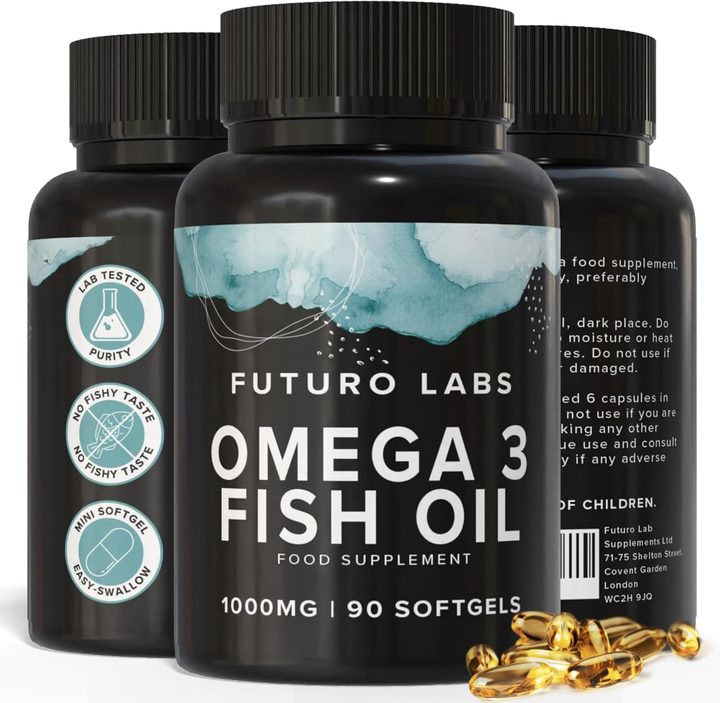
Our brand: the worked example on this page
Futuro Labs Omega 3 Fish Oil
- 17p a day
- 90 softgels, 1 softgel daily
- Lab tested
- Made in the UK
Omega-3 for its own sentences, with no skin word: Futuro Labs Omega 3 Fish Oil on Amazon UK, 1 softgel with food, 180mg EPA and 120mg DHA, 90 for £14.99 at 17p. Full label breakdown. The women's page is here; the skin claim roster also appears on the magnesium and nails page.
No skin claim, and the roster of nutrients that hold one, because the question is really about whose sentence skin is
Do omega-3 benefits help with skin is answered first by the register, because the question is really about whose sentence skin is, and it is not omega-3's. The register's skin roster: zinc, biotin, niacin, riboflavin, iodine and vitamin A each contribute to the maintenance of normal skin, and vitamin C contributes to normal collagen formation for the normal function of skin, each authorised at 15% NRV or more, and no omega-3 entry mentions skin, omega-3's sentences being heart, brain, vision, triglycerides and blood pressure, so a fish oil label may not print a skin sentence and a fish oil sold for skin has stepped outside the register whatever the research. The roster is also the honest answer to a lifter whose skin is the question: a plate that carries zinc from meat, shellfish and seeds, biotin and riboflavin from eggs and dairy, niacin from meat and grains, iodine from fish and dairy, vitamin A from liver, eggs and orange vegetables and vitamin C from fruit and vegetables has the nutrients skin's maintenance sentences name, and a plate that runs light on them, a cut or a rice-and-chicken bulk, is the plate on which skin, hair and nails dull, the magnesium-and-nails page's finding transferred, with the fix being the plate or those nutrients by audit rather than an oil. The omega-3 skin research exists and is graded next, but a reader who wants the register's answer has it in one word, absent.
The omega-3 skin research graded, the strongest small file and the weaker ones, what helps a lifter's skin, and the question filed
The omega-3 skin research is real and small, and grading it by file keeps it honest. Sunburn resistance is the strongest small file: trials giving EPA at gram-and-above doses for several weeks found the skin's threshold for ultraviolet redness raised, a measurable increase in resistance to sunburn that is thought to run through the membrane mediators the EPA pages describe, a genuine finding in small groups that reaches no claim and is no substitute for sunscreen, a lifter who trains outdoors in summer gaining more from a hat and factor thirty than from a softgel. Eczema is a mixed file: trials of fish oil in atopic eczema have reported improvements in some and none in others, the reviews concluding that the evidence is inconsistent, so a reader with eczema has a GP and the evidenced treatments first. Acne is a weak file: a couple of small trials report modest improvements in inflammatory acne with omega-3 alongside other changes, too small and too confounded to say much, and acne has evidenced treatments a GP prescribes. Hydration and dryness is a modest file: small studies report slightly improved skin hydration and reduced roughness over weeks at gram doses, a plausible effect of a fat that builds into every membrane and a small one. None of the four reaches a claim, and none changes the register's answer. What helps a lifter's skin is what usually helps it: seven to nine hours of sleep, sun protection, a plate that carries the roster's nutrients, a shower after training so sweat and bacteria do not sit on the back and shoulders, a training-acne conversation with a GP if it persists, and, for the reader who eats little oily fish, an omega-3 by the oily-fish audit for its own sentences, the skin effects a small bonus that is not a reason. The question filed: no skin claim for omega-3, the register's skin roster belonging to zinc, biotin, niacin, riboflavin, iodine, vitamin A and vitamin C, the research graded as sunburn resistance strongest and small, eczema mixed, acne weak and hydration modest, with the worked example being omega-3 for its own sentences and no skin word, one softgel at 17p, £14.99 for 90.
| The item | The finding | The grade |
|---|---|---|
| The register's skin roster | Zinc, biotin, niacin, riboflavin, iodine, vitamin A: normal skin; vitamin C: collagen formation | Authorised; omega-3 absent |
| Sunburn resistance | EPA at gram doses over weeks raises the ultraviolet redness threshold | The strongest small file; no claim; not a sunscreen |
| Eczema | Some trials improve, some do not | Mixed; a GP first |
| Acne | A couple of small confounded trials | Weak; evidenced treatments exist |
| Hydration and dryness | Slightly improved hydration at gram doses | Modest |
| What helps a lifter's skin | Sleep, sun protection, the roster on the plate, a post-training shower, a GP | The real levers |
The verdict, skin belongs to other nutrients' sentences, and omega-3's research is small
Do omega-3 benefits help with skin: not as a claim, the register's skin sentences belonging to zinc, biotin, niacin, riboflavin, iodine and vitamin A for the maintenance of normal skin and to vitamin C for collagen formation, with no omega-3 entry mentioning skin, and the omega-3 skin research graded small, increased resistance to sunburn with EPA at gram doses over weeks being the strongest file and no substitute for sunscreen, eczema mixed, acne weak and hydration modest, so that a lifter's skin is helped by sleep, sun protection, the roster's nutrients on the plate, a post-training shower and a GP for what persists, with omega-3 taken for its own sentences by the oily-fish audit. Omega-3 for its own sentences: Futuro Labs Omega 3 Fish Oil, one softgel with food, 180mg EPA and 120mg DHA, 90 for £14.99 at 17p a day.
What to check on the label
- Assign skin to its roster: zinc, biotin, niacin, riboflavin, iodine, vitamin A, vitamin C.
- Read the sunburn file as small: real, claimless, not a sunscreen.
- Read eczema and acne as a GP's: mixed and weak files.
- Feed the roster on the plate: the fix for dull skin on a light diet.
- Take omega-3 for its own sentences: skin a small bonus, not a reason.
Our brand
The worked example: Futuro Labs Omega 3 Fish Oil
Futuro Labs Omega 3 Fish Oil: 1 softgel daily with food, 1000mg fish oil providing 180mg EPA and 120mg DHA (300mg combined), 90 softgels for £14.99, 17p a day, lab-tested purity, UK GMP made. Gelatin shell, so not vegetarian.
- Fish oil per softgel
- 1000mg
- EPA / DHA per softgel
- 180mg / 120mg (300mg combined)
- Serving
- 1 softgel a day
- Bottle
- 90 softgels, 90 days
- Price
- £14.99 (17p a day)
- Softgel
- mini softgel, no fishy taste
Questions people also ask
Is fish oil good for your skin?
Not as a claim: no omega-3 entry on the register mentions skin, whose maintenance sentences belong to zinc, biotin, niacin, riboflavin, iodine and vitamin A, with vitamin C for collagen; the research is small, sunburn resistance with EPA at gram doses being the strongest file and eczema, acne and hydration weaker.
Does omega-3 protect against sunburn?
Small trials found EPA at gram-and-above doses over several weeks raised the skin's threshold for ultraviolet redness, a genuine but modest increase in resistance that reaches no claim and is no substitute for a hat and sunscreen.
Does fish oil help acne or eczema?
Weakly and inconsistently: a couple of small confounded acne trials and mixed eczema trials, neither reaching a claim, so both conditions go to a GP for the evidenced treatments and omega-3 is taken, if at all, for its own sentences.
Which supplements actually hold skin claims?
Zinc, biotin, niacin, riboflavin, iodine and vitamin A, which contribute to the maintenance of normal skin, and vitamin C, which contributes to normal collagen formation for skin, all at 15% NRV or more and all met by a mixed plate.
What helps a lifter's skin most?
Sleep, sun protection, a plate carrying zinc, the B vitamins, iodine, vitamin A and vitamin C, a shower after training so sweat does not sit on the back and shoulders, and a GP for training acne or eczema that persists.
Sources
- The GB claims register, skin entries: zinc, biotin, niacin, riboflavin, iodine and vitamin A contribute to the maintenance of normal skin, vitamin C contributes to normal collagen formation for the normal function of skin, and no omega-3 entry mentions skin. https://www.gov.uk/government/publications/great-britain-nutrition-and-health-claims-nhc-register
- The omega-3 and skin literature: small trials report increased resistance to sunburn with EPA supplementation over weeks, mixed results in eczema, weak signals in acne, and modest effects on skin hydration, none reaching an authorised claim, the register's skin sentences belonging to other nutrients. PubMed record
- The GB claims register, nail entries: zinc, selenium and biotin each contribute to the maintenance of normal nails, with copper and other nutrients holding hair or skin claims, and magnesium holding no nail, hair or skin claim. https://www.gov.uk/government/publications/great-britain-nutrition-and-health-claims-nhc-register
- Retained Regulation (EC) No 1924/2006 on nutrition and health claims made on foods, and the Great Britain nutrition and health claims register. https://www.gov.uk/government/publications/great-britain-nutrition-and-health-claims-nhc-register