Ghost Fitness/Omega-3/Does omega-3 help with weight loss?
Does omega-3 help with weight loss?
The short answer
No: systematic reviews of omega-3 supplementation and body weight find no meaningful effect on weight, body fat or waist in adults, and no weight claim exists. The four forum claims are audited: fat oxidation, a laboratory mechanism with no weight outcome; insulin sensitivity, small mixed effects; appetite, nothing consistent; belly fat, no effect on waist. A softgel in a cut costs nine calories and earns the heart claim.
- The reviewsno meaningful effect on weight, body fat or waist in adults; no weight claim on the register
- Fat oxidationa mechanism in laboratory and animal work; no weight outcome in human trials
- Insulin sensitivity and appetitesmall mixed effects; a couple of small appetite studies; no weight change
- A softgel in a cutnine calories; the heart claim and the index a low-fish cut leaves unbuilt
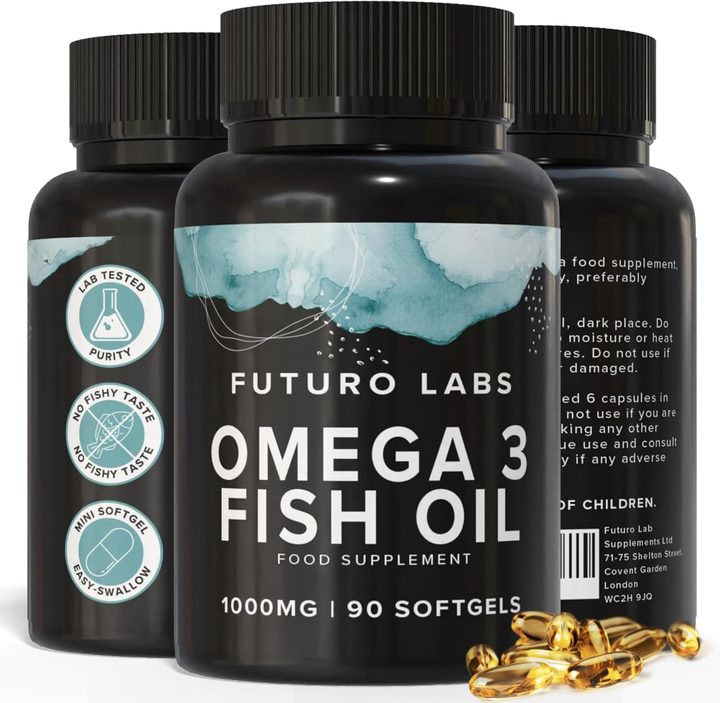
Our brand: the worked example on this page
Futuro Labs Omega 3 Fish Oil
- 17p a day
- 90 softgels, 1 softgel daily
- Lab tested
- Made in the UK
A softgel in a cut, for the claim and not the scale: Futuro Labs Omega 3 Fish Oil on Amazon UK, 1 softgel with food, 180mg EPA and 120mg DHA, about nine calories, 90 for £14.99 at 17p. Full label breakdown. The magnesium version of the two rates is on the magnesium weight-loss timeline page; the gym flagship on the gym page.
No, on the reviews and the register, and the first two forum claims audited
Does omega-3 help with weight loss, and the variants asking how to use fish oil for weight loss, for belly fat and for fat loss in bodybuilding, are answered no by the careful-claims flag on this page and by the evidence it rests on, and then by auditing the four claims the forums make, because the lore is specific and each item deserves its own grade. The reviews: systematic reviews and meta-analyses of omega-3 supplementation and body weight in adults find no meaningful effect on body weight, body fat or waist circumference, small and inconsistent changes that vanish in the pooled estimates and no dose at which fat loss appears, the weight literature's finding, and the register agrees, no weight, fat, metabolism, appetite or body-composition claim existing for omega-3, whose sentences are heart, brain, vision, triglycerides and blood pressure, so a fish oil label may not print a weight word and a fish oil sold for fat loss has stepped outside the register. Forum claim one, fat oxidation: the lore says omega-3 shifts the body toward burning fat, and the mechanism is real in a laboratory, EPA and DHA acting on the nuclear receptors that regulate fat metabolism in cell and rodent work, but human trials measuring fat oxidation during exercise or at rest find small or no changes and, crucially, no weight or fat outcome follows, a mechanism that does not reach the scale. Forum claim two, insulin sensitivity: the lore says omega-3 improves insulin sensitivity and so drives fat loss, and the trials show small, mixed effects on insulin markers in some populations, larger in people with metabolic disease and absent in healthy adults, with no weight change accompanying them, so the sensitivity story, where it holds at all, holds without a fat-loss consequence.
The third and fourth forum claims, the honest place of a softgel in a cut, and the lore filed
Forum claim three, appetite: the lore says omega-3 reduces hunger, and a couple of small studies have reported greater fullness after meals in overweight adults on fish oil, findings that are small, short, unreplicated and unaccompanied by weight loss, so a reader on a cut who takes a softgel for hunger has taken nine calories of fat for an effect the evidence does not reliably show, the hunger levers being protein at each meal, fibre, volume and sleep. Forum claim four, belly fat: the lore says omega-3 targets visceral fat, and the reviews find no effect on waist circumference, the best simple proxy for it, while the cortisol chain the magnesium pages dismantle reappears here in a different coat and breaks at the same link, no supplement lowering the cortisol that a hard week and a short night raise, and no supplement choosing where a deficit's fat comes off. Four claims, four mechanisms or suggestions, and no weight outcome in any of them, which is the pattern of a supplement whose research is real and whose marketing has read the research's first page. The honest place of a softgel in a cut is small and specific: a cut shrinks food volume and drops oily fish first, since a lifter cutting eats chicken and white fish rather than mackerel, so the 250mg heart claim and the omega-3 index that a low-fish diet leaves unbuilt are the reason a softgel belongs in a cut, at nine calories a day that no deficit notices, taken with the day's fattiest meal, for the claim and the index and not for the scale, with the DOMS review's modest soreness effect at gram doses a small bonus for a reader cutting hard. What loses fat is the deficit, at half a kilo to a kilo a week sustained, protein at around 1.6 grams per kilogram to protect muscle, resistance training to keep it, and sleep, the levers of every cut, with omega-3 beside them by the oily-fish audit. The lore filed: no weight effect in the reviews and no weight claim, fat oxidation a laboratory mechanism, insulin sensitivity small and mixed, appetite unreplicated, belly fat absent, and the softgel's place in a cut being nine calories and the heart claim, with the worked example being that softgel, one at 17p, £14.99 for 90.
| The claim | The evidence | The grade |
|---|---|---|
| Weight loss in general | Systematic reviews: no meaningful effect on weight, fat or waist; no claim | No |
| Fat oxidation | A real mechanism in cell and rodent work; small or no human change; no weight outcome | A mechanism that does not reach the scale |
| Insulin sensitivity | Small mixed effects, larger in metabolic disease, absent in healthy adults; no weight change | Not a fat-loss effect |
| Appetite | A couple of small unreplicated fullness studies; no weight loss | Unreliable |
| Belly fat | No effect on waist circumference in the reviews | Absent |
| A softgel in a cut | Nine calories; the heart claim and the index a low-fish cut leaves unbuilt | For the claim, not the scale |
The verdict, four pieces of lore with real first pages and no last page, and a softgel that belongs in a cut for another reason
Does omega-3 help with weight loss: no, systematic reviews of omega-3 supplementation and body weight finding no meaningful effect on weight, body fat or waist in adults and no weight claim existing on the register, with the four claims the forums make audited, fat oxidation a real laboratory mechanism with no human weight outcome, insulin sensitivity a small mixed effect without a fat-loss consequence, appetite a couple of unreplicated studies, and belly fat absent from the waist measurements, so that a softgel's honest place in a cut is nine calories and the 250mg heart claim and index that a low-fish cut leaves unbuilt, while the fat comes off on a sustained deficit with protein, training and sleep. A softgel in a cut for the claim: Futuro Labs Omega 3 Fish Oil, one softgel with food, 180mg EPA and 120mg DHA, about nine calories, 90 for £14.99 at 17p a day.
What to check on the label
- Read the reviews: no weight, fat or waist effect.
- Audit the fat-oxidation story: a mechanism, not a scale.
- Audit insulin sensitivity and appetite: small, mixed, unreplicated.
- Drop the belly-fat story: no effect on waist; no supplement picks where fat comes off.
- Keep the softgel in a cut for the claim: nine calories, the heart, the index.
Our brand
The worked example: Futuro Labs Omega 3 Fish Oil
Futuro Labs Omega 3 Fish Oil: 1 softgel daily with food, 1000mg fish oil providing 180mg EPA and 120mg DHA (300mg combined), 90 softgels for £14.99, 17p a day, lab-tested purity, UK GMP made. Gelatin shell, so not vegetarian.
- Fish oil per softgel
- 1000mg
- EPA / DHA per softgel
- 180mg / 120mg (300mg combined)
- Serving
- 1 softgel a day
- Bottle
- 90 softgels, 90 days
- Price
- £14.99 (17p a day)
- Softgel
- mini softgel, no fishy taste
Questions people also ask
Does fish oil burn fat?
No: the fat-oxidation mechanism is real in cell and rodent work, EPA and DHA acting on receptors that regulate fat metabolism, but human trials find small or no changes in fat oxidation and no weight or fat outcome follows, the systematic reviews finding no meaningful effect on body weight or fat in adults.
Is omega-3 good for belly fat?
No: the reviews find no effect on waist circumference, the simple proxy for visceral fat, no supplement chooses where a deficit's fat comes off, and the cortisol-to-belly-fat chain the lore relies on breaks at the link where a supplement is supposed to lower cortisol.
How should I use fish oil during a cut?
For the claim rather than the scale: a cut drops oily fish first, so the 250mg heart claim and the omega-3 index a low-fish diet leaves unbuilt are the reason one softgel belongs in a cut, at nine calories with the day's fattiest meal, while the fat comes off on the deficit, protein, training and sleep.
Does omega-3 reduce appetite?
Not reliably: a couple of small studies reported greater fullness after meals in overweight adults on fish oil, findings that are short, unreplicated and unaccompanied by weight loss, while protein at each meal, fibre, volume and sleep are the hunger levers with evidence.
Can a fish oil supplement claim to help weight loss?
No: no weight, fat, metabolism, appetite or body-composition claim exists for omega-3 on the register, whose sentences are heart, brain, vision, triglycerides and blood pressure, so a fish oil sold for fat loss has stepped outside the register whatever its forum reputation.
Sources
- Systematic review evidence on omega-3 (fish oil) supplementation and body weight in adults: no clinically meaningful effect on weight or fat mass across randomized trials. PubMed record
- Commission Regulation (EU) No 536/2013 authorising health claims for DHA and EPA: maintenance of normal blood triglyceride concentrations (2g DHA+EPA/day) and normal blood pressure (3g DHA+EPA/day), with a supplemental limit note of 5g/day. https://eur-lex.europa.eu/legal-content/EN/TXT/?uri=CELEX%3A32013R0536
- The protein intake and resistance training literature: meta-analyses support intakes around 1.6g per kilogram of body weight daily for maximising resistance-training gains, with diminishing returns above. PubMed record
- Review evidence on omega-3 supplementation and exercise-induced muscle damage and soreness: small positive findings mainly in untrained participants, mixed-to-null results in trained populations. PubMed record