Ghost Fitness/Omega-3/Does omega-3 help muscle protein synthesis?
Does omega-3 help muscle protein synthesis?
The short answer
The one trial, read line by line. Who: healthy adults who did not train. What: four grams of EPA and DHA a day for eight weeks. How: synthesis by tracer during a laboratory infusion of amino acids and insulin. Found: a larger synthetic response to the infusion, none at rest. Not measured: size, strength, real meals, training. After: the trials that measured size in trained adults found no gain. A mechanism without a muscle.
- Who and whathealthy non-training adults; four grams of EPA and DHA a day for eight weeks
- Howa labelled amino acid tracer during a clamp: amino acids and insulin infused to simulate a meal
- Found and not founda larger synthetic response to the infusion, signalling more activated, nothing at rest; no size, strength, meals or training
- Aftersize measured in trained adults on omega-3 plus training: no consistent gain; sensitivity restored modestly in older adults only
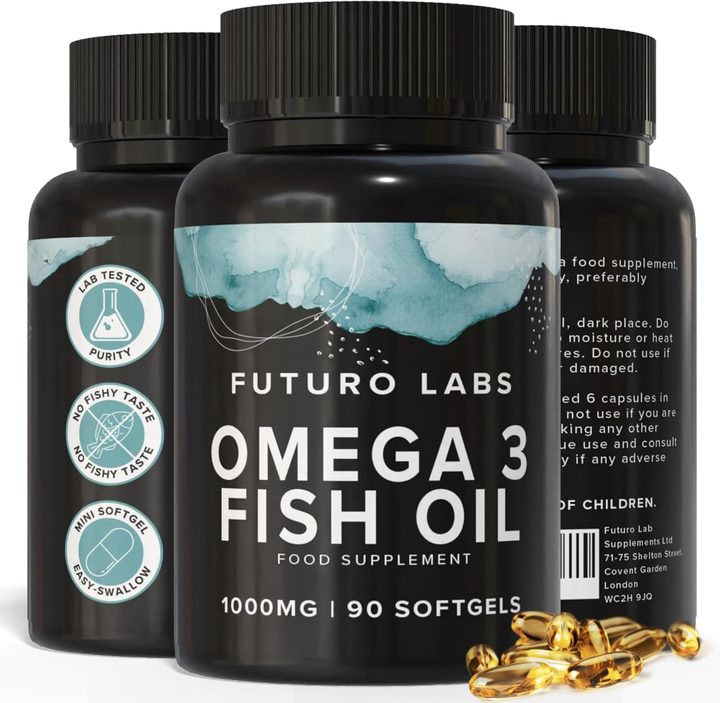
Our brand: the worked example on this page
Futuro Labs Omega 3 Fish Oil
- 17p a day
- 90 softgels, 1 softgel daily
- Lab tested
- Made in the UK
A softgel for the plate, at a thirteenth of the trial's dose: Futuro Labs Omega 3 Fish Oil on Amazon UK, 1 softgel with food, 180mg EPA and 120mg DHA, 90 for £14.99 at 17p. Full label breakdown. Inside a fibre by compartment is on the why-good-for-muscle page; whether it is important for growth on the important-for-growth page.
The one trial, read line by line, who, what, how and what was found
Does omega-3 help muscle protein synthesis is a question with one trial behind it that every forum cites and almost nobody reads, and the honest page reads it line by line, because each line qualifies the claim in a way the citation does not. Who was studied: a small group of healthy young and middle-aged adults, in their twenties to forties, who were not on a training programme and were not asked to train, the 2011 synthesis trial's participants, so the muscle measured was an untrained muscle in a resting person. What was given: four grams of EPA and DHA a day, a prescription-strength dose that is thirteen standard softgels or four concentrate capsules, taken for eight weeks, against a corn oil control, a dose nobody on a shelf takes and the rung at which the rhythm signal and the gut effects live. How synthesis was measured: by a labelled amino acid tracer infused into the blood, whose incorporation into muscle protein in a biopsy gives the rate of synthesis, measured under a clamp, a laboratory procedure in which amino acids and insulin are infused into a vein at fixed rates to simulate the blood state after a meal, so the meal was simulated rather than eaten and the response measured was the muscle's response to an infusion. What was found: after eight weeks the synthetic response to the infusion was larger than before, with the anabolic signalling proteins downstream of the membrane more activated, and synthesis at rest, before the infusion, was unchanged, so the trial found a muscle that responded more to a simulated feeding after eight weeks at four grams and did nothing different when left alone, the finding that became, on the forums, fish oil builds muscle.
What was not measured, what came after, what the line-by-line reading leaves, and the trial filed
What was not measured is the longest line: muscle size, since no imaging or lean mass measurement was taken; strength, since nobody lifted anything; real meals, since the feeding was an infusion; and training, since nobody trained, so the trial could not and did not say whether a person eating meals and training for months would grow more muscle on four grams of fish oil, which is the only question a lifter has. What came after answers it: the randomised trials that added omega-3 to resistance training in trained young adults, at a gram to several grams a day over eight to sixteen weeks, and measured lean mass and strength against placebo, found no consistent gain, the reviews settling the shape as no growth effect in the trained, the muscle-claim-by-year page's fourth era, so the larger synthetic response in the laboratory did not translate into a larger muscle in the gym, a mechanism that did not reach its outcome, which is common in physiology and is the reason mechanisms are not claims. The one place the synthesis finding did find an echo is older adults: the trials at around three grams a day for six months in people aged sixty to eighty-five report a partial restoration of the blunted protein-synthetic response of older muscle and a modest increase in thigh muscle volume and strength, the anabolic resistance literature's finding, an effect not seen in the young and the trained and the reason the older-lifters page exists. What the line-by-line reading leaves: a real and interesting mechanism, a larger synthetic response to a simulated meal in untrained adults after eight weeks at a prescription dose, with no muscle built and none built in the trials that looked, no register claim for muscle or synthesis, the synthesis story belonging to protein and leucine at twenty to forty grams a meal and to the training that switches it on, the synthesis literature's levers. So a lifter reads the citation as a mechanism paper, takes the softgel for the plate's heart claim at a thirteenth of the trial's dose, and puts the synthesis money on protein. The trial filed: healthy non-training adults, four grams for eight weeks, a tracer under a clamp, a larger response to an infusion and nothing at rest, no size, strength, meals or training measured, and no gain in the trained trials that followed, with the worked example being a softgel for the plate, £14.99 for 90 at 17p.
| The line | What it says | What it means for a lifter |
|---|---|---|
| Who | Healthy young and middle-aged adults, not training | An untrained muscle in a resting person |
| What | Four grams of EPA and DHA a day for eight weeks | Thirteen standard softgels; a prescriber's rung |
| How | A tracer under a clamp: amino acids and insulin infused to simulate a meal | A simulated feeding, not a meal eaten |
| Found | A larger synthetic response to the infusion; signalling more activated; nothing at rest | A mechanism |
| Not measured | Size, strength, real meals, training | The only question a lifter has |
| After | Trained adults on omega-3 plus training: no consistent gain in size or strength | The mechanism did not reach its outcome |
The verdict, a real mechanism in a laboratory that built no muscle in the gym
Does omega-3 help muscle protein synthesis: in one trial, read line by line, a small group of healthy non-training adults took four grams of EPA and DHA a day for eight weeks and showed a larger muscle protein synthetic response to a laboratory infusion of amino acids and insulin, measured by tracer under a clamp, with signalling more activated and synthesis at rest unchanged, while muscle size, strength, real meals and training were not measured, and the trials that later added omega-3 to resistance training in trained adults and measured size and strength found no consistent gain, the one echo of the mechanism being a modest restoration of the blunted response in adults over sixty at three grams for six months, so the citation is a mechanism paper and the synthesis a lifter can act on belongs to protein, leucine and training. A softgel for the plate at a thirteenth of the trial's dose: Futuro Labs Omega 3 Fish Oil, one with food, 180mg EPA and 120mg DHA, 90 for £14.99 at 17p a day.
What to check on the label
- Read who: untrained adults at rest.
- Read what: four grams for eight weeks, a prescriber's rung.
- Read how: an infusion, not a meal.
- Read what was not measured: size, strength, meals, training.
- Read what came after: no gain in the trained; protein and leucine own synthesis.
Our brand
The worked example: Futuro Labs Omega 3 Fish Oil
Futuro Labs Omega 3 Fish Oil: 1 softgel daily with food, 1000mg fish oil providing 180mg EPA and 120mg DHA (300mg combined), 90 softgels for £14.99, 17p a day, lab-tested purity, UK GMP made. Gelatin shell, so not vegetarian.
- Fish oil per softgel
- 1000mg
- EPA / DHA per softgel
- 180mg / 120mg (300mg combined)
- Serving
- 1 softgel a day
- Bottle
- 90 softgels, 90 days
- Price
- £14.99 (17p a day)
- Softgel
- mini softgel, no fishy taste
Questions people also ask
What did the fish oil muscle protein synthesis study actually find?
That healthy non-training adults who took four grams of EPA and DHA a day for eight weeks had a larger muscle protein synthetic response to a laboratory infusion of amino acids and insulin, measured by tracer under a clamp, with no change in synthesis at rest and no muscle size, strength, real meals or training measured.
Does increased muscle protein synthesis mean more muscle?
Only if it reaches the outcome, and here it did not: the trials that added omega-3 to resistance training in trained adults and measured lean mass and strength found no consistent gain over placebo, so the larger synthetic response in the laboratory did not translate into a larger muscle in the gym.
How much omega-3 increases muscle protein synthesis?
The trial used four grams of EPA and DHA a day, thirteen standard softgels or four concentrate capsules, for eight weeks, a prescription-strength rung where the gut effects and the rhythm signal live, and a standard softgel was never tested for synthesis and has no reason to affect it.
Does omega-3 increase muscle protein synthesis in older adults?
Partially, in the trials: adults aged sixty to eighty-five taking around three grams a day for six months showed a partial restoration of the blunted protein-synthetic response of older muscle and a modest increase in thigh muscle volume and strength, an effect not seen in younger or trained adults.
What actually drives muscle protein synthesis?
Resistance training and a leucine-rich protein dose of around twenty to forty grams, which stimulate synthesis for hours, with total daily protein at around 1.6 grams per kilogram, energy availability and the training stimulus determining the net gain, and the register's muscle sentences belonging to protein for that reason.
Sources
- Smith GI, Atherton P, Reeds DN, et al. Dietary omega-3 fatty acid supplementation increases the rate of muscle protein synthesis in older adults: a randomized controlled trial. American Journal of Clinical Nutrition 2011;93(2):402-412. PubMed record
- McGlory C, Calder PC, Nunes EA. The influence of omega-3 fatty acids on skeletal muscle protein turnover in health, disuse, and disease. Frontiers in Nutrition 2019;6:144. PubMed record
- The anabolic resistance literature: muscle in adults over around sixty responds less to a given dose of protein and to training than younger muscle, the age-related blunting that contributes to sarcopenia, and the omega-3 trials in older adults, at around three grams a day for six months in people aged sixty to eighty-five, report a modest increase in thigh muscle volume and strength and a partial restoration of the protein-synthetic response, effects not seen in trained younger adults. PubMed record
- The muscle protein synthesis literature: resistance exercise and a leucine-rich protein dose of around 20 to 40 grams stimulate muscle protein synthesis for hours, with total daily protein, energy availability and the training stimulus determining net gain, and no trial of magnesium supplementation on muscle protein synthesis in trained adults. PubMed record