Ghost Fitness/Omega-3/Is Holland and Barrett omega-3 good quality?
Is Holland and Barrett omega-3 good quality?
The short answer
Quality is five measurable things, and an own-brand label shows some and hides others. Actives accuracy: the EPA and DHA line, checkable against a certificate. Oxidation: peroxide, anisidine and TOTOX, the read a label never shows. Contaminants: heavy metals, dioxins and PCBs, usually met and rarely stated. Form: often unstated. Source: a logo or nothing. Good quality is what the retailer can evidence when asked.
- Actives accuracythe EPA and DHA line against a certificate of analysis; usually close
- Oxidationperoxide under 5, anisidine under 20, TOTOX under 26: the read a label never shows
- Contaminantsheavy metals, dioxins and PCBs within the regulation: usually met, rarely stated
- Form and sourcetriglyceride or ethyl ester, often unstated; a sustainability logo, or nothing
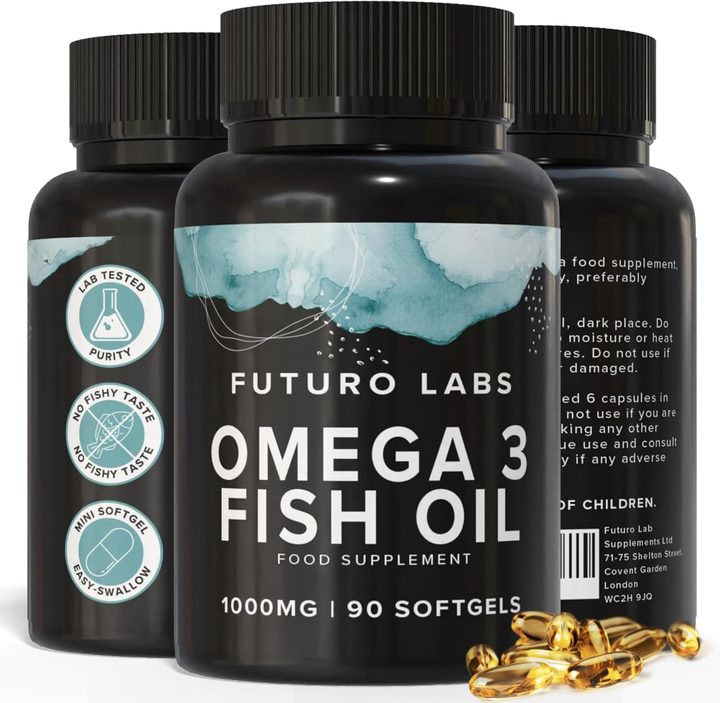
Our brand: the worked example on this page
Futuro Labs Omega 3 Fish Oil
- 17p a day
- 90 softgels, 1 softgel daily
- Lab tested
- Made in the UK
The benchmark with the five dimensions stated: Futuro Labs Omega 3 Fish Oil on Amazon UK, 1 softgel a day, 180mg EPA and 120mg DHA, lab-tested purity, UK GMP made, 90 for £14.99 at 17p. Full label breakdown. The shelf-tier template is on the health-food shelf page; the rancidity checks on the rancid page.
Quality defined as five measurable things, and the first three, actives, oxidation and contaminants
Is a health-food retailer's own-brand omega-3 good quality is a question this site answers by defining quality, because good quality is not a feeling about a shop but five things a laboratory can measure, and an own-brand label shows some of them and hides the rest, the retailer reformulating and repricing without notice so that the template rather than a verdict is what a reader can keep. The first dimension, actives accuracy: does the softgel contain the EPA and DHA the nutrient line declares, a question a certificate of analysis answers and an independent test occasionally checks, with UK own-brand fish oils generally close to label and the larger risk being the reader's misreading of the 1000mg oil weight as the actives, the 1000mg pages' decode. The second, oxidation: fish oil goes rancid, its freshness measured by peroxide value, anisidine value and their combination as TOTOX, the industry monograph setting limits of 5, 20 and 26, and retail surveys in several countries finding a meaningful share of oils over those limits on the shelf, the dimension that matters most for a fish oil, the one a label never shows, and the one a reader can partly check by biting a softgel, a fresh oil tasting mildly of fish and a rancid one of paint or old nuts, the rancid page's test. The third, contaminants: heavy metals, dioxins and PCBs accumulate in fish and are removed by molecular distillation, the contaminant regulation sets maximum levels and reputable oils meet them with room, so this dimension is usually met on an own-brand and almost never stated on its label, the reader taking it on the retailer's word or asking for the certificate.
The fourth and fifth dimensions, form and source, what to ask the retailer, and the verdict the reader writes
The fourth dimension, form: whether the oil is a natural triglyceride, a re-esterified triglyceride concentrate or an ethyl ester, which decides how well it absorbs without a fatty meal, a triglyceride absorbing well at any meal and an ethyl ester markedly better with fat and poorly without, the absorption literature's finding, and an own-brand standard oil often leaves the form unstated, which a reader reads as ethyl ester and takes with the fattiest meal of the day, the omission being a quality-of-label point rather than a quality-of-oil one. The fifth, source and sustainability: the species, anchovy, sardine and mackerel for a standard oil, and a sustainability scheme's logo, which an own-brand may or may not carry, a dimension of ethics rather than of the softgel's chemistry but one a reader who cares reads off the tub. What to ask the retailer is the tested brands guide's four questions applied to fish oil: is the oil tested for peroxide and anisidine values and what TOTOX limit does it meet; are heavy metals, dioxins and PCBs tested against the contaminant regulation; what form is the oil, triglyceride or ethyl ester; and can a certificate of analysis for the current batch be seen, the reply being the quality answer, a retailer who answers all four with a certificate having evidenced good quality and one who cannot having left the reader with a label and a bite test. The verdict the reader writes: an own-brand omega-3 is good quality when its actives are as declared, its oxidation is within the monograph, its contaminants are within the regulation, its form is stated or fed and its source is named, which is a matter of what the retailer can evidence when asked rather than of the name on the tub. The benchmark with the five dimensions stated: Futuro Labs Omega 3 Fish Oil, one softgel, 180mg EPA and 120mg DHA declared, lab-tested for purity with certificates askable, fish oil triglyceride taken with food, UK GMP made with a UK address, 90 for £14.99 at 17p.
| The dimension | What good looks like | On an own-brand label |
|---|---|---|
| Actives accuracy | EPA and DHA as declared, per a certificate | Declared; the certificate asked for |
| Oxidation | Peroxide under 5, anisidine under 20, TOTOX under 26 | Never shown; ask, and bite a softgel |
| Contaminants | Heavy metals, dioxins and PCBs within the regulation | Usually met; rarely stated; ask |
| Form | Triglyceride stated; ethyl ester fed | Often unstated; read as ethyl ester |
| Source and sustainability | Species named; a scheme's logo | Sometimes; a matter of ethics |
| The verdict | What the retailer can evidence when asked | Not the name on the tub |
The verdict, quality is five things and a retailer's answer
Is a health-food retailer's own-brand omega-3 good quality: quality being five measurable things, actives accuracy against a certificate, oxidation within the monograph's peroxide, anisidine and TOTOX limits, contaminants within the regulation, a stated form or an unstated one fed, and a named source, of which an own-brand label shows the first and hides the rest, so that good quality is what the retailer can evidence when asked the four questions and a reader who gets a certificate has an answer while a reader who gets a shrug has a label and a bite test. The benchmark with the five dimensions stated: Futuro Labs Omega 3 Fish Oil, one softgel, 180mg EPA and 120mg DHA, lab-tested purity, UK GMP made, 90 for £14.99 at 17p a day.
What to check on the label
- Define quality as five things: actives, oxidation, contaminants, form, source.
- Read the actives off the label: the one dimension it shows.
- Ask about oxidation: the dimension that matters most and shows least.
- Feed an unstated form: read it as ethyl ester.
- Judge by the retailer's answer: a certificate, or a shrug.
Our brand
The worked example: Futuro Labs Omega 3 Fish Oil
Futuro Labs Omega 3 Fish Oil: 1 softgel daily with food, 1000mg fish oil providing 180mg EPA and 120mg DHA (300mg combined), 90 softgels for £14.99, 17p a day, lab-tested purity, UK GMP made. Gelatin shell, so not vegetarian.
- Fish oil per softgel
- 1000mg
- EPA / DHA per softgel
- 180mg / 120mg (300mg combined)
- Serving
- 1 softgel a day
- Bottle
- 90 softgels, 90 days
- Price
- £14.99 (17p a day)
- Softgel
- mini softgel, no fishy taste
Questions people also ask
How can I tell if an own-brand fish oil is good quality?
By five measurable things: the EPA and DHA line checked against a certificate, oxidation within the monograph's TOTOX limit, contaminants within the regulation, a stated form or an unstated one taken with fat, and a named source, of which the label shows the first and the retailer must evidence the rest when asked.
What is the most important quality measure for fish oil?
Oxidation: fish oil goes rancid, measured by peroxide, anisidine and TOTOX with limits of 5, 20 and 26, retail surveys find a meaningful share of oils over them, and no label shows it, so it is asked for and partly checked by biting a softgel for a paint or old-nut taste.
Are own-brand fish oils tested for heavy metals?
Usually met and rarely stated: heavy metals, dioxins and PCBs are removed by molecular distillation and the contaminant regulation sets maximum levels reputable oils meet with room, so the reader takes it on the retailer's word or asks for the certificate.
Why doesn't an own-brand label say what form the oil is?
Because it need not: form is a quality-of-label point rather than a legal requirement, and an unstated form on a standard own-brand is read as ethyl ester and taken with the fattiest meal of the day, where it absorbs markedly better.
What should I ask a retailer about their own-brand omega-3?
Four questions: whether the oil is tested for peroxide and anisidine values and to what TOTOX limit, whether heavy metals, dioxins and PCBs are tested against the regulation, what form the oil is, and whether a certificate of analysis for the current batch can be seen.
Sources
- The fish oil oxidation literature: oxidation is measured by peroxide value, anisidine value and their combination as TOTOX, with the industry monograph setting limits of 5, 20 and 26 respectively, and surveys of retail fish oils finding a meaningful share above those limits, freshness being a quality dimension a label rarely shows and a certificate does. PubMed record
- Assimilated Regulation (EC) No 1881/2006 setting maximum levels for certain contaminants in foodstuffs, including mercury in fishery products: the contaminant-limits framework retained in UK food law. https://eur-lex.europa.eu/legal-content/EN/TXT/?uri=CELEX%3A32006R1881
- Classic absorption work on fish oil ethyl esters: uptake is markedly higher when ethyl ester omega-3 is taken with a high-fat meal, narrowing the gap to triglyceride forms. PubMed record
- GOED Voluntary Monograph: the omega-3 industry's quality standard setting limits for heavy metals, dioxins and oxidation (peroxide, anisidine and TOTOX values) in fish oils. https://goedomega3.com