Ghost Fitness/Omega-3/How to know if fish oil is rancid?
How to know if fish oil is rancid?
The short answer
Run three tests: cut a capsule and smell it, fresh oil is faintly marine, rancid oil is sharp and painty; dab a taste, bitterness convicts; check the oil's colour and the capsules' condition. Any strong sign means bin the bottle.
- Test 1the smell test: one cut capsule, thirty seconds, usually decisive
- Test 2the taste dab: bitterness and harsh sourness corroborate
- Test 3the visual sweep: colour, clarity, capsule condition
- The ruleany single strong sign convicts: rancidity does not need a jury
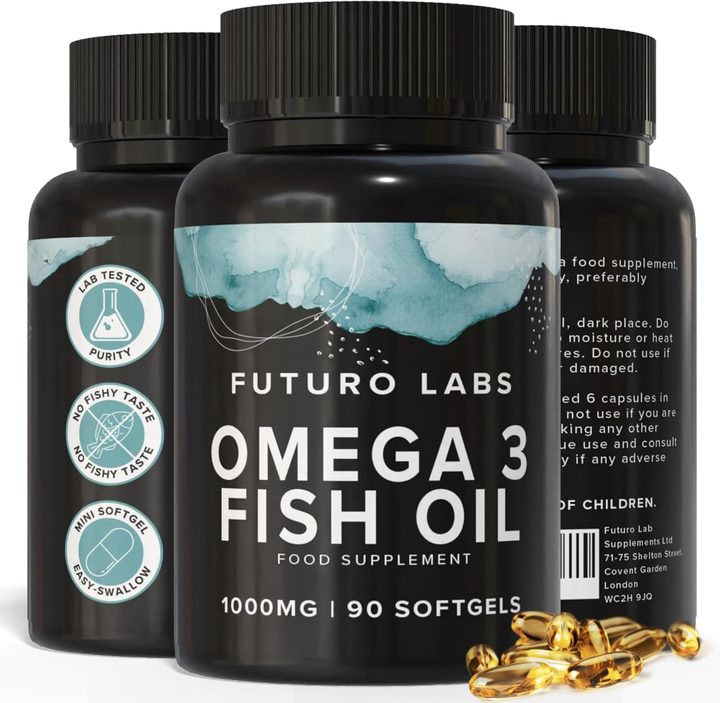
Our brand: the worked example on this page
Futuro Labs Omega 3 Fish Oil
- 17p a day
- 90 softgels, 1 softgel daily
- Lab tested
- Made in the UK
A bottle that keeps passing: Futuro Labs Omega 3 Fish Oil on Amazon UK, lab-tested, opaque 90-count, £14.99. Label breakdown. The full symptom reference is on rancid symptoms; what to do with a failed bottle on the expired capsules page.
Test one, the smell test: the procedure that settles most bottles
The smell test is the protocol's workhorse, and running it properly takes a minute. Take one capsule from the suspect bottle, cut it open with scissors over a teaspoon, and smell the oil immediately, since the volatile compounds that carry the verdict are strongest at first exposure; give it one honest inhale rather than repeated sniffs that fatigue the nose. Calibrate against the two known readings: fresh, well-refined fish oil registers as faintly marine to nearly neutral, an unremarkable, clean note that many people describe as almost nothing; rancid oil registers as sharp, sour-edged and pungent, the paint, putty or old-fish character that oxidation's aldehydes produce, unmistakable once met and impossible to talk yourself out of. A clearly fresh reading ends the protocol, keep the bottle; a clearly rancid one ends it the other way, bin it; and only the genuinely ambiguous middle, a faint staleness you cannot classify, sends you to the corroborating tests, which is a minority of bottles, the nose being decisive far more often than not.
Tests two and three, the context audit, and the verdict rules
Test two, the taste dab, for the ambiguous middle: touch a clean fingertip to the cut capsule's oil and taste it, fresh oil reading bland to faintly fishy, rancid oil reading bitter, sour and harsh with a lingering unpleasantness, the tongue confirming what the nose suspected. Test three, the visual sweep: hold the oil against light, pale gold is the healthy register while darkening toward amber-brown suggests age; check liquids for cloudiness or sediment at room temperature, since fridge clouding is innocent crystallisation but warm clouding is not; and inspect the bottle's remaining capsules for softening, stickiness, clumping or a greasy film, the physical signature of stock aging badly. Around the three tests runs the context audit that explains their results: the printed date, the months since opening, and the storage history, a windowsill, radiator shelf or hot car counting as accelerated aging whatever the calendar says. The verdict rules close the protocol: any single strong sign convicts, smell alone being sufficient; multiple faint signs together convict; one faint ambiguous sign with good dates and storage acquits, retest in a fortnight; and a fresh-smelling bottle causing harsh rancid-tasting burps from fed doses overrules its own smell test, the daily evidence outranking the single sniff.
| Step | Procedure | Fresh reading | Rancid reading |
|---|---|---|---|
| 1. Smell test | Cut one capsule over a spoon, smell immediately | Faintly marine to nearly neutral | Sharp, painty, old-fish pungency: decisive |
| 2. Taste dab | Fingertip of oil, only if smell was ambiguous | Bland, faintly fishy | Bitter, sour, harsh, lingering |
| 3. Visual sweep | Oil colour and clarity; capsule condition | Pale gold, clean, firm capsules | Darkened, cloudy warm, soft or sticky capsules |
| Context audit | Date, months open, storage history | In date, cupboard-kept, finished on schedule | Long open, heat or light exposed |
| The verdict | Any strong sign, or several faint ones | Keep; retest ambiguity in a fortnight | Bin, replace, fix the storage habit |
The verdict, and the habits that keep the protocol theoretical
How to know if fish oil is rancid: cut, smell and believe the nose, dab and look only when it hesitates, audit the date and storage for context, and let any single strong sign end the matter, a protocol costing one capsule and settling in minutes what vague worry never settles at all. The response to a conviction lives on the neighbouring pages, bin with household rubbish and replace fresh; and the habits that keep the whole protocol theoretical are the ones this section keeps repeating, quarter-sized bottles finished young, opaque packaging, cupboard storage with the lid tight, and a brand that tests its oil, which is where the worked example stands: Futuro Labs Omega 3 Fish Oil, lab-tested, 90 softgels at £14.99, 17p a day, UK made, a bottle designed to smell of nothing every time the protocol is run on it, which, run once per bottle out of good habit, it should be.
What to check on the label
- Cut one capsule, smell immediately: the decisive test, one honest inhale.
- Fresh reads nearly neutral; rancid reads painty: calibration is the whole skill.
- Taste and visuals corroborate ambiguity: bitterness, darkening, sticky capsules.
- Any strong sign convicts alone: rancidity does not need a jury.
- Harsh fed-dose burps overrule a passed smell test: daily evidence outranks one sniff.
Our brand
The worked example: Futuro Labs Omega 3 Fish Oil
Futuro Labs Omega 3 Fish Oil: 1 softgel daily with food, 1000mg fish oil providing 180mg EPA and 120mg DHA (300mg combined), 90 softgels for £14.99, 17p a day, lab-tested purity, UK GMP made. Gelatin shell, so not vegetarian.
- Fish oil per softgel
- 1000mg
- EPA / DHA per softgel
- 180mg / 120mg (300mg combined)
- Serving
- 1 softgel a day
- Bottle
- 90 softgels, 90 days
- Price
- £14.99 (17p a day)
- Softgel
- mini softgel, no fishy taste
Questions people also ask
What is the quickest way to know if fish oil is rancid?
Cut a capsule over a spoon and smell it immediately: fresh oil is faintly marine to neutral, rancid oil is sharp and painty, and the nose decides most bottles in one inhale.
What if the smell test is ambiguous?
Corroborate: dab a taste, bitterness convicts; check colour and capsule condition; and audit the date and storage history. Several faint signs together equal one strong one.
Can fish oil be rancid before its expiry date?
Yes, with bad storage: heat, light and a loose lid age oil faster than the calendar. The tests outrank the printed date whenever they disagree.
Does one rancid capsule mean the whole bottle is off?
Effectively yes: the capsules share the bottle's history, and one clear conviction is the batch's verdict. Bin and replace rather than sampling onward.
How often should I test a bottle?
Once on opening as a baseline habit, and again whenever burps turn harsh or the bottle has lived through heat: a finished-on-schedule bottle rarely needs the second look.
Sources
- Futuro Labs Omega 3 Fish Oil listing: 1000mg fish oil per softgel providing 180mg EPA and 120mg DHA, 90 softgels. Amazon UK, accessed 31 August 2026. https://www.amazon.co.uk/dp/B0CP9T3BTN
- GOED Voluntary Monograph: the omega-3 industry's quality standard setting limits for heavy metals, dioxins and oxidation (peroxide, anisidine and TOTOX values) in fish oils. https://goedomega3.com
- Dyerberg J, Madsen P, Møller JM, Aardestrup I, Schmidt EB. Bioavailability of marine n-3 fatty acid formulations. Prostaglandins, Leukotrienes and Essential Fatty Acids 2010;83(3):137-141. PubMed record
- EFSA Panel on Dietetic Products. Scientific opinion on the substantiation of health claims related to EPA and DHA and normal function of the heart (250mg daily condition of use). EFSA Journal 2010;8(10):1796. https://www.efsa.europa.eu/en/efsajournal/pub/1796