Ghost Fitness/Omega-3/What to do with expired fish oil capsules?
What to do with expired fish oil capsules?
The short answer
Bin them with household rubbish: expired fish oil is not acutely dangerous, but oxidised oil loses potency and gains the rancid compounds you were paying to avoid. At 17p a day fresh, rescuing stale capsules saves nothing worth having.
- Household binthe disposal: a food supplement, not a medicines-takeback item
- Oxidationwhat expiry tracks in an oil: rancidity, not sudden toxicity
- The smell testcut one open: fresh oil is faintly marine, rancid oil announces itself
- ~£15 saved maxthe ceiling on rescuing a stale bottle: the maths against it
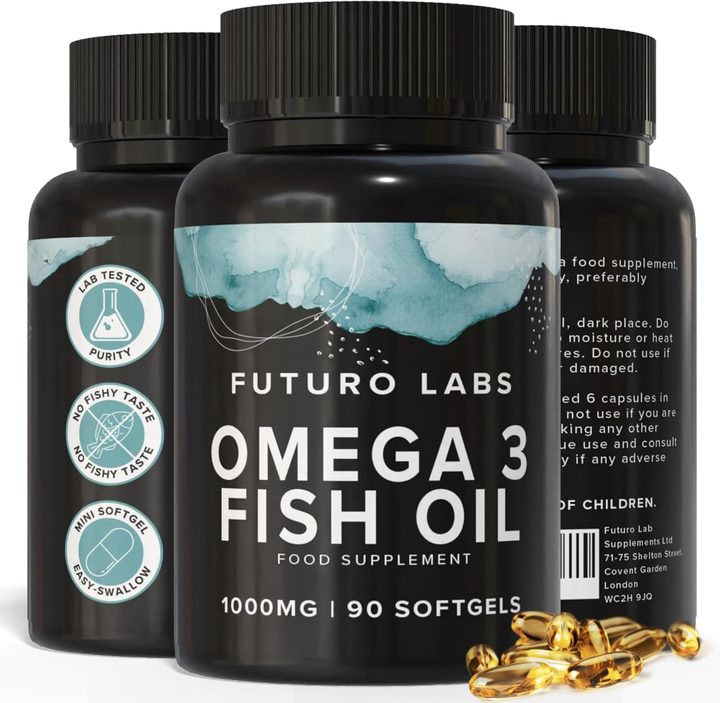
Our brand: the worked example on this page
Futuro Labs Omega 3 Fish Oil
- 17p a day
- 90 softgels, 1 softgel daily
- Lab tested
- Made in the UK
The 90-day sizing that prevents the problem: Futuro Labs Omega 3 Fish Oil on Amazon UK, 90 softgels for £14.99, finished well inside any dating. Label breakdown. The freshness signals to buy on are covered on the burps page.
What expiry means in an oil, and the honest risk assessment
A date on a fish oil bottle tracks one process: oxidation, the slow reaction of polyunsaturated oil with oxygen that builds peroxides and aldehydes, the rancid compounds, degrading the EPA and DHA as it goes, accelerated by heat, light and the air that enters every time the lid opens, and essentially unrelated to the sudden-danger model people carry over from dairy. The honest risk assessment follows the chemistry: a recently-lapsed capsule from a cool, dark, mostly-full bottle is usually just a slightly weaker capsule, and nobody needs alarm over having taken a few; a long-expired, warm-stored, half-empty bottle holds oil that has lost a real fraction of the potency you bought it for while accumulating exactly the oxidation products the industry's quality standards, the GOED monograph's peroxide and TOTOX limits among them, exist to cap; and the everyday intake of oxidised oil is a thing worth avoiding on general principle rather than a poisoning to fear. Not dangerous enough to panic over, degraded enough to stop swallowing: the two halves of the verdict.
The disposal, the field test, and the habits that stop the question recurring
Disposal is the easy paragraph: fish oil capsules are food supplements, not medicines, so the pharmacy takeback route exists for prescriptions and is not required here, and the household bin does the job, capsules in the rubbish, bottle recycled per its material, with the one courtesy of not flushing them, oils belonging in no drain. The field test, for the bottle you are unsure about: cut a capsule and smell it, fresh refined oil reading faintly marine to nearly neutral while rancid oil announces itself with the sharp, paint-adjacent pungency there is no mistaking, and cloudiness or a strong fishy repeat from a fed dose corroborating the verdict. The prevention habits close the loop: buy sizes you finish inside three or four months, a 90-day bottle being the sensible ceiling for a one-a-day habit; store cool and dark, a cupboard rather than a windowsill or the car; keep the lid habitually tight; and let the arithmetic retire any rescue instinct, since the entire bottle cost around £15, the expired remainder is worth a fraction of that, and the thing being protected by binning it, months of actually-delivered EPA and DHA, is the entire point of the habit.
| Situation | Verdict | Action |
|---|---|---|
| A few days past date, stored cool and dark | Weaker, not worrying | Finish or bin by preference; no alarm either way |
| Months past date, or warm or light-stored | Oxidation has done real work | Bin with household rubbish; recycle the bottle |
| Smells sharp, painty or aggressively fishy when cut | Rancid: the verdict is in | Bin regardless of the printed date |
| In-date but causing hard fishy repeats when fed | Early oxidation or poor stock | Treat as expired: swap to fresh, tested stock |
| Already took some expired ones | Not an emergency | Stop, bin the rest, carry on: no action needed |
| Tempted to finish the bottle to save money | £15 ceiling on the whole bottle | The maths says bin: fresh potency was the purchase |
The verdict, and the sizing that makes the page unnecessary
What to do with expired fish oil capsules: bin them with the household rubbish, untroubled but unsentimental, because expiry in an oil means oxidation, a potency loss plus the rancid compounds quality standards exist to cap, rather than a toxin to fear, and because the rescue maths never works on a product this cheap. The habits that make the question stop arriving are the same ones the freshness pages teach for burps, and the worked example is sized for them: Futuro Labs Omega 3 Fish Oil sells 90 softgels for £14.99, a one-a-day quarter that any consistent habit finishes months inside its dating, stored in a cupboard, lid tight, 17p a day of oil that never gets the chance to go stale. The best thing to do with expired fish oil is to stop owning any, and a 90-day bottle plus a dinner habit is the whole method.
What to check on the label
- Bin with household rubbish: a food supplement, not a medicines-takeback item; never flush.
- Expiry means oxidation: potency lost, rancid compounds gained, no sudden toxicity.
- The smell test settles doubt: cut one; painty pungency is the verdict.
- Took a few already? No alarm: stop, bin the rest, carry on.
- Prevention is sizing and storage: 90-day bottles, cool, dark, lid tight.
Our brand
The worked example: Futuro Labs Omega 3 Fish Oil
Futuro Labs Omega 3 Fish Oil: 1 softgel daily with food, 1000mg fish oil providing 180mg EPA and 120mg DHA (300mg combined), 90 softgels for £14.99, 17p a day, lab-tested purity, UK GMP made. Gelatin shell, so not vegetarian.
- Fish oil per softgel
- 1000mg
- EPA / DHA per softgel
- 180mg / 120mg (300mg combined)
- Serving
- 1 softgel a day
- Bottle
- 90 softgels, 90 days
- Price
- £14.99 (17p a day)
- Softgel
- mini softgel, no fishy taste
Questions people also ask
Is it dangerous to take expired fish oil capsules?
Not acutely: recently-lapsed, well-stored capsules are mainly just weaker. The case for binning is oxidation, lost potency plus rancid compounds, not poisoning risk.
How can I tell if fish oil capsules have gone off?
Cut one and smell it: fresh oil is faintly marine, rancid oil is sharp and paint-adjacent. Hard fishy repeats from a fed dose say the same thing.
Can I return expired supplements to a pharmacy?
No need: the takeback route is for medicines. Food supplements go in the household bin, with the bottle recycled.
How long does fish oil last after opening?
Comfortably months when stored cool, dark and tightly lidded: which is why 90-day bottles finished on schedule never meet their dates.
Does refrigerating fish oil capsules extend their life?
It slows oxidation and does no harm: useful in warm homes, unnecessary for a cupboard-stored bottle finished inside a quarter.
Sources
- Futuro Labs Omega 3 Fish Oil listing: 1000mg fish oil per softgel providing 180mg EPA and 120mg DHA, 90 softgels. Amazon UK, accessed 31 August 2026. https://www.amazon.co.uk/dp/B0CP9T3BTN
- GOED Voluntary Monograph: the omega-3 industry's quality standard setting limits for heavy metals, dioxins and oxidation (peroxide, anisidine and TOTOX values) in fish oils. https://goedomega3.com
- Dyerberg J, Madsen P, Møller JM, Aardestrup I, Schmidt EB. Bioavailability of marine n-3 fatty acid formulations. Prostaglandins, Leukotrienes and Essential Fatty Acids 2010;83(3):137-141. PubMed record
- EFSA Panel on Dietetic Products. Scientific opinion on the substantiation of health claims related to EPA and DHA and normal function of the heart (250mg daily condition of use). EFSA Journal 2010;8(10):1796. https://www.efsa.europa.eu/en/efsajournal/pub/1796