Ghost Fitness/Omega-3/What medications should not be taken with fish oil?
What medications should not be taken with fish oil?
The short answer
One class carries the documented caution: blood thinners, anticoagulants and antiplatelets, where gram-scale fish oil is a pharmacist conversation first. Everything else on your repeat list is a free thirty-second question at the same counter.
- 1 caution classanticoagulants and antiplatelets: the documented conversation
- The dose dependenceeveryday 300mg is a mention; gram plans are a gate
- The maybe columnblood-pressure medication at 3g intakes: additive logic, ask
- The countera pharmacist answers combination questions free, in seconds
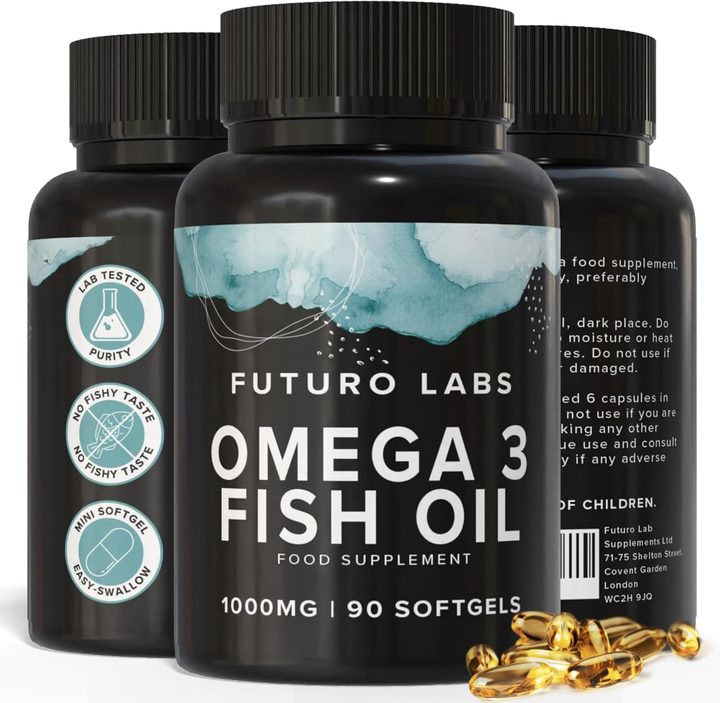
Our brand: the worked example on this page
Futuro Labs Omega 3 Fish Oil
- 17p a day
- 90 softgels, 1 softgel daily
- Lab tested
- Made in the UK
The everyday dose the roster barely troubles: Futuro Labs Omega 3 Fish Oil on Amazon UK, 300mg EPA+DHA with dinner, £14.99 for 90 days. Label breakdown. The full avoid roster beyond medicines is on the when-to-avoid page; the safety file on the boundary page.
The roster: one documented class, one maybe, and a long fine column
The medication roster for fish oil is shorter than the worry that searches for it, and honesty means drawing it at its true size. The documented caution class: anticoagulant and antiplatelet medicines, warfarin, the newer direct oral anticoagulants, aspirin in its antiplatelet role, clopidogrel and their relatives, where the logic is additive, omega-3's mild effects on platelet function stacking with drugs whose entire job is to reduce clotting, and where the rule is dose-shaped: an everyday 300mg softgel is worth mentioning at the next review, while gram-scale plans are a pharmacist or prescriber conversation before the purchase, and prescription-grade intakes were never a self-serve decision at all. The maybe column: blood-pressure medication, where the pair's own claim territory at 3g implies a modest additive effect on readings, making high-dose plans worth the same ask, and where everyday doses raise nothing documented. And the fine column, which is most of the pharmacy: no documented interaction stands between fish oil and the common repeat-list residents, statins being co-managed with omega-3 in cardiology care as a matter of routine, and the standard diabetes, thyroid and acid-suppression medicines carrying no fish oil entry in their interaction literature, which is a factual statement about documentation and not a personal clearance, the distinction the next section turns into a procedure.
The procedure that beats every list, and the two standing rules
The reason this page ends in a procedure rather than a longer table is structural: interaction lists describe drug classes, while readers take specific medicines in specific combinations at specific doses, and the person equipped to collapse that gap is standing behind a counter answering exactly these questions for free. The procedure: bring your repeat list, or the app that holds it, name the fish oil product and its member milligrams, and ask the thirty-second question, ideally at the next collection so it costs no extra trip, with the medicine's own patient information leaflet as the written backstop, its interactions section being the manufacturer's documented word. The two standing rules that survive every individual answer: surgery outranks everything, every supplement declared to the surgical team and their stop-or-continue instruction obeyed, since perioperative bleeding rules are theirs alone; and prescriber instructions outrank every general page, a clinician who has told you personally to avoid or pause fish oil having said the final word this site's tiers all defer to. Run the procedure once per new medicine and the roster above becomes what it should be, background knowledge rather than a decision tool, which is the safest thing a medication page can turn itself into.
| The class | The status | The rule |
|---|---|---|
| Anticoagulants and antiplatelets | The documented caution | Everyday dose: mention it; gram plans: ask first |
| Blood-pressure medicines | The maybe column, at 3g intakes | High-dose plans earn the same thirty-second ask |
| Statins | No documented interaction | Routinely co-managed with omega-3 in cardiac care |
| Common diabetes, thyroid, acid-suppression medicines | No documented interaction | Factual documentation, not personal clearance: ask anyway |
| Any surgery, any medicine | Surgical team governs | Declare everything; obey the stop-or-continue |
| A personal prescriber instruction | The final word | Outranks this and every general page |
The verdict, and the roster folded into one visit
What medications should not be taken with fish oil: none absolutely at everyday doses, one class conditionally, the anticoagulants and antiplatelets whose additive logic makes gram-scale fish oil a conversation before a purchase, a maybe column at blood-pressure territory intakes, and a long fine column that a pharmacist confirms for your specific list in half a minute. The page's real product is the procedure: repeat list, product name, member milligrams, one question at the next collection, leaflet as backstop, surgery and prescriber instructions supreme. The worked example is the dose that makes the whole visit brief: Futuro Labs Omega 3 Fish Oil, 300mg of EPA and DHA with dinner, £14.99 for 90 days at 17p, lab-tested, UK made, an everyday intake the roster barely troubles, carried to the counter anyway, because thirty seconds is the cheapest insurance in the building.
What to check on the label
- One documented caution class: anticoagulants and antiplatelets, dose-shaped.
- Everyday is a mention; grams are a gate: the rule's whole geometry.
- Blood-pressure meds join at 3g plans: additive logic, same ask.
- The pharmacist beats every list: your medicines, thirty seconds, free.
- Surgery and prescriber words are supreme: declare, obey, done.
Our brand
The worked example: Futuro Labs Omega 3 Fish Oil
Futuro Labs Omega 3 Fish Oil: 1 softgel daily with food, 1000mg fish oil providing 180mg EPA and 120mg DHA (300mg combined), 90 softgels for £14.99, 17p a day, lab-tested purity, UK GMP made. Gelatin shell, so not vegetarian.
- Fish oil per softgel
- 1000mg
- EPA / DHA per softgel
- 180mg / 120mg (300mg combined)
- Serving
- 1 softgel a day
- Bottle
- 90 softgels, 90 days
- Price
- £14.99 (17p a day)
- Softgel
- mini softgel, no fishy taste
Questions people also ask
Can I take fish oil with blood thinners?
The everyday dose is worth mentioning at your next review; gram-scale plans are a pharmacist or prescriber conversation before the purchase. The logic is additive, so the professional decides.
Is fish oil safe with statins?
No documented interaction exists, and the pair are routinely co-managed in cardiac care: still name both at the counter, since documentation is not personal clearance.
Does fish oil interact with blood pressure tablets?
Nothing documented at everyday doses: plans at the 3g claim territory imply a modest additive effect on readings, which earns the same thirty-second ask.
Should I stop fish oil before an operation?
Declare it with every supplement and follow the surgical team's instruction: perioperative rules belong to them, not to any general page.
Where do I actually check my own medicines?
The counter and the leaflet: your pharmacist answers your specific list free in seconds, and each medicine's patient information leaflet is the manufacturer's documented word.
Sources
- EFSA Panel on Dietetic Products. Scientific opinion on the tolerable upper intake level of EPA, DHA and DPA: supplemental intakes of EPA and DHA combined up to about 5g/day do not raise safety concerns for adults. EFSA Journal 2012;10(7):2815. https://www.efsa.europa.eu/en/efsajournal/pub/2815
- Electronic medicines compendium (emc): Summaries of Product Characteristics for omega-3-acid ethyl esters 1000mg capsules (Omacor and generics) and icosapent ethyl (Vazkepa). https://www.medicines.org.uk/emc/search?q=omega-3-acid+ethyl+esters
- Futuro Labs Omega 3 Fish Oil listing: 1000mg fish oil per softgel providing 180mg EPA and 120mg DHA, 90 softgels. Amazon UK, accessed 31 August 2026. https://www.amazon.co.uk/dp/B0CP9T3BTN
- EFSA Panel on Dietetic Products. Scientific opinion on the substantiation of health claims related to EPA and DHA and normal function of the heart (250mg daily condition of use). EFSA Journal 2010;8(10):1796. https://www.efsa.europa.eu/en/efsajournal/pub/1796