Ghost Fitness/Omega-3/Does fish oil go bad if not refrigerated?
Does fish oil go bad if not refrigerated?
The short answer
No: softgels are designed for ambient storage and last their full dating in a cool, dark cupboard with the lid tight. Refrigeration is optional insurance, useful in warm homes and for opened liquid oils, where the fridge is genuinely recommended.
- Ambient by designsoftgels: sealed doses built for the cupboard, not the fridge
- The real enemiesheat, light and air: room temperature is not on the list
- Opened liquidsthe one format where the fridge is genuinely recommended
- The freezerharmless to the oil, and doing a different job: burp control
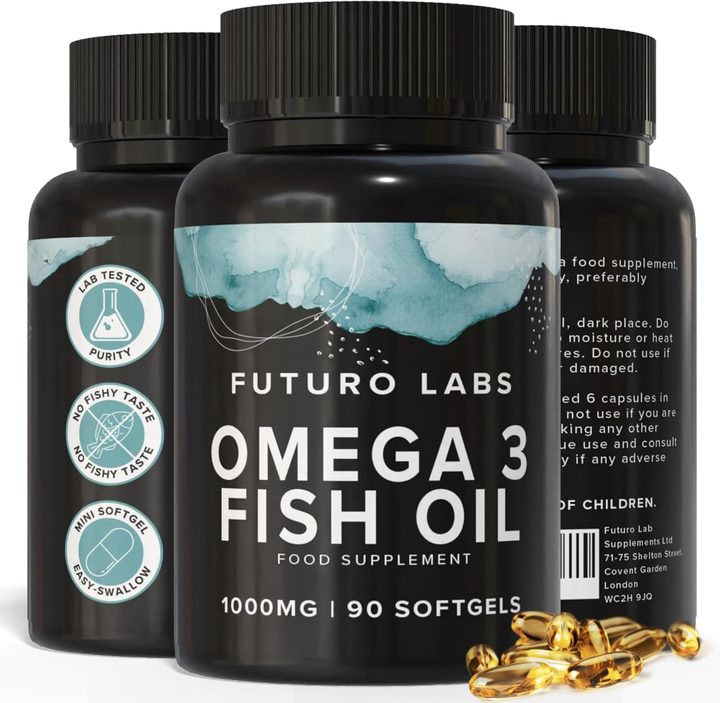
Our brand: the worked example on this page
Futuro Labs Omega 3 Fish Oil
- 17p a day
- 90 softgels, 1 softgel daily
- Lab tested
- Made in the UK
Cupboard-ready by design: Futuro Labs Omega 3 Fish Oil on Amazon UK, opaque 90-softgel bottle, £14.99 for 90 days. Label breakdown. What expiry actually means is on the expired capsules page; the failure signs on rancid symptoms.
What actually degrades fish oil, and where room temperature ranks
Fish oil goes bad by oxidation, the reaction of polyunsaturated oil with oxygen that builds the rancid peroxides and aldehydes the industry's quality standards cap, and the reaction's accelerators rank in an order the refrigeration question gets backwards: air exposure first, every opening of the lid and every half-empty bottle's headspace feeding the reaction directly; light second, ultraviolet especially, which is why serious products ship in opaque or amber containers; heat third, with the reaction roughly speeding as temperature climbs, meaning a radiator shelf, a sunny windowsill or a parked car does real damage while the difference between an 18-degree cupboard and a 4-degree fridge is modest insurance at the margin. A sealed softgel adds its own protection, each dose encapsulated away from air until swallowed, which is why capsule products are formulated, dated and instructed for ambient storage, and why the direct answer is no: an unrefrigerated softgel bottle in a sensible cupboard is not going bad, it is being stored exactly as designed.
The storage table by format, and the two fridge jobs worth knowing
Format decides the rules. Sealed softgel bottles, opened or not: the cupboard, cool, dark, lid tight, finished within a few months of opening, with the fridge as optional extra damping in genuinely warm homes or through a heatwave, never a requirement and mildly inconvenient, since cold capsules can fog and the bottle sweats condensation on each removal. Liquid fish oils are the different animal: once opened, the whole surface meets air at every pour, oxidation runs faster, and the fridge is genuinely recommended, usually by the label itself, with a finish-within-weeks discipline attached. Gummies want the cupboard and dislike both heat and fridge humidity. And the freezer earns its separate mention for its separate job: freezing softgels neither harms nor preserves the oil in any way that matters, but it delays dissolution in the gut, the burp-control trick from this section's quartet, which is the one good reason capsules ever enter the icebox. Store by format, protect from the real enemies, and the printed date takes care of itself.
| Format | Where it lives | The rules that matter |
|---|---|---|
| Softgels, sealed bottle | The cupboard | Cool, dark: the fridge adds nothing meaningful |
| Softgels, opened bottle | The cupboard | Lid tight, finish inside a few months; fridge optional in warm homes |
| Liquid fish oil, opened | The fridge, genuinely | Air meets the whole surface per pour: cold and quick consumption |
| Gummies | The cupboard | Heat melts, fridge humidity spoils: ambient and dry |
| Any format, badly placed | Not the windowsill, radiator or car | Heat and light are the accelerants that actually bite |
| Softgels in the freezer | Optional, for burps | Harmless to the oil; delays dissolution, nothing more |
The verdict, and the sizing habit that outranks any fridge
Does fish oil go bad if not refrigerated: softgels, no, the cupboard is their designed home and the fridge is optional insurance; opened liquids, eventually yes, and the fridge is their genuine rule; and across every format the variables that actually decide freshness are air, light, heat and time, which converts the best storage advice into a purchasing habit rather than an appliance: buy quarter-sized bottles a daily routine finishes young, in opaque packaging, from brands that test, and store them dark with the lid tight. The worked example is that habit pre-packaged: Futuro Labs Omega 3 Fish Oil, an opaque 90-softgel bottle a one-a-day habit empties well inside its dating, lab-tested oil, £14.99 at 17p a day, UK made, living happily in the same cupboard as everything else and never meeting the fridge unless a heatwave or the burp trick invites it.
What to check on the label
- Softgels are ambient by design: the cupboard is the correct home, not a compromise.
- The real enemies are air, light and heat: room temperature is not on the list.
- Opened liquid oils are the exception: fridge, genuinely, and finished quickly.
- The freezer's job is burps, not preservation: harmless and optional.
- Sizing beats refrigeration: quarter-sized bottles finished young stay fresh anywhere sensible.
Our brand
The worked example: Futuro Labs Omega 3 Fish Oil
Futuro Labs Omega 3 Fish Oil: 1 softgel daily with food, 1000mg fish oil providing 180mg EPA and 120mg DHA (300mg combined), 90 softgels for £14.99, 17p a day, lab-tested purity, UK GMP made. Gelatin shell, so not vegetarian.
- Fish oil per softgel
- 1000mg
- EPA / DHA per softgel
- 180mg / 120mg (300mg combined)
- Serving
- 1 softgel a day
- Bottle
- 90 softgels, 90 days
- Price
- £14.99 (17p a day)
- Softgel
- mini softgel, no fishy taste
Questions people also ask
Do fish oil capsules need to be refrigerated after opening?
No: opened softgel bottles belong in a cool, dark cupboard with the lid tight, finished within a few months. The fridge is optional insurance in warm homes.
Does refrigerating fish oil make it last longer?
Marginally: cold slows oxidation, but air, light and heat exposure matter far more, and a well-sized bottle finished on schedule never needs the help.
I left my fish oil in a hot car: is it ruined?
One hot afternoon rarely ruins a sealed bottle, but heat is a genuine accelerant: run the smell test on a cut capsule, and treat repeated heat exposure as aging the bottle fast.
Should liquid fish oil go in the fridge?
Yes, once opened: every pour exposes the whole surface to air, so cold storage and quick consumption are the liquid format's real rules, usually printed on its own label.
Is it bad to freeze fish oil capsules?
No: freezing neither harms nor meaningfully preserves the oil. Its actual use is the burp trick, delaying dissolution past the stomach.
Sources
- Futuro Labs Omega 3 Fish Oil listing: 1000mg fish oil per softgel providing 180mg EPA and 120mg DHA, 90 softgels. Amazon UK, accessed 31 August 2026. https://www.amazon.co.uk/dp/B0CP9T3BTN
- GOED Voluntary Monograph: the omega-3 industry's quality standard setting limits for heavy metals, dioxins and oxidation (peroxide, anisidine and TOTOX values) in fish oils. https://goedomega3.com
- Dyerberg J, Madsen P, Møller JM, Aardestrup I, Schmidt EB. Bioavailability of marine n-3 fatty acid formulations. Prostaglandins, Leukotrienes and Essential Fatty Acids 2010;83(3):137-141. PubMed record
- EFSA Panel on Dietetic Products. Scientific opinion on the substantiation of health claims related to EPA and DHA and normal function of the heart (250mg daily condition of use). EFSA Journal 2010;8(10):1796. https://www.efsa.europa.eu/en/efsajournal/pub/1796