Ghost Fitness/Omega-3/Ethyl ester vs triglyceride fish oil: does it matter?
Ethyl ester vs triglyceride fish oil: does it matter?
The short answer
Rarely: at everyday 250mg doses taken with dinner, the form is worth pennies and nothing in absorption. It starts mattering at gram-scale targets, fasted habits or per-gram budgets, and the boundary between those situations is the whole answer.
- Everyday, fedthe form is worth approximately nothing: the majority's situation
- Gram-scalewhere per-gram price and absorption start paying rent
- Fasted habitsthe one condition that keeps the absorption gap alive
- The boundarydose times habit times budget: the whole answer in a grid
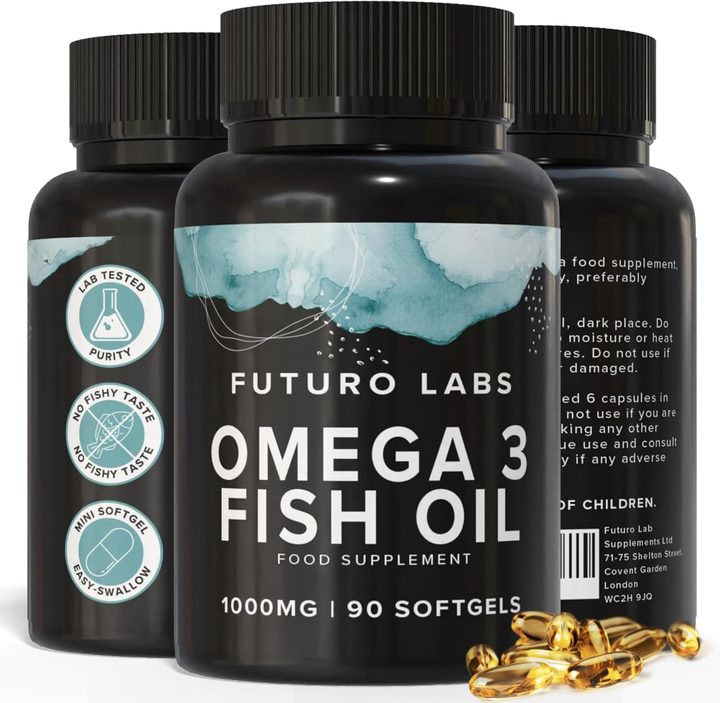
Our brand: the worked example on this page
Futuro Labs Omega 3 Fish Oil
- 17p a day
- 90 softgels, 1 softgel daily
- Lab tested
- Made in the UK
The bottle for the doesn't-matter side of the boundary: Futuro Labs Omega 3 Fish Oil on Amazon UK, natural triglyceride oil, 300mg EPA+DHA, £14.99 for 90 days. Label breakdown. The full scoring is on the EE vs TG showdown; the buying tree on which form to buy.
The mattering grid: dose, habit, budget
After a showdown, a router, a decision tree and a fact-check, this page's job is the magnitude question those pages imply: how much does the form actually matter, and the honest answer is a grid with three axes. Dose: at the everyday 250-to-300mg territory, both forms clear the claim threshold in one ordinary capsule and standard bottles are natural triglyceride at no premium anyway, so the form is worth roughly nothing; at gram-scale targets the concentrate aisle opens and with it the real EE-versus-rTG money. Habit: taken with dinner, the fatty meal that summons bile and lipase, the absorption gap between the forms collapses to a margin no user would ever detect; taken fasted and erratically, the gap stays live and starts costing a percentage of every capsule paid for. Budget: at matched gram strength, EE's per-100mg price edge is real and compounds monthly, while rTG's premium buys back the fasted forgiveness, so budget only votes once dose and habit have spoken. Multiply the axes and the grid shows one hot corner, gram-scale users deciding between fasted forgiveness and fed economy, and a large cool plain where the whole debate is a rounding error.
Reading your own square, and the two errors the grid prevents
Find your square honestly. The everyday dinner-taker, most readers of this site: cool plain, the form question already answered by the standard shelf, and every minute spent on EE-versus-TG forums was a minute the label masterclass would have spent better. The gram-scale dinner-taker: warm square, where EE's arithmetic wins and the fatty meal retires its only weakness, the decision tree's exit two. The gram-scale erratic doser: the hot corner, where rTG's premium is honest insurance, exit three, ideally bought alongside an attempt to fix the habit that made it necessary. The grid then prevents the two symmetrical errors the marketing sells. Error one, upgrading a cool-plain purchase: paying an rTG or form premium at everyday strength buys a difference too small to have a name, the walk-away the showdown priced. Error two, ignoring the hot corner: running cheap EE fasted at 2g and quietly absorbing a discount on every capsule, the one situation where the form genuinely bills you for not caring. Everything else in the debate is content, not consequence.
| Your situation | Does it matter? | What to do |
|---|---|---|
| Everyday 250-300mg, taken with dinnerOurs | No: worth approximately nothing | Standard softgel; spend the attention on the label instead |
| Everyday dose, offered a form premium | No: the premium buys a nameless difference | Decline it; natural TG is already standard |
| Gram-scale, welded to dinner | Yes, on price: EE's per-gram edge compounds | Cheapest honest EE concentrate, meal non-negotiable |
| Gram-scale, fasted or erratic | Yes, on absorption: the gap stays live | rTG as insurance, or fix the habit and save the premium |
| Chasing form-specific effects at any dose | No: delivered molecules are identical | No purchase answers this; dose and adherence do |
The verdict, and the boundary in one sentence
Ethyl ester vs triglyceride fish oil, does it matter: rarely, and the boundary is statable in one sentence, the form starts mattering exactly where deliberate gram-scale dosing meets either a fasted habit or a per-gram budget, and everywhere short of that line it is a debate about pennies and undetectable margins. Most readers live on the near side of the line, where the worked example already ends the question: Futuro Labs Omega 3 Fish Oil, natural triglyceride oil at standard strength, one softgel with dinner delivering 300mg of EPA and DHA, £14.99 for 90 days at 17p, lab-tested, UK made, a bottle whose form was never a decision because at this dose, taken this way, there was never a decision to make.
What to check on the label
- At everyday fed doses the form is worth nothing: the majority's square.
- The boundary: gram-scale meets fasted habits or per-gram budgets.
- Fed gram users: EE's price edge is the real money: dinner retires its weakness.
- Fasted gram users: the gap stays live: rTG is insurance, or fix the habit.
- Never buy form for effects: delivered molecules are identical either way.
Our brand
The worked example: Futuro Labs Omega 3 Fish Oil
Futuro Labs Omega 3 Fish Oil: 1 softgel daily with food, 1000mg fish oil providing 180mg EPA and 120mg DHA (300mg combined), 90 softgels for £14.99, 17p a day, lab-tested purity, UK GMP made. Gelatin shell, so not vegetarian.
- Fish oil per softgel
- 1000mg
- EPA / DHA per softgel
- 180mg / 120mg (300mg combined)
- Serving
- 1 softgel a day
- Bottle
- 90 softgels, 90 days
- Price
- £14.99 (17p a day)
- Softgel
- mini softgel, no fishy taste
Questions people also ask
Does the fish oil form matter at a normal daily dose?
Practically no: standard bottles are natural triglyceride anyway, one capsule clears the claim territory, and taken with dinner the absorption difference is undetectable.
When does ethyl ester vs triglyceride actually matter?
At gram-scale targets: that is where EE's per-gram price edge and rTG's fasted absorption edge both become real money rather than forum content.
Is it worth paying more for triglyceride form?
Only in the hot corner: gram-scale dosing with genuinely erratic, often-fasted habits. Everywhere else the premium buys a difference too small to name.
Will switching forms make my fish oil work better?
No: once absorbed, the EPA and DHA are identical whatever backbone delivered them. Dose, adherence and the dinner habit are where effectiveness lives.
What form is a standard supermarket softgel?
Natural triglyceride, by manufacturing norm: which is why the everyday buyer was never actually in this debate.
Sources
- Futuro Labs Omega 3 Fish Oil listing: 1000mg fish oil per softgel providing 180mg EPA and 120mg DHA, 90 softgels. Amazon UK, accessed 31 August 2026. https://www.amazon.co.uk/dp/B0CP9T3BTN
- Dyerberg J, Madsen P, Møller JM, Aardestrup I, Schmidt EB. Bioavailability of marine n-3 fatty acid formulations. Prostaglandins, Leukotrienes and Essential Fatty Acids 2010;83(3):137-141. PubMed record
- Classic absorption work on fish oil ethyl esters: uptake is markedly higher when ethyl ester omega-3 is taken with a high-fat meal, narrowing the gap to triglyceride forms. PubMed record
- GOED Voluntary Monograph: the omega-3 industry's quality standard setting limits for heavy metals, dioxins and oxidation (peroxide, anisidine and TOTOX values) in fish oils. https://goedomega3.com
- EFSA Panel on Dietetic Products. Scientific opinion on the substantiation of health claims related to EPA and DHA and normal function of the heart (250mg daily condition of use). EFSA Journal 2010;8(10):1796. https://www.efsa.europa.eu/en/efsajournal/pub/1796