Ghost Fitness/Omega-3/What is TOTOX and does it matter for fish oil?
What is TOTOX and does it matter for fish oil?
The short answer
TOTOX is the industry's freshness score: twice the peroxide value plus the anisidine value, measuring early and late oxidation together, with 26 as the accepted ceiling. It matters, and the brands worth buying can show you the number.
- 2 x PV + AVthe formula: peroxide value doubled, plus anisidine value
- 26the voluntary industry ceiling for total oxidation
- PV 5, AV 20the accompanying limits on each component
- Batch, not bottlethe number is measured at production: storage still matters after
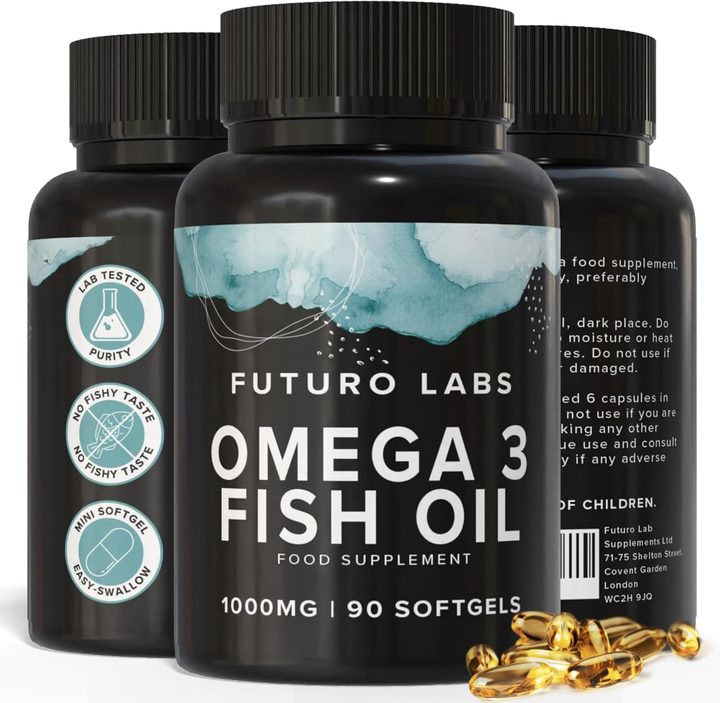
Our brand: the worked example on this page
Futuro Labs Omega 3 Fish Oil
- 17p a day
- 90 softgels, 1 softgel daily
- Lab tested
- Made in the UK
Tested oil, plainly declared: Futuro Labs Omega 3 Fish Oil on Amazon UK, independent lab tested, 300mg EPA+DHA, £14.99 for 90 days. Label breakdown. What rancidity looks like at home is on the rancid audit; what deodorising hides on the deodorised page.
The score, its two halves, and the ceiling
Oxidation, the process that turns fish oil rancid, happens in stages, and TOTOX exists because no single lab number catches both. The peroxide value, PV, counts the primary oxidation products, the peroxides that form first as fresh oil meets oxygen: an early-warning gauge that can actually fall again as those peroxides break down. The anisidine value, AV, counts the secondary products those peroxides break down into, the aldehydes that carry the rancid smell and taste: the late-stage gauge. TOTOX combines them as twice the PV plus the AV, weighting the early signal double, and the omega-3 industry's voluntary monograph, maintained by its trade association, sets the widely used ceilings: PV no more than 5, AV no more than 20, TOTOX no more than 26. A freshly refined, well-handled oil typically scores far under the ceiling; a heat-abused or elderly one climbs past it, whatever the deodorising did to the smell, which is precisely why a laboratory number exists where a nose used to be.
Does it matter, and how a buyer actually uses it
It matters for exactly the reason the deodorised page establishes: modern refining mutes the sensory checks, so a measured oxidation value is the one freshness verdict that survives processing, and a brand publishing its TOTOX on a batch certificate is showing you the thing the marketing cannot fake. How to use it, honestly ranked: best, a brand that publishes batch-level certificates of analysis with PV, AV and TOTOX under the limits, dated and lot-matched, the strongest freshness evidence on sale; good, a named third-party testing statement covering oxidation even without published numbers, this site's own minimum bar; weakest, a bare pure and fresh boast with no lab behind it, which the checklist pages already walk away from. Two honest caveats keep the score in proportion. First, TOTOX is measured at production: a superb batch number does not exempt the bottle from the storage rules, since oxidation resumes in your cupboard, which is why dates and the storage page still apply. Second, the limits are quality thresholds, not toxicity lines: an oil at TOTOX 30 is stale and substandard rather than a poisoning, the honest framing the rancid pages use, and the response to a bad number is a refund and a better brand, not alarm.
| The measure | What it counts | The accepted ceiling | The buyer's reading |
|---|---|---|---|
| Peroxide value (PV) | Primary oxidation: the early peroxides | 5 | The early-warning gauge |
| Anisidine value (AV) | Secondary oxidation: the rancid-tasting aldehydes | 20 | The late-stage gauge |
| TOTOX (2xPV + AV) | Both stages combined | 26 | The headline freshness score |
| A published, lot-matched CoA | All of the above, per batch | Within limits, dated | The strongest freshness evidence on sale |
| No numbers, no named lab | Nothing verifiable | Not applicable | The walk-away the checklist already teaches |
The verdict, and where the number sits in this site's method
What is TOTOX and does it matter: the industry's combined oxidation score, two parts early warning to one part late-stage evidence, capped at 26 by the trade monograph, and it matters because it is the freshness check that deodorising cannot mute and marketing cannot write. In this site's method it slots in as the top tier of the testing line on the label read: certificates with numbers beat named testing, which beats boasts, and nothing on a certificate excuses careless storage afterwards. The worked example holds the tier this site requires of everything it compares: Futuro Labs Omega 3 Fish Oil is independently lab tested for purity, dated on pack, and sold at a 90-day pace that keeps bottles young, 300mg of EPA and DHA with dinner, £14.99 at 17p a day, UK made, with the fed burp test available to any reader as the free at-home audit the laboratory number was designed to make unnecessary.
What to check on the label
- TOTOX = 2 x peroxide value + anisidine value: both oxidation stages in one score.
- The ceilings: PV 5, AV 20, TOTOX 26: the industry's voluntary monograph.
- Published batch CoAs are the strongest evidence: numbers beat boasts.
- The score is measured at production: your cupboard still runs the clock.
- Quality threshold, not toxicity line: a bad number means refund, not alarm.
Our brand
The worked example: Futuro Labs Omega 3 Fish Oil
Futuro Labs Omega 3 Fish Oil: 1 softgel daily with food, 1000mg fish oil providing 180mg EPA and 120mg DHA (300mg combined), 90 softgels for £14.99, 17p a day, lab-tested purity, UK GMP made. Gelatin shell, so not vegetarian.
- Fish oil per softgel
- 1000mg
- EPA / DHA per softgel
- 180mg / 120mg (300mg combined)
- Serving
- 1 softgel a day
- Bottle
- 90 softgels, 90 days
- Price
- £14.99 (17p a day)
- Softgel
- mini softgel, no fishy taste
Questions people also ask
What is a good TOTOX value for fish oil?
Under 26 is the accepted ceiling, and well-handled fresh oils typically score far below it: single digits to low teens on a good batch certificate.
Where do I find a product's TOTOX number?
On a batch certificate of analysis, where a brand publishes one: the strongest freshness evidence available. Absent that, a named third-party testing statement is the minimum bar.
Is a high TOTOX fish oil dangerous?
It is stale and substandard rather than acutely dangerous: oxidised fats are a thing to avoid on principle and on palate. The response is a refund and a better brand.
Does a good TOTOX mean the bottle stays fresh?
No: the number is measured at production, and oxidation resumes in storage. Dates, cool dark cupboards and sealed lids still carry the rest of the job.
Why not just smell the oil instead?
Because deodorising mutes the nose: modern refining strips the volatile warning signs, which is exactly why a laboratory oxidation score exists.
Sources
- GOED Voluntary Monograph: the omega-3 industry's quality standard setting limits for heavy metals, dioxins and oxidation (peroxide, anisidine and TOTOX values) in fish oils. https://goedomega3.com
- Assimilated Regulation (EC) No 1881/2006 setting maximum levels for certain contaminants in foodstuffs, including mercury in fishery products: the contaminant-limits framework retained in UK food law. https://eur-lex.europa.eu/legal-content/EN/TXT/?uri=CELEX%3A32006R1881
- Futuro Labs Omega 3 Fish Oil listing: 1000mg fish oil per softgel providing 180mg EPA and 120mg DHA, 90 softgels. Amazon UK, accessed 31 August 2026. https://www.amazon.co.uk/dp/B0CP9T3BTN
- EFSA Panel on Dietetic Products. Scientific opinion on the substantiation of health claims related to EPA and DHA and normal function of the heart (250mg daily condition of use). EFSA Journal 2010;8(10):1796. https://www.efsa.europa.eu/en/efsajournal/pub/1796