Ghost Fitness/Omega-3/What does deodorised fish oil mean?
What does deodorised fish oil mean?
The short answer
Deodorised means the oil was steam-stripped of volatile odour and flavour compounds during refining: a palatability step, not a freshness guarantee. It mutes the smell test, so on deodorised oils the dates and the fed burp test carry the verdict.
- Steam strippinghigh heat under vacuum pulls out the volatile smell and taste compounds
- Palatabilitywhat the step buys: an oil people will actually swallow
- Not freshnessdeodorisation resets the nose, not the oxidation clock
- Dates + burp testthe checks that still work once the smell test is muted
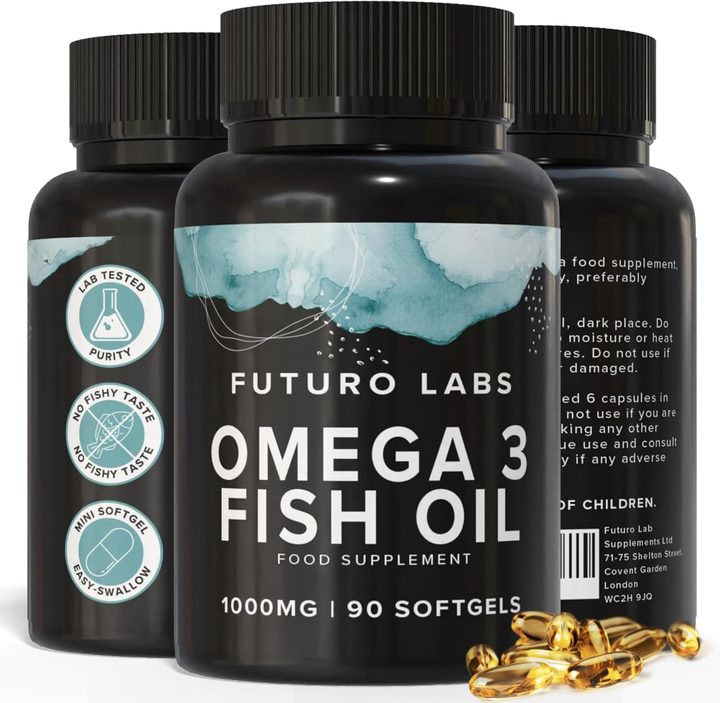
Our brand: the worked example on this page
Futuro Labs Omega 3 Fish Oil
- 17p a day
- 90 softgels, 1 softgel daily
- Lab tested
- Made in the UK
A mini softgel where palatability is the design: Futuro Labs Omega 3 Fish Oil on Amazon UK, no fishy taste, 300mg EPA+DHA, £14.99 for 90 days. Label breakdown. The freshness protocol is on how to tell if fish oil is rancid; the symptom sheet on rancid oil symptoms.
What the refinery actually does, and why
Deodorisation is a late stage of standard edible-oil refining: the oil is heated under vacuum and stripped with steam, which carries off the volatile compounds responsible for fishy smell and taste, along with some free fatty acids and other light molecules, leaving an oil that is close to neutral on the nose and tongue. Marine oils get the treatment for the obvious commercial reason, palatability: an undeodorised fish oil announces itself from across the kitchen, and capsules, liquids and especially flavoured oils all start from a deodorised base so the lemon can win. The step usually sits alongside the rest of the refining train this section has met elsewhere, degumming, neutralising, bleaching and, for concentrates, molecular distillation, the contamination-stripping stage the purity pages cover, and on a label the word may appear directly, hide inside refined fish oil, or simply be implied by the fact that the capsule does not taste of harbour. So far, so reasonable: deodorisation is why modern fish oil is swallowable at all.
What deodorisation does to your checks, and the honest reading of the word
The catch is diagnostic, not chemical: deodorisation resets the nose without resetting the clock. Oxidation, the process that turns an oil rancid, resumes the moment refining ends and accelerates with heat, light, air and time, and a deodorised oil that has since gone stale can smell far more innocent than it is, because the step removed the very volatiles your nose would have used as an early warning, until enough new oxidation products accumulate to smell anyway. Which rewrites the freshness protocol for deodorised products, meaning almost all products: the smell-and-taste test demotes from judge to tie-breaker, still worth running, only trusted when it fails loudly; the dates promote, best-before runway and batch codes becoming the primary screen; storage discipline promotes with them, cool, dark, lid on, opened liquids refrigerated; and the fed burp test becomes the live-fire check, harsh, sour, paint-adjacent burps from capsules taken with a proper meal overruling a passed smell test, exactly the hierarchy the rancid pages teach. Read honestly, deodorised on a label means pleasant, and only ever means pleasant: freshness was never the claim, and testing plus dates remain the only words that make it.
| The check | On an undeodorised oil | On a deodorised oil (most products) |
|---|---|---|
| Smell and taste | Loud early warning of staleness | Muted: trust it only when it fails |
| Best-before and batch dates | Useful | Primary: the screen that carries the verdict |
| Storage discipline | Matters | Matters more: the clock runs silently |
| The fed burp test | Confirms | The live-fire check: harsh burps overrule a clean nose |
| What the word itself guarantees | Nothing: the word is absent | Palatability only: never freshness or quality |
The verdict, and the two words that actually promise freshness
What does deodorised fish oil mean: steam-stripped of its smell and taste during refining, a palatability step that makes the product swallowable and simultaneously mutes the oldest freshness alarm you own, which is why the honest response to the word is to lean harder on dates, storage and the fed burp test rather than to relax. The two words that actually promise anything are the ones this site checks on every bottle: tested, as in named third-party oxidation and purity checks, and dated, as in a best-before with real runway. The worked example carries both alongside its deodorised-by-design mini softgel: Futuro Labs Omega 3 Fish Oil, no fishy taste, independent lab testing, dated packs, 300mg of EPA and DHA with dinner, £14.99 for 90 days at 17p, UK made, pleasant on purpose and fresh on evidence, in that order of difficulty.
What to check on the label
- Deodorised = steam-stripped of smell and taste: a standard refining stage.
- It buys palatability, never freshness: the oxidation clock keeps running.
- The smell test demotes to tie-breaker: trust it only when it fails loudly.
- Dates, storage and the fed burp test promote: the checks that still work.
- Tested and dated are the promising words: deodorised just means pleasant.
Our brand
The worked example: Futuro Labs Omega 3 Fish Oil
Futuro Labs Omega 3 Fish Oil: 1 softgel daily with food, 1000mg fish oil providing 180mg EPA and 120mg DHA (300mg combined), 90 softgels for £14.99, 17p a day, lab-tested purity, UK GMP made. Gelatin shell, so not vegetarian.
- Fish oil per softgel
- 1000mg
- EPA / DHA per softgel
- 180mg / 120mg (300mg combined)
- Serving
- 1 softgel a day
- Bottle
- 90 softgels, 90 days
- Price
- £14.99 (17p a day)
- Softgel
- mini softgel, no fishy taste
Questions people also ask
Is deodorised fish oil lower quality?
No: deodorisation is a normal refining stage nearly all edible oils receive. It says nothing about quality either way; testing and dates carry that verdict.
Does deodorising remove the omega-3?
No meaningful amount: the step strips volatile smell and taste compounds. The EPA and DHA content is what the panel declares, deodorised or not.
Can deodorised fish oil still go rancid?
Yes, at the same underlying rate: oxidation resumes after refining. The difference is that early staleness smells more innocent, which is why dates and the fed burp test matter more.
How do I check freshness if I can't smell anything?
Dates first, storage second, and the fed burp test as the live check: harsh, sour burps from capsules taken with a proper meal overrule a clean nose.
Why does my fish oil have no fishy taste at all?
Deodorisation plus, on good mini softgels, a sealed shell: pleasant by design. Enjoy it, and keep judging freshness by the dates rather than the silence.
Sources
- Futuro Labs Omega 3 Fish Oil listing: 1000mg fish oil per softgel providing 180mg EPA and 120mg DHA, 90 softgels. Amazon UK, accessed 31 August 2026. https://www.amazon.co.uk/dp/B0CP9T3BTN
- Assimilated Regulation (EC) No 1881/2006 setting maximum levels for certain contaminants in foodstuffs, including mercury in fishery products: the contaminant-limits framework retained in UK food law. https://eur-lex.europa.eu/legal-content/EN/TXT/?uri=CELEX%3A32006R1881
- GOED Voluntary Monograph: the omega-3 industry's quality standard setting limits for heavy metals, dioxins and oxidation (peroxide, anisidine and TOTOX values) in fish oils. https://goedomega3.com
- EFSA Panel on Dietetic Products. Scientific opinion on the substantiation of health claims related to EPA and DHA and normal function of the heart (250mg daily condition of use). EFSA Journal 2010;8(10):1796. https://www.efsa.europa.eu/en/efsajournal/pub/1796
- EFSA Panel on Dietetic Products, Nutrition and Allergies. Scientific Opinion on the substantiation of health claims related to magnesium. EFSA Journal 2010;8(10):1807. https://efsa.onlinelibrary.wiley.com/doi/10.2903/j.efsa.2010.1807