Ghost Fitness/Omega-3/How do you know if fish oil has gone rancid?
How do you know if fish oil has gone rancid?
The short answer
Audit five signs in escalating order: a lapsed date, careless storage, changed colour or smell, a bitter paint-like taste, and harsh sour burps from capsules taken with food. Two or more together, and the bottle goes in the bin.
- 5 signsdate, storage history, senses, taste, the fed burp: the audit order
- 2 or morethe bin threshold: signs together outrank any single one
- The fed burpthe live-fire check that overrules a passed smell test
- Not a poisoningrancid means degraded and worth binning, not an emergency
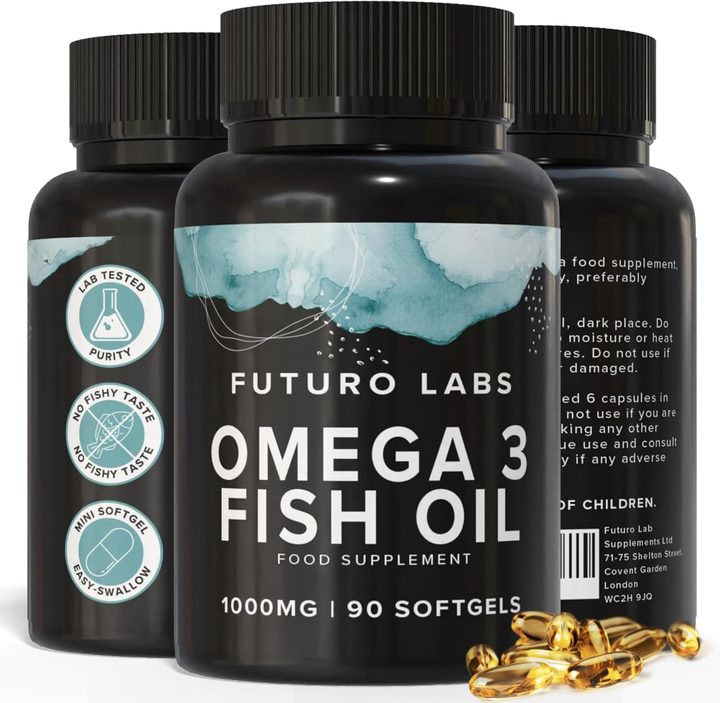
Our brand: the worked example on this page
Futuro Labs Omega 3 Fish Oil
- 17p a day
- 90 softgels, 1 softgel daily
- Lab tested
- Made in the UK
A bottle designed to pass the audit: Futuro Labs Omega 3 Fish Oil on Amazon UK, lab tested, dated, 90 softgels at a pace that keeps oil young, £14.99. Label breakdown. The laboratory version of this page is the TOTOX explainer; the symptom detail on the rancid symptoms sheet.
The audit: five signs, run in order of cheapness
Has gone rancid is a past-tense question about a bottle you already own, so run the audit from the cheapest evidence to the most direct. Sign one, the date: a lapsed best-before does not prove rancidity but strips the benefit of the doubt, because fish oil's unsaturated fats oxidise faster than most supplements age. Sign two, the storage history, asked honestly: months on a sunny windowsill, a steamy bathroom cabinet, a hot car, a liquid opened long ago and kept warm, each accelerates the clock the date assumed you would not. Sign three, the senses, with the deodorised caveat attached: darkened or unusually cloudy oil at room temperature, a sharp, sour, paint-or-varnish smell where there was none, remembering that refining mutes early warnings so a clean nose acquits nothing while a foul one convicts. Sign four, taste, for liquids or a bitten capsule: fresh oil is bland to mildly marine, rancid oil is bitter, acrid and unmistakably wrong. Sign five, the live-fire check for capsule users: harsh, sour, chemical-edged burps from softgels taken with a proper dinner, which overrule every passed test above them, since the fed burp reports on the oil actually inside the shell.
The decision rule, and what rancid honestly means
The rule that converts signs into action: one weak sign alone, a recently lapsed date on a well-stored, clean-smelling bottle, earns a downgrade of trust and a closer watch; two or more signs together, or any single strong one, the paint taste or the harsh fed burps, and the bottle goes in the bin, unphotogenic as that feels at £15. What binning actually protects you from deserves stating plainly, because the forums oscillate between shrugging and panic: rancid oil is oxidised oil, its EPA and DHA partially degraded so you are no longer buying what the label promised, and oxidised fats are a category worth avoiding on general dietary principle, which is reason enough; it is not an acute poisoning, and a stale capsule swallowed yesterday calls for a bin and a better brand, not a helpline. The follow-through matters more than the funeral: note what the audit found, refund or review where the product failed young, and re-buy against the freshness checklist, tested oil, honest dates, right-sized bottles, cool dark storage, the regime under which this audit becomes a formality you never fail.
| Sign | What to check | Weight |
|---|---|---|
| 1. The date | Best-before lapsed? | Weak alone: strips benefit of the doubt |
| 2. Storage history | Heat, light, air, an old opened liquid? | Weak alone: accelerates every other sign |
| 3. Colour and smell | Darkened, oddly cloudy warm, sour or paint-like? | Foul convicts; clean acquits nothing (deodorising) |
| 4. Taste | Bitter, acrid, varnish-adjacent? | Strong: a direct verdict on the oil |
| 5. The fed burp test | Harsh, sour burps from capsules with dinner? | Strongest: overrules every passed test above |
| The rule | Two or more signs, or one strong one | Bin it, claim the refund, buy better |
The verdict, and the regime that retires the question
How do you know if fish oil has gone rancid: run the five-sign audit from date to fed burp, weight the strong signs over the weak, and apply the two-signs rule without sentimentality, remembering that rancid means degraded and refundable rather than dangerous and dramatic. The longer answer is the regime that makes the audit boring: buy tested and dated oil, at bottle sizes you finish inside the runway, stored cool, dark and sealed, taken daily with dinner so the stock turns over. The worked example is built to that regime: Futuro Labs Omega 3 Fish Oil, independently lab tested, dated on pack, 90 mini softgels at one a day so the bottle empties in 90 days, £14.99 at 17p, UK made, a product whose intended relationship with this page is that you read it once and never need it.
What to check on the label
- Run the five signs in order: date, storage, senses, taste, fed burp.
- A clean smell acquits nothing: deodorising mutes the early warnings.
- The fed burp test is the strongest sign: it reports on the oil in the shell.
- Two or more signs, bin it: refund, review, re-buy against the checklist.
- Rancid means degraded, not poisonous: a bin decision, not an emergency.
Our brand
The worked example: Futuro Labs Omega 3 Fish Oil
Futuro Labs Omega 3 Fish Oil: 1 softgel daily with food, 1000mg fish oil providing 180mg EPA and 120mg DHA (300mg combined), 90 softgels for £14.99, 17p a day, lab-tested purity, UK GMP made. Gelatin shell, so not vegetarian.
- Fish oil per softgel
- 1000mg
- EPA / DHA per softgel
- 180mg / 120mg (300mg combined)
- Serving
- 1 softgel a day
- Bottle
- 90 softgels, 90 days
- Price
- £14.99 (17p a day)
- Softgel
- mini softgel, no fishy taste
Questions people also ask
What does rancid fish oil smell like?
Sharp, sour and paint-or-varnish adjacent rather than merely fishy: though deodorised oils can hide early staleness, which is why a clean smell never acquits on its own.
Is it harmful if I already took rancid fish oil?
A stale capsule is unpleasant and substandard, not an acute danger: oxidised fats are worth avoiding on principle, so bin the bottle and move on, no drama required.
Can capsules go rancid even though I can't smell them?
Yes: the shell hides the oil until the fed burp reports on it. Harsh, sour burps from softgels taken with a proper meal are the strongest sign on the list.
Does cloudy fish oil mean it has gone off?
Cloudiness in the fridge is usually harmless crystallisation that clears on warming: unusual cloudiness at room temperature, alongside other signs, counts against the bottle.
How do I stop the next bottle going rancid?
Buy tested, dated oil in sizes you finish in time, store it cool, dark and sealed, and take it daily so stock turns over: the regime that makes this audit a formality.
Sources
- GOED Voluntary Monograph: the omega-3 industry's quality standard setting limits for heavy metals, dioxins and oxidation (peroxide, anisidine and TOTOX values) in fish oils. https://goedomega3.com
- Assimilated Regulation (EC) No 1881/2006 setting maximum levels for certain contaminants in foodstuffs, including mercury in fishery products: the contaminant-limits framework retained in UK food law. https://eur-lex.europa.eu/legal-content/EN/TXT/?uri=CELEX%3A32006R1881
- Futuro Labs Omega 3 Fish Oil listing: 1000mg fish oil per softgel providing 180mg EPA and 120mg DHA, 90 softgels. Amazon UK, accessed 31 August 2026. https://www.amazon.co.uk/dp/B0CP9T3BTN
- EFSA Panel on Dietetic Products. Scientific opinion on the substantiation of health claims related to EPA and DHA and normal function of the heart (250mg daily condition of use). EFSA Journal 2010;8(10):1796. https://www.efsa.europa.eu/en/efsajournal/pub/1796