Ghost Fitness/Omega-3/What should you look for in enteric coated fish oil?
What should you look for in enteric coated fish oil?
The short answer
Check four things: a true enteric declaration, pH-dependent coating rather than vague delayed-release wording; the EPA and DHA milligrams, unchanged by any coating; named freshness testing, because coatings can mask stale oil; and a premium that stays proportionate.
- pH-dependentwhat a true enteric coating is: dissolving past the stomach by design
- Unchangedthe EPA and DHA arithmetic: a coating adds zero milligrams
- The hidden-staleness riskcoatings silence the burp signal that reports rancid oil
- Pattern 4 onlywho genuinely needs the premium: the true-refluxer minority
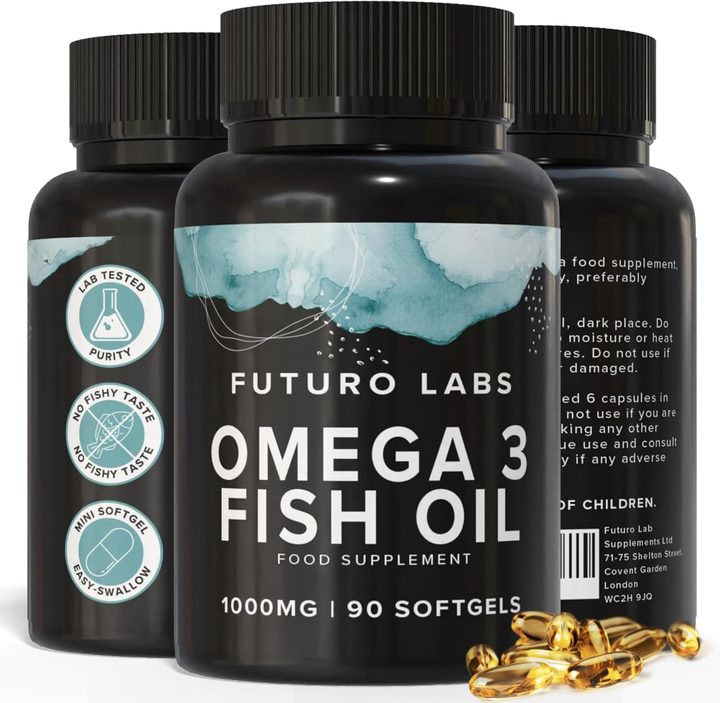
Our brand: the worked example on this page
Futuro Labs Omega 3 Fish Oil
- 17p a day
- 90 softgels, 1 softgel daily
- Lab tested
- Made in the UK
The uncoated baseline to price against: Futuro Labs Omega 3 Fish Oil on Amazon UK, 300mg EPA+DHA per softgel with dinner, £14.99 for 90 days. Label breakdown. Whether you need a coating at all is diagnosed on the troubleshooting page; the feature audit on the features page.
Check one and two: a real coating, wrapped around real milligrams
Enteric is a specific technology, not a vibe: a pH-dependent polymer coating that stays intact in stomach acid and dissolves in the higher pH of the small intestine, which is the entire mechanism by which any repeat moves out of the oesophagus's reach, so check one is the declaration, the words enteric coated or a named delayed-release system with the mechanism described, versus the vague easy-on-the-stomach copy that promises the effect without the polymer, and a brand that can say how its coating works has passed while a brand that cannot has answered. Check two is the arithmetic the coating cannot touch: EPA and DHA milligrams per capsule, declared and added exactly as on any product, because a coating adds zero omega-3 and some coated lines quietly run smaller fills, meaning the burp solution can arrive with a dose cut nobody mentioned, and the 250mg threshold cares nothing for the polymer.
Check three, the one nobody prints: the staleness a coating can hide, then the premium audit
Check three is this page's reason to exist: a fishy repeat is the consumer's crude oxidation detector, the taste of rancid oil reporting itself, and an enteric coating disables exactly that alarm, delivering stale oil silently past the only quality sensor most buyers have, which is why freshness verification matters more on coated products than anywhere else on the shelf, named third-party testing with oxidation values, the GOED-standard language, sane dating, opaque packaging, the works, demanded harder precisely because the burp can no longer testify. Check four is the premium audit: coatings cost, the fair version lands within a modest margin of the equivalent uncoated oil on the pence-per-100mg denominator, and the unfair version uses the burpless promise to double the rate for the same distilled commodity. And wrapped around all four sits the prior question the troubleshooting page settles: most burping is fasted dosing or stale oil, fixed free at dinner or by swapping stock, so the coated aisle is honestly for the pattern-four minority who burp on everything fresh and fed, not the default it markets itself as.
| Check | Pass looks like | Fail looks like |
|---|---|---|
| True enteric declaration | pH-dependent coating named, mechanism described | 'Gentle' and 'easy on the stomach' with no polymer |
| EPA+DHA per capsule | Declared, unchanged, 300mg+ per serving | Smaller fills hiding behind the coating story |
| Freshness verification | Named testing with oxidation values, sane dating | No testing mention: the alarm is off and nobody is watching |
| Premium proportionality | Modest margin over the uncoated equivalent per 100mg | Double the rate for the same distilled oil |
| Do you need it at all? | Pattern four: burping on everything, fresh and fed | Buying a coating for a timing problem dinner fixes |
The verdict, and the honest order of operations
What should you look for in enteric coated fish oil: a real pH-dependent coating, wrapped around undiminished declared milligrams, from a brand whose freshness testing you can find, at a premium the denominator can defend, purchased only after the free fixes have actually failed. The order of operations this section keeps teaching applies here last as everywhere: a fresh, tested standard softgel with dinner first, the worked example being built as exactly that, Futuro Labs Omega 3 Fish Oil at 300mg of EPA and DHA, lab-tested, £14.99 for 90 days at 17p, and the enteric aisle second, entered with these four checks for the minority whose burping genuinely survives the meal. A coating is a good tool wrapped around the same commodity oil as everything else on the shelf; the checks exist because the wrapper can hide both the quality and the price of what is inside.
What to check on the label
- Demand the polymer, not the vibe: pH-dependent enteric, mechanism described.
- The milligrams are unchanged by coating: check the fill did not shrink.
- Freshness testing matters most here: the coating silences the burp alarm.
- Premium within a modest margin per 100mg: the wrapper is not the oil.
- Free fixes first: dinner and fresh stock retire most burping before any coating.
Our brand
The worked example: Futuro Labs Omega 3 Fish Oil
Futuro Labs Omega 3 Fish Oil: 1 softgel daily with food, 1000mg fish oil providing 180mg EPA and 120mg DHA (300mg combined), 90 softgels for £14.99, 17p a day, lab-tested purity, UK GMP made. Gelatin shell, so not vegetarian.
- Fish oil per softgel
- 1000mg
- EPA / DHA per softgel
- 180mg / 120mg (300mg combined)
- Serving
- 1 softgel a day
- Bottle
- 90 softgels, 90 days
- Price
- £14.99 (17p a day)
- Softgel
- mini softgel, no fishy taste
Questions people also ask
Do enteric coated fish oils work for burps?
Yes, mechanically: the pH-dependent coating dissolves past the stomach. The checks exist because the word gets used loosely and the coating hides other things.
Is delayed release the same as enteric coated?
Sometimes: a named system with the mechanism described is fine, while vague gentle-formula wording without a polymer is marketing borrowing the effect.
Can enteric coating hide rancid oil?
That is this page's central warning: the coating disables the burp signal that reports oxidation, so named freshness testing matters more on coated products than any others.
Is coated fish oil less well absorbed?
Delivery shifts along the gut by design, and with meals the practical difference for a healthy user is minor: the dose declaration matters more than the site of release.
Should I just buy enteric coated by default?
No: most burping is fasted timing or stale stock, fixed free. The coated aisle is for the minority still burping on fresh oil taken with dinner.
Sources
- Futuro Labs Omega 3 Fish Oil listing: 1000mg fish oil per softgel providing 180mg EPA and 120mg DHA, 90 softgels. Amazon UK, accessed 31 August 2026. https://www.amazon.co.uk/dp/B0CP9T3BTN
- Dyerberg J, Madsen P, Møller JM, Aardestrup I, Schmidt EB. Bioavailability of marine n-3 fatty acid formulations. Prostaglandins, Leukotrienes and Essential Fatty Acids 2010;83(3):137-141. PubMed record
- GOED Voluntary Monograph: the omega-3 industry's quality standard setting limits for heavy metals, dioxins and oxidation (peroxide, anisidine and TOTOX values) in fish oils. https://goedomega3.com
- EFSA Panel on Dietetic Products. Scientific opinion on the substantiation of health claims related to EPA and DHA and normal function of the heart (250mg daily condition of use). EFSA Journal 2010;8(10):1796. https://www.efsa.europa.eu/en/efsajournal/pub/1796