Ghost Fitness/Omega-3/What should you look for in fish oil cloudy in refrigerator?
What should you look for in fish oil cloudy in refrigerator?
The short answer
Usually nothing wrong: fish oil clouding in the fridge is fats crystallising in the cold, the same as olive oil, and it clears at room temperature. Cloudiness at room temperature, or with sediment and rancid smell, is the bad sign.
- Olive-oil physicscold crystallisation: the innocent explanation for fridge clouding
- The 10-minute testwarm the bottle to room temperature: innocent cloud clears
- The bad versioncloudy while warm, with sediment or a rancid smell
- The smell testthe tiebreaker whenever the eye cannot decide
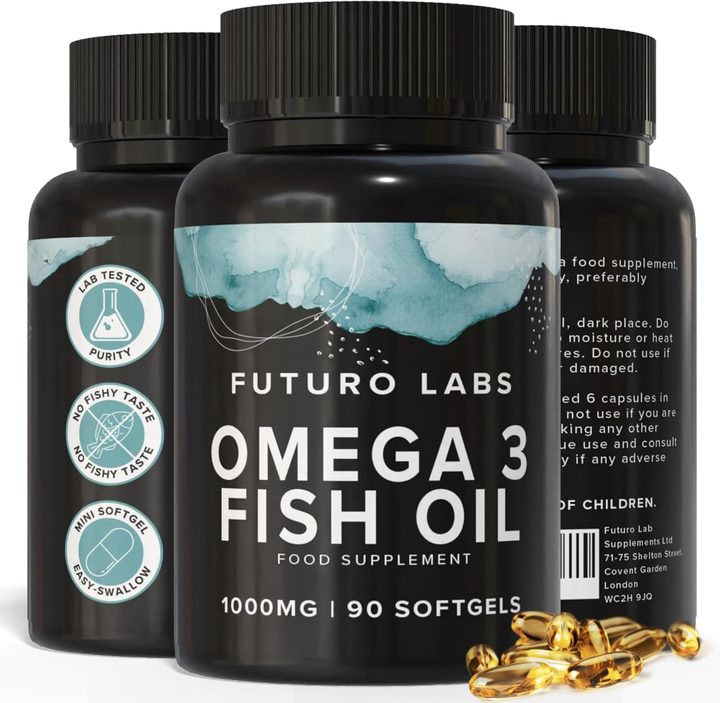
Our brand: the worked example on this page
Futuro Labs Omega 3 Fish Oil
- 17p a day
- 90 softgels, 1 softgel daily
- Lab tested
- Made in the UK
Cupboard-stored and never cloudy to begin with: Futuro Labs Omega 3 Fish Oil on Amazon UK, opaque 90-softgel bottle, £14.99. Label breakdown. The storage rules are on the refrigeration page; the rancidity protocol on how to know if fish oil is rancid.
Why cold makes fish oil cloudy, and why that is usually fine
Fish oil is a blend of fatty molecules with different freezing behaviours, and refrigeration sorts them: the more saturated fractions and natural waxes begin crystallising at fridge temperatures while the long-chain unsaturated majority stays liquid, producing haze, cloud, flecks or even a semi-solid layer, the exact behaviour every kitchen has watched olive oil perform on a cold shelf, and equally innocent here. The crystallisation is physical, not chemical: nothing has oxidised, the EPA and DHA are unchanged, and the process reverses completely with warmth, which supplies the ten-minute test that settles almost every case, take the bottle out, stand it at room temperature, and watch an innocent cloud clear back to uniform pale-gold liquid, capsules likewise defogging as they warm. A cloud that behaves this way is chemistry class, not spoilage, and the fridge that caused it was doing no harm, merely a job, extra oxidation damping, that softgels never needed and opened liquids sometimes do.
The versions that do matter, and the decision table that sorts them
The observation earns attention in three variants the warm test exposes. Cloudiness that persists at room temperature: no longer crystallisation, and worth the rancidity protocol, since haze in warm oil can accompany degradation or, in liquids, water contamination from careless handling. Sediment that settles rather than dissolves: particulate matter is not wax behaviour, and in an opened liquid it downgrades the bottle regardless of smell. And cloud travelling with the true rancidity signs, a sharp painty smell on the cut-and-smell test, bitterness, darkened colour, harsh fed-dose repeats, in which case the cloud was a bystander and the smell is the verdict, oxidation and crystallisation being independent processes that a badly stored fridge bottle can host simultaneously, cold slowing the first while causing the second. The sorting rule across all variants: temperature-dependent cloud is innocent, temperature-independent cloud is suspicious, and the smell test is the tiebreaker whenever the eye alone cannot classify, which keeps the whole question a two-step decision rather than a worry.
| What you observe | The reading | What to do |
|---|---|---|
| Cloud or flecks in the fridge, clears when warm | Innocent crystallisation: olive-oil physics | Nothing: use as normal; cupboard storage avoids the show |
| Semi-solid layer in cold liquid oil | The same physics, further along | Warm and gently swirl: normal for the format |
| Cloud persisting at room temperature | Not crystallisation: investigate | Run the rancidity protocol: smell decides |
| Sediment settling in an opened liquid | Particulates, possibly contamination | Downgrade the bottle: replace |
| Cloud plus painty smell or bitter taste | Rancidity with a bystander cloud | The smell convicts: bin and replace |
| Foggy capsules straight from the fridge | Condensation and chill: cosmetic | Warm to room temperature; store the next bottle in the cupboard |
The verdict, and the storage choice that retires the observation
What should you look for in fish oil cloudy in the refrigerator: temperature-dependence first, because a cloud that clears warm was crystallised fat performing olive-oil physics and needs nothing from you, and the investigation triggers second, persistence at room temperature, sediment, or any companion rancidity sign, at which point the cut-and-smell test takes over as it always does. The choice that retires the observation entirely is the storage this section recommends anyway: softgels in a cool, dark cupboard, where the cloud never forms because the cold never applies, the fridge reserved for opened liquids and heatwaves. The worked example lives that way by design: Futuro Labs Omega 3 Fish Oil, an opaque 90-softgel bottle at £14.99, 17p a day, lab-tested, UK made, cupboard-kept, finished young, and never once cloudy, which is the least dramatic resolution a worried fridge inspection can hope for and the correct one.
What to check on the label
- Fridge cloud is usually crystallised fat: olive-oil physics, fully reversible.
- The ten-minute test settles it: warm to room temperature; innocent cloud clears.
- Persistent warm cloudiness investigates: run the rancidity protocol.
- Sediment in opened liquids downgrades the bottle: particulates are not wax.
- Cupboard storage retires the whole show: softgels never needed the fridge.
Our brand
The worked example: Futuro Labs Omega 3 Fish Oil
Futuro Labs Omega 3 Fish Oil: 1 softgel daily with food, 1000mg fish oil providing 180mg EPA and 120mg DHA (300mg combined), 90 softgels for £14.99, 17p a day, lab-tested purity, UK GMP made. Gelatin shell, so not vegetarian.
- Fish oil per softgel
- 1000mg
- EPA / DHA per softgel
- 180mg / 120mg (300mg combined)
- Serving
- 1 softgel a day
- Bottle
- 90 softgels, 90 days
- Price
- £14.99 (17p a day)
- Softgel
- mini softgel, no fishy taste
Questions people also ask
Is cloudy fish oil in the fridge safe to take?
Almost always: the cloud is fat crystallising in the cold, the same behaviour as olive oil, and it clears completely at room temperature with the oil unchanged.
Why did my fish oil capsules go foggy in the refrigerator?
Chill and condensation: cosmetic, reversible on warming, and one of the reasons softgels belong in the cupboard rather than the fridge.
When is cloudiness in fish oil a bad sign?
When it persists at room temperature, settles as sediment, or arrives with a painty smell or bitter taste: those variants get the cut-and-smell test, which decides.
Does refrigeration damage fish oil by making it cloudy?
No: crystallisation is physical and reversible. The fridge mildly slows oxidation; it just also stages this harmless show, which cupboard storage avoids.
Should I shake cloudy fish oil before using it?
Warm it first: once room temperature clears the crystals, a gentle swirl re-homogenises a liquid oil, and capsules need nothing at all.
Sources
- Futuro Labs Omega 3 Fish Oil listing: 1000mg fish oil per softgel providing 180mg EPA and 120mg DHA, 90 softgels. Amazon UK, accessed 31 August 2026. https://www.amazon.co.uk/dp/B0CP9T3BTN
- GOED Voluntary Monograph: the omega-3 industry's quality standard setting limits for heavy metals, dioxins and oxidation (peroxide, anisidine and TOTOX values) in fish oils. https://goedomega3.com
- Dyerberg J, Madsen P, Møller JM, Aardestrup I, Schmidt EB. Bioavailability of marine n-3 fatty acid formulations. Prostaglandins, Leukotrienes and Essential Fatty Acids 2010;83(3):137-141. PubMed record
- Scientific Advisory Committee on Nutrition and Committee on Toxicity. Advice on fish consumption: benefits and risks (two portions of fish a week, one oily). TSO, 2004. https://www.gov.uk/government/publications/sacn-advice-on-fish-consumption-benefits-and-risks