Ghost Fitness/Omega-3/Is ethyl ester fish oil safe?
Is ethyl ester fish oil safe?
The short answer
Yes: ethyl ester is the form the licensed prescription omega-3 medicines use, given at four grams a day for years in the outcome trials. The four stories audited: synthetic, a processing form the prescription products share; ethanol, trace amounts on digestion; oxidises faster, true, so freshness matters more; dissolves a polystyrene cup, a party trick showing nothing about the gut. The real difference is absorption with fat.
- The prescription proofthe licensed omega-3 medicines are ethyl esters; four grams a day for years in the outcome trials
- The ethanoltrace amounts released on digestion; a fraction of a ripe banana's
- The oxidationsomewhat less stable than triglyceride oil: freshness matters more; a TOTOX certificate
- The cup testsolvent behaviour on polystyrene; nothing about a stomach
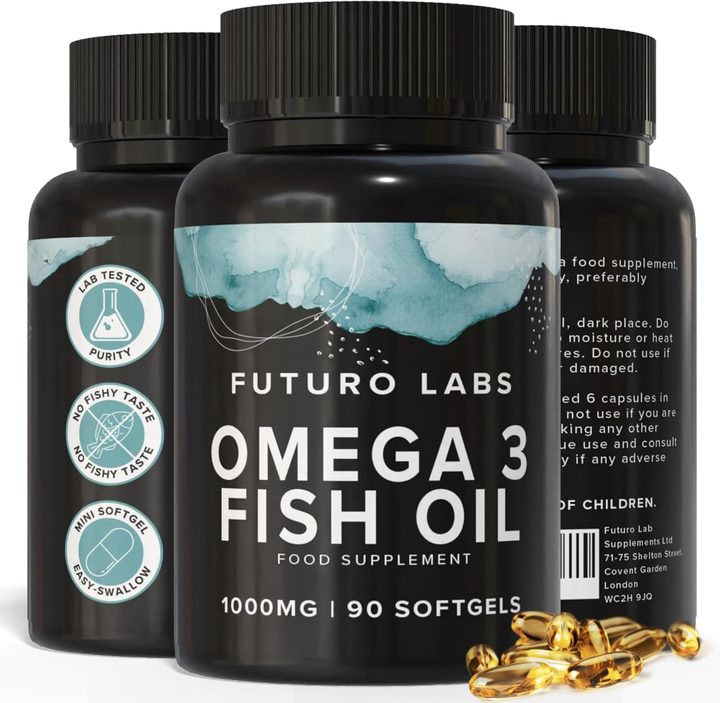
Our brand: the worked example on this page
Futuro Labs Omega 3 Fish Oil
- 17p a day
- 90 softgels, 1 softgel daily
- Lab tested
- Made in the UK
A natural triglyceride fish oil, the form that absorbs well with any meal: Futuro Labs Omega 3 Fish Oil on Amazon UK, 1 softgel with food, 180mg EPA and 120mg DHA, lab-tested purity, 90 for £14.99 at 17p. Full label breakdown. The forms compared are on the omega-3 section; the rancidity checks on the rancid page.
Yes, on the prescription proof, and the first two stories audited, synthetic and ethanol
Is ethyl ester fish oil safe is answered yes, and the strongest answer is the one the internet's four ethyl ester stories forget: ethyl ester is the form of the licensed prescription omega-3 medicines, the omega-3-acid ethyl ester capsules prescribed for raised triglycerides for two decades and the purified EPA ethyl ester given at four grams a day for years to thousands of patients in the largest of the cardiovascular outcome trials, so its safety file is a pharmaceutical one, the fullest a fish oil form can have, and a shelf ethyl ester at a gram is a smaller dose of a form medicine trusts at four. The four stories, audited. Story one, that ethyl ester is synthetic and unnatural: partly true and irrelevant to safety, an ethyl ester being made by removing the glycerol backbone of a natural fish oil and attaching each fatty acid to an ethanol molecule instead, a processing step that lets the EPA and DHA be concentrated by distillation, the reason nearly every concentrate over 60% actives is either an ethyl ester or a re-esterified triglyceride made from one, and the prescription products are exactly this, the ethyl ester literature's account. Story two, that it releases alcohol: true and trivial, the ethanol backbone being freed when lipase splits the ester in the gut, in trace amounts, a gram of ethyl ester omega-3 releasing tens of milligrams of ethanol, a fraction of what a ripe banana carries and a rounding error against the body's own daily ethanol production, with no effect on a breath test, a driver, a liver or a reader avoiding alcohol for any reason.
The third and fourth stories, oxidation and the cup, the real difference which is absorption, and the form filed
Story three, that ethyl ester oxidises faster: true, and the one story with a practical consequence. Ethyl ester concentrates are somewhat less oxidatively stable than triglyceride oils, the free ethyl-linked fatty acids being a little more exposed to oxygen than the ones held on a glycerol backbone, so an ethyl ester tub goes rancid a little sooner in the same cupboard, which does not make the form unsafe and does make freshness matter more, the fix being a recent date, a cool dark cupboard or the fridge, a closed lid, a tub finished within a couple of months and, for the certificate reader, a TOTOX under 26, the rancid pages' checks applied a little more strictly. Story four, that it dissolves a polystyrene cup: true and meaningless, ethyl esters being good solvents for polystyrene in the way many oils and solvents are, so a softgel's contents squeezed into a foam cup eat through it in a party trick that circulates as proof of danger and demonstrates solvent chemistry on a plastic, a stomach being neither polystyrene nor dissolved by an oil it has digested from fish for as long as there have been fish, the cup test saying nothing about safety and everything about polystyrene. The real difference between the forms is absorption, and it is the reason this site prefers triglyceride oils without calling ethyl esters unsafe: an ethyl ester absorbs markedly better with a high-fat meal than fasted, several-fold in the classic absorption work, while a natural or re-esterified triglyceride absorbs well with any meal and a little better with fat, so an ethyl ester taken fasted wastes much of its softgel and one taken with dinner does not, the with-food rule mattering most for this form. The form filed: safe on the prescription proof, synthetic as a processing step the medicines share, ethanol in trace amounts, oxidation somewhat faster so freshness matters more, the cup test a trick, and the real difference absorption with fat, with the worked example being a natural triglyceride oil that absorbs well with any meal, one softgel at 17p, £14.99 for 90.
| The story | The truth | The consequence |
|---|---|---|
| The prescription proof | The licensed omega-3 medicines are ethyl esters, at four grams a day for years in the trials | The fullest safety file a fish oil form can have |
| It is synthetic | A processing step that lets EPA and DHA be concentrated; the medicines share it | Irrelevant to safety |
| It releases alcohol | Trace ethanol on digestion, a fraction of a ripe banana's | No effect on anything |
| It oxidises faster | Somewhat less stable than triglyceride oil | Freshness matters more: date, cool, dark, TOTOX under 26 |
| It dissolves a cup | Solvent behaviour on polystyrene | A party trick; a stomach is not a cup |
| The real differenceOurs | Absorbs markedly better with a fatty meal than fasted | Take it with dinner; a triglyceride forgives a light meal |
The verdict, safe on a pharmaceutical file, with one story that matters and three that do not
Is ethyl ester fish oil safe: yes, on the fullest safety file a fish oil form can have, ethyl ester being the form of the licensed prescription omega-3 medicines given at four grams a day for years in the outcome trials, with the four stories audited, synthetic being a processing step the medicines share, ethanol being trace amounts on digestion, faster oxidation being true and the one story with a consequence, that freshness matters more, and the polystyrene-cup test being a party trick about a plastic, the real difference between the forms being absorption, an ethyl ester absorbing markedly better with a fatty meal and a triglyceride forgiving a light one. A natural triglyceride oil that absorbs well with any meal: Futuro Labs Omega 3 Fish Oil, one softgel with food, 180mg EPA and 120mg DHA, lab-tested purity, 90 for £14.99 at 17p a day.
What to check on the label
- Trust the prescription proof: the medicines are ethyl esters.
- Ignore the synthetic and alcohol stories: a processing step and a trace.
- Respect the oxidation story: buy fresh, store cool, finish within months.
- Laugh at the cup: a stomach is not polystyrene.
- Take an ethyl ester with a fatty meal: the real difference.
Our brand
The worked example: Futuro Labs Omega 3 Fish Oil
Futuro Labs Omega 3 Fish Oil: 1 softgel daily with food, 1000mg fish oil providing 180mg EPA and 120mg DHA (300mg combined), 90 softgels for £14.99, 17p a day, lab-tested purity, UK GMP made. Gelatin shell, so not vegetarian.
- Fish oil per softgel
- 1000mg
- EPA / DHA per softgel
- 180mg / 120mg (300mg combined)
- Serving
- 1 softgel a day
- Bottle
- 90 softgels, 90 days
- Price
- £14.99 (17p a day)
- Softgel
- mini softgel, no fishy taste
Questions people also ask
Is ethyl ester omega-3 bad for you?
No: ethyl ester is the form of the licensed prescription omega-3 medicines, prescribed for two decades and given at four grams a day for years to thousands of patients in the largest outcome trial, so its safety file is pharmaceutical, and a shelf ethyl ester at a gram is a smaller dose of a form medicine trusts at four.
Does ethyl ester fish oil contain alcohol?
In trace amounts: the ethanol backbone is freed when lipase splits the ester in the gut, a gram of ethyl ester omega-3 releasing tens of milligrams, a fraction of what a ripe banana carries and nothing that affects a breath test, a driver, a liver or a reader avoiding alcohol.
Does the styrofoam cup test prove ethyl ester fish oil is dangerous?
No: ethyl esters are good solvents for polystyrene in the way many oils are, so a softgel's contents eat through a foam cup in a party trick that demonstrates solvent chemistry on a plastic and nothing about a stomach, which is not polystyrene and digests fish oil as it always has.
Is triglyceride fish oil better than ethyl ester?
Better absorbed without a fatty meal, several-fold in the classic absorption work, and somewhat more stable against oxidation, which is why this site prefers it; an ethyl ester taken with dinner absorbs well and is safe, and the difference is convenience and freshness rather than safety.
Does ethyl ester fish oil go rancid faster?
Somewhat: ethyl ester concentrates are a little less oxidatively stable than triglyceride oils, so freshness matters more for them, with a recent date, a cool dark cupboard or the fridge, a closed lid, a tub finished within a couple of months and a TOTOX under 26 as the checks.
Sources
- The ethyl ester fish oil literature: ethyl ester concentrates are the form of the licensed prescription omega-3 medicines, release only trace ethanol on digestion, absorb markedly better with a fatty meal than fasted, and are somewhat less oxidatively stable than triglyceride oils, so freshness matters more for them, with the polystyrene-cup test demonstrating solvent behaviour rather than any safety difference. PubMed record
- Electronic medicines compendium (emc): Summaries of Product Characteristics for omega-3-acid ethyl esters 1000mg capsules (Omacor and generics) and icosapent ethyl (Vazkepa). https://www.medicines.org.uk/emc/search?q=omega-3-acid+ethyl+esters
- Classic absorption work on fish oil ethyl esters: uptake is markedly higher when ethyl ester omega-3 is taken with a high-fat meal, narrowing the gap to triglyceride forms. PubMed record
- The fish oil oxidation literature: oxidation is measured by peroxide value, anisidine value and their combination as TOTOX, with the industry monograph setting limits of 5, 20 and 26 respectively, and surveys of retail fish oils finding a meaningful share above those limits, freshness being a quality dimension a label rarely shows and a certificate does. PubMed record