Ghost Fitness/Omega-3/omega-3 ethyl esters vs fish oil: which is better?
omega-3 ethyl esters vs fish oil: which is better?
The short answer
Better depends on which comparison you meant: against standard fish oil, EE concentrates win on strength and price per gram and want a fatty meal; against the prescription product, there is no contest, just two lanes.
- 3 contestsconcentrate vs standard, medicine vs supplement, EE vs TG: the hidden readings
- Strength and pricewhat EE concentrates genuinely win against standard oil
- Two lanesthe medicine comparison: an indication, not a contest
- Simplicitywhat standard fish oil wins for the everyday 250mg job
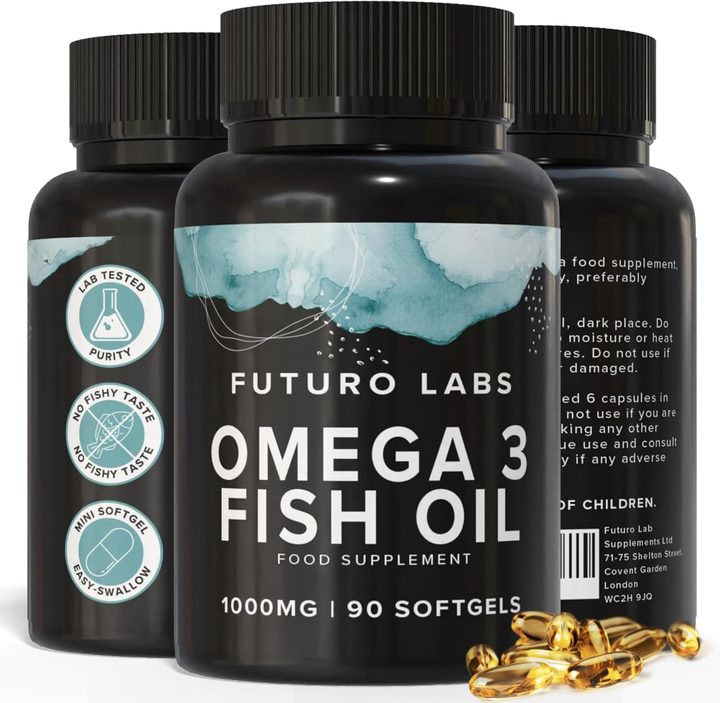
Our brand: the worked example on this page
Futuro Labs Omega 3 Fish Oil
- 17p a day
- 90 softgels, 1 softgel daily
- Lab tested
- Made in the UK
The simplicity winner: Futuro Labs Omega 3 Fish Oil on Amazon UK, 300mg EPA+DHA per softgel, £14.99 for 90 days. Label breakdown. The identity question is settled on the same-as page; the form showdown on EE vs TG.
Contest one: EE concentrates against standard fish oil, the real shoppers' comparison
The comparison most searchers mean is the retail one, an ethyl ester concentrate against a standard fish oil softgel, and it resolves on jobs rather than a podium. The concentrate's genuine wins: strength, 500mg to 900mg of EPA and DHA per capsule against the standard's 300mg, turning gram targets into one-or-two-capsule habits; price per delivered gram, since skipping re-esterification makes EE the shelf's best pence-per-100mg performer; and distillation-grade purity, the concentration process itself stripping contaminants. Its costs: the fatty-meal dependency, EE absorbing meaningfully worse fasted, and the strength itself being surplus to the everyday job. The standard oil's wins: simplicity and fit, one natural-triglyceride softgel clearing the 250mg heart-claim territory with margin, no form questions, no meal-dependency drama beyond the dinner habit everything here recommends anyway, at the lowest absolute price per bottle. Verdict by buyer: gram-scale users, deliberately dosing toward the 2g territories or research protocols, are the concentrate's honest market; everyday 250mg buyers, which is most people reading this, were never in it.
Contests two and three: the medicine, and the form war, each sent to its page
The second reading hidden in the phrase is omega-3-acid ethyl esters the prescription medicine against retail fish oil, and better is the wrong instrument entirely: the Omacor-class product is a licensed treatment for severe hypertriglyceridaemia at pharmacopoeial specification, prescribed and monitored, while retail oil is a food making maintenance claims, two lanes rather than two contestants, with the only rule being no self-directed traffic between them, flagged bloods going to a GP and prescriptions taken exactly as written, the full sorting living on this section's medicine pages. The third reading is the form war proper, ethyl ester versus triglyceride chemistry at matched strength, scored round by round on its own showdown page: TG wins fasted absorption, EE wins price, the fatty meal referees the rest, and the buyer matrix, rTG for erratic gram-dosers, value EE for dinner-disciplined ones, closes it. Three contests, one phrase, and the routing itself is most of the answer: identify which comparison you were actually making, and the winner falls out of the job.
| The comparison you meant | The winner | The basis |
|---|---|---|
| EE concentrate vs standard softgel, gram-scale job | The concentrate | 500-900mg per capsule; best pence per 100mg; fed dosing |
| EE concentrate vs standard softgel, everyday 250mg jobOurs | Standard fish oil | The claim cleared in one simple capsule at 17p |
| The prescription medicine vs any supplement | Neither: two lanes | An indication and monitoring versus maintenance claims |
| EE vs TG at matched strength | Conditional: TG fasted, near-draw fed | The showdown page's buyer matrix decides |
| Any format vs oily fish | The fish | The standing answer above every capsule contest |
The verdict, and the reader routed to their winner
Omega-3 ethyl esters vs fish oil, which is better: the concentrate for deliberate gram-scale delivery, the standard softgel for the everyday claim territory, neither in the medicine comparison because lanes are not contestants, and the fatty meal refereeing whatever remains of the chemistry war. For the majority reader whose actual job is the 250mg-to-300mg everyday territory, the routing lands where this section always lands: Futuro Labs Omega 3 Fish Oil, one natural-form softgel with dinner, 180mg EPA and 120mg DHA for 300mg combined, £14.99 for 90 days at 17p, lab-tested, UK made, the simplicity winner doing the common job at the common price, with the concentrate aisle and the prescription lane both one honest signpost away for the readers whose jobs genuinely live there.
What to check on the label
- Three contests hide in the phrase: concentrate vs standard, medicine vs supplement, EE vs TG.
- Concentrates win strength and price per gram: for deliberate gram-scale jobs, fed.
- Standard oil wins the everyday job: 250mg cleared simply at 17p.
- The medicine is a lane, not a contestant: indication, prescription, monitoring.
- The fatty meal referees the chemistry war: the showdown page holds the matrix.
Our brand
The worked example: Futuro Labs Omega 3 Fish Oil
Futuro Labs Omega 3 Fish Oil: 1 softgel daily with food, 1000mg fish oil providing 180mg EPA and 120mg DHA (300mg combined), 90 softgels for £14.99, 17p a day, lab-tested purity, UK GMP made. Gelatin shell, so not vegetarian.
- Fish oil per softgel
- 1000mg
- EPA / DHA per softgel
- 180mg / 120mg (300mg combined)
- Serving
- 1 softgel a day
- Bottle
- 90 softgels, 90 days
- Price
- £14.99 (17p a day)
- Softgel
- mini softgel, no fishy taste
Questions people also ask
Are ethyl ester omega-3s better than regular fish oil?
For gram-scale delivery, yes on strength and price per gram, taken with a fatty meal: for the everyday 250mg job, the standard softgel wins on simplicity and fit.
Is prescription omega-3 better than fish oil supplements?
It is a different object: a licensed treatment for severe hypertriglyceridaemia, prescribed and monitored. Lanes, not a leaderboard, and no self-directed swapping in either direction.
Which absorbs better, ethyl esters or fish oil?
Standard fish oil's natural triglyceride form absorbs better fasted; a fatty meal closes most of the gap, which is why the dinner habit settles the question for most users.
Why would anyone buy ethyl ester fish oil?
Strength and value: the best pence per 100mg on many shelves, gram targets in one or two capsules, and the same distillation-grade purity as pricier forms.
So which should I actually buy?
Match the job: the everyday claim takes the standard 300mg softgel at 17p; deliberate gram-scale plans take a well-priced concentrate with dinner; flagged bloods take a GP appointment.
Sources
- Futuro Labs Omega 3 Fish Oil listing: 1000mg fish oil per softgel providing 180mg EPA and 120mg DHA, 90 softgels. Amazon UK, accessed 31 August 2026. https://www.amazon.co.uk/dp/B0CP9T3BTN
- Dyerberg J, Madsen P, Møller JM, Aardestrup I, Schmidt EB. Bioavailability of marine n-3 fatty acid formulations. Prostaglandins, Leukotrienes and Essential Fatty Acids 2010;83(3):137-141. PubMed record
- Electronic medicines compendium (emc): Summaries of Product Characteristics for omega-3-acid ethyl esters 1000mg capsules (Omacor and generics) and icosapent ethyl (Vazkepa). https://www.medicines.org.uk/emc/search?q=omega-3-acid+ethyl+esters
- EFSA Panel on Dietetic Products. Scientific opinion on the substantiation of health claims related to EPA and DHA and normal function of the heart (250mg daily condition of use). EFSA Journal 2010;8(10):1796. https://www.efsa.europa.eu/en/efsajournal/pub/1796
- EFSA Panel on Dietetic Products. Scientific opinion on the tolerable upper intake level of EPA, DHA and DPA: supplemental intakes of EPA and DHA combined up to about 5g/day do not raise safety concerns for adults. EFSA Journal 2012;10(7):2815. https://www.efsa.europa.eu/en/efsajournal/pub/2815