Ghost Fitness/Omega-3/Creatine vs omega-3: which is better for brain health?
Creatine vs omega-3: which is better for brain health?
The short answer
For brain health as the register defines it, omega-3 wins: DHA holds the brain-function claim at 250mg daily, while creatine's authorised claim is physical performance. Both have live cognition research; neither is a rival, and both cost pennies.
- DHA's mandatemaintenance of normal brain function, at 250mg of DHA daily
- Creatine's mandatephysical performance in high-intensity exercise, at 3g: not cognition
- 2 live research areascreatine cognition and omega-3 cognition: both open, neither claimed
- Not rivalsdifferent molecules, different desks, compatible at one dinner
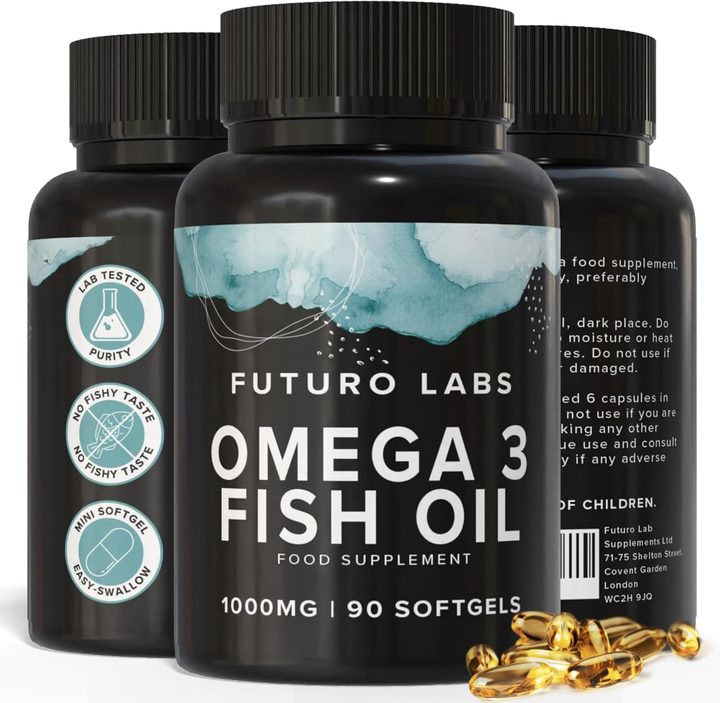
Our brand: the worked example on this page
Futuro Labs Omega 3 Fish Oil
- 17p a day
- 90 softgels, 1 softgel daily
- Lab tested
- Made in the UK
The omega-3 corner: Futuro Labs Omega 3 Fish Oil on Amazon UK, 180mg EPA + 120mg DHA per softgel, £14.99 for 90 days. Label breakdown. The EPA-versus-DHA split behind the brain claim is on the EPA vs DHA page; the DHA threshold on high EPA and DHA.
The register's answer: one contestant holds a brain claim, and it is not creatine
Score the contest the way this site scores everything, by mandate first, and it ends quickly: DHA holds an authorised claim that reads maintenance of normal brain function, conditioned on 250mg of DHA daily, with a matching vision claim beside it, which makes omega-3 the only contestant carrying the actual phrase the question asked about, with the honest footnote this section always attaches, that a standard softgel's 120mg of DHA sits under the condition and the claim properly belongs to DHA-rich and algae products, the threshold covered on the concentrate pages. Creatine's authorised territory is elsewhere and excellent: increased physical performance in successive bursts of short-term, high-intensity exercise at 3g daily, the gym shelf's one true performance mandate, plus a strength claim for older adults training against resistance, and precisely nothing about cognition, memory or brain function, every brain-branded creatine product being marketing past its own register entry. Round one, by knockout of vocabulary: omega-3.
The research round, scored fairly, and the stack that makes the versus dissolve
The research round is livelier and genuinely split. Creatine cognition is a real literature: the brain runs on phosphocreatine too, supplementation raises brain creatine modestly, and trials show signals for cognitive tasks under stressors, sleep deprivation most consistently, and in vegetarians whose dietary creatine is nil, with rested omnivores returning mixed results, a pattern the reviews summarise as promising, situational, unclaimed. Omega-3 cognition mirrors it from the structural side: DHA's membrane role gives the mechanism, the developmental literature is strong, and adult supplementation trials in already-nourished populations run mixed, which is exactly why the claim is a maintenance claim rather than an enhancement one. Verdict: a draw of open questions, each molecule interesting for different brains on different days. And the practical dissolution: the two are not rivals but neighbours, no interaction, different jobs, jointly costing under 30p, so the lifter who wants both mandates and both research seats simply takes 3g of creatine and one softgel at the same dinner, the versus retired by the word and.
| Round | Creatine | Omega-3 (DHA) | Verdict |
|---|---|---|---|
| Authorised brain claim | None | Normal brain function at 250mg DHA | Omega-3, by vocabulary |
| Authorised claims held at all | Performance at 3g; strength in over-55s | Heart combined; brain and vision via DHA | Both mandated, different desks |
| Cognition research | Signals under sleep loss and in vegetarians; mixed rested | Strong mechanism; mixed adult trials | A draw of open questions |
| Standard product meets the brain condition? | n/a | No: 120mg DHA is under 250mg; DHA-rich products meet it | The honest footnote |
| Cost per day | A few pence at 3g | 17p at 300mg combined | Both trivial |
| Compatibility | One dinner holds both | One dinner holds both | The versus dissolves into and |
The verdict, and what each buyer should actually do
Creatine vs omega-3, which is better for brain health: by the register, omega-3, because DHA owns the only brain-function claim in the contest, met properly by DHA-rich or algae products at 250mg; by the research, an honest draw of live questions, creatine's most interesting under sleep loss and in vegetarians, omega-3's strongest in mechanism and weakest in rested-adult trials; and by practice, a false choice, since both cost pennies and share a dinner without friction. The worked example holds its usual honest position: Futuro Labs Omega 3 Fish Oil covers the combined heart claim at 300mg for 17p, with its 120mg of DHA stated plainly as below the brain-claim threshold, that specific target belonging to the DHA-rich aisle; creatine keeps its 3g performance mandate beside it; and the brain, unimpressed by the whole contest, benefits most from the sleep both supplements' best research keeps pointing back at.
What to check on the label
- DHA holds the brain claim: 250mg daily, the contest's only mandated vocabulary.
- Creatine's mandate is performance, not cognition: 3g, high-intensity bursts.
- The research round is a draw of open questions: sleep loss and vegetarians for creatine, mechanism-strong and trial-mixed for DHA.
- Standard softgels sit under the 250mg DHA condition: the brain claim lives DHA-rich.
- Not rivals: one dinner holds both for under 30p.
Our brand
The worked example: Futuro Labs Omega 3 Fish Oil
Futuro Labs Omega 3 Fish Oil: 1 softgel daily with food, 1000mg fish oil providing 180mg EPA and 120mg DHA (300mg combined), 90 softgels for £14.99, 17p a day, lab-tested purity, UK GMP made. Gelatin shell, so not vegetarian.
- Fish oil per softgel
- 1000mg
- EPA / DHA per softgel
- 180mg / 120mg (300mg combined)
- Serving
- 1 softgel a day
- Bottle
- 90 softgels, 90 days
- Price
- £14.99 (17p a day)
- Softgel
- mini softgel, no fishy taste
Questions people also ask
Does creatine help brain function?
The research shows situational signals, clearest under sleep deprivation and in vegetarians, mixed in rested omnivores: interesting, unclaimed, and no authorised cognitive claim exists.
Does omega-3 improve memory?
No enhancement claim exists: DHA's authorised claim is maintenance of normal brain function at 250mg daily, and adult trials in nourished populations run mixed.
Which should I take for studying or exams?
Sleep outranks both by the research's own showing: beyond that, both are cheap enough to hold together, with creatine's sleep-deprivation signals the more exam-adjacent finding.
Does the standard fish oil softgel cover the brain claim?
No: it carries 120mg of DHA against a 250mg condition. The brain and vision claims belong to DHA-rich concentrates and algae oils.
Can I take creatine and omega-3 together?
Yes, at the same meal, with no interaction: different molecules doing different jobs for under 30p combined.
Sources
- Futuro Labs Omega 3 Fish Oil listing: 1000mg fish oil per softgel providing 180mg EPA and 120mg DHA, 90 softgels. Amazon UK, accessed 31 August 2026. https://www.amazon.co.uk/dp/B0CP9T3BTN
- EFSA Panel on Dietetic Products. Scientific opinion on health claims related to DHA: maintenance of normal brain function and normal vision (250mg DHA daily condition of use). EFSA Journal 2010;8(10):1734. https://www.efsa.europa.eu/en/efsajournal/pub/1734
- EFSA Panel on Dietetic Products, Nutrition and Allergies. Scientific Opinion on the substantiation of health claims related to creatine and increase in physical performance during short-term, high intensity, repeated exercise bouts. EFSA Journal 2011;9(7):2303. https://efsa.onlinelibrary.wiley.com/doi/10.2903/j.efsa.2011.2303
- Review evidence on creatine supplementation and cognitive function: signals for tasks under sleep deprivation and in vegetarians, with mixed findings in rested omnivores and no authorised cognitive claim. PubMed record
- Kreider RB, et al. International Society of Sports Nutrition position stand: safety and efficacy of creatine supplementation in exercise, sport, and medicine. Journal of the International Society of Sports Nutrition 2017;14:18. PubMed record
- McGlory C, Calder PC, Nunes EA. The influence of omega-3 fatty acids on skeletal muscle protein turnover in health, disuse, and disease. Frontiers in Nutrition 2019;6:144. PubMed record