Ghost Fitness/Omega-3/Which is better, ethyl ester or triglyceride omega-3?
Which is better, ethyl ester or triglyceride omega-3?
The short answer
Answer four questions: gram-scale dosing or everyday? With dinner or erratic? Paying per gram or per bottle? The tree lands most people on standard oil, disciplined gram users on cheap EE with a meal, and erratic gram users on rTG.
- 4 questionstarget, habit, budget, sensitivity: the whole decision
- Branch oneeveryday 250mg: exit immediately to standard oil
- Branch twogram-scale plus dinner discipline: cheap EE wins
- Branch threegram-scale plus erratic habits: rTG buys forgiveness
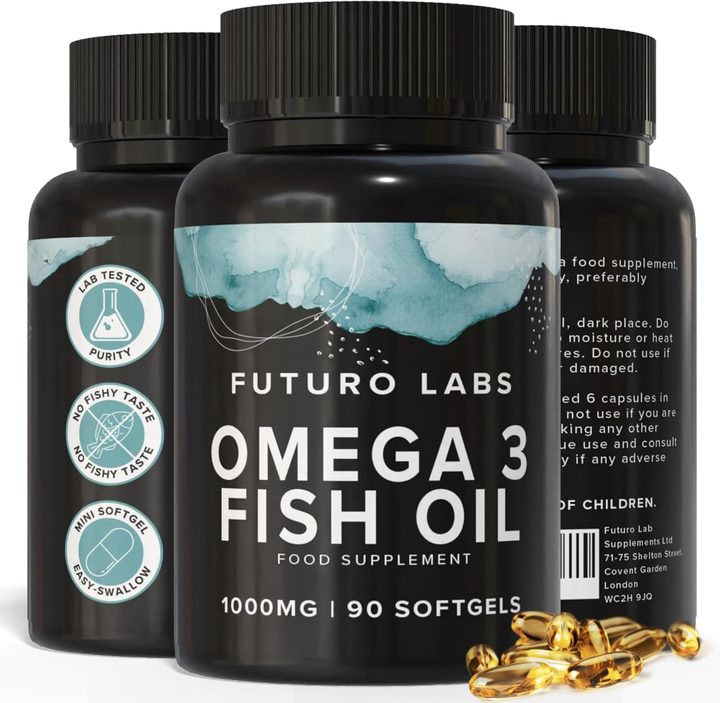
Our brand: the worked example on this page
Futuro Labs Omega 3 Fish Oil
- 17p a day
- 90 softgels, 1 softgel daily
- Lab tested
- Made in the UK
The tree's biggest exit: Futuro Labs Omega 3 Fish Oil on Amazon UK, 300mg EPA+DHA in natural triglyceride oil, £14.99 for 90 days. Label breakdown. The round-by-round scoring is on the EE vs TG showdown; the chemistry on the ethyl esters explainer.
The tree, walked question by question
Question one, the target: is your daily aim the everyday 250mg-to-300mg territory, or a deliberate gram-scale plan? Everyday exits the tree immediately, because standard fish oil softgels are natural triglyceride by manufacturing norm, carry no form premium, and clear the claim threshold in one capsule, meaning the EE-versus-TG contest was never your contest; most readers leave here. Question two, for gram-scale users, the habit: do your capsules reliably ride a proper meal, dinner being the natural anchor, or does dosing drift fasted and forgotten? Fed dosing neutralises the absorption gap between the forms, which converts question three, the budget test, into the decider: at matched strength, ethyl ester concentrates post the best pence per 100mg on the shelf, so the disciplined-dinner gram user buys the cheapest honest EE and banks the difference. Erratic dosing keeps the absorption gap live, and question four simply confirms the purchase: re-esterified triglyceride's premium is the price of forgiveness for capsules that land on empty stomachs, worth paying only by the user who just admitted to being that user.
The exits, and the two purchases the tree never issues
Every walk ends at one of three exits. Exit one, the everyday majority: a standard natural-TG softgel with dinner, the form debate bypassed entirely. Exit two, the disciplined gram user: a well-priced EE concentrate declaring its form and its with-a-fatty-meal instruction, judged by the concentrate checklist, pence per 100mg its whole argument. Exit three, the erratic gram user: an rTG concentrate, the premium understood as insurance rather than superiority, ideally alongside an honest attempt to fix the habit that made it necessary, since dinner is free and rTG is not. And two purchases the tree never issues, whatever the marketing suggests: a form premium paid at everyday doses, where the natural oil already is the premium form at no premium; and a switch between forms in search of effects, since delivered EPA and DHA are the same molecules whichever backbone carried them, the effectiveness page's whole point restated in one branch. The tree's quiet lesson is that the famous form war is really a habit audit wearing a chemistry costume.
| Your answers | Your form | Why |
|---|---|---|
| Everyday 250-300mg targetOurs | Standard fish oil (natural TG) | No premium, claim cleared in one capsule: the contest never applied |
| Gram-scale, disciplined dinner habit | Cheapest honest EE concentrate | The meal closes the absorption gap; EE wins the per-gram price |
| Gram-scale, erratic or fasted habit | rTG concentrate | The premium buys forgiveness the habit lacks |
| Any target, chasing form-specific effects | No purchase | Delivered molecules are identical: fix the habit, not the backbone |
| Everyday target, offered a form premium | Walk away | Natural TG at standard strength already costs nothing extra |
The verdict, and the exit most readers take
Which is better, ethyl ester or triglyceride omega-3: whichever one your four answers point at, which is the honest way of saying the forms are tools for different users rather than ranks on a ladder, TG's edge living only in fasted stomachs, EE's edge living only in gram-scale invoices, and the everyday majority standing outside the whole contest. The worked example is exit one on a shelf: Futuro Labs Omega 3 Fish Oil, natural triglyceride oil at standard strength, 180mg EPA and 120mg DHA per softgel, 300mg combined with dinner, £14.99 for 90 days at 17p, lab-tested, UK made, the form debate resolved by never having entered it. Walk the tree once, buy the exit, and let the forum war carry on without you.
What to check on the label
- Question one settles most readers: everyday targets exit to standard oil immediately.
- Fed gram-scale dosing buys cheap EE: the meal closes the gap, the price decides.
- Erratic gram-scale dosing buys rTG: the premium is forgiveness, not superiority.
- Never pay a form premium at everyday doses: natural TG is already standard.
- Never switch forms chasing effects: delivered molecules are identical.
Our brand
The worked example: Futuro Labs Omega 3 Fish Oil
Futuro Labs Omega 3 Fish Oil: 1 softgel daily with food, 1000mg fish oil providing 180mg EPA and 120mg DHA (300mg combined), 90 softgels for £14.99, 17p a day, lab-tested purity, UK GMP made. Gelatin shell, so not vegetarian.
- Fish oil per softgel
- 1000mg
- EPA / DHA per softgel
- 180mg / 120mg (300mg combined)
- Serving
- 1 softgel a day
- Bottle
- 90 softgels, 90 days
- Price
- £14.99 (17p a day)
- Softgel
- mini softgel, no fishy taste
Questions people also ask
Is triglyceride omega-3 worth the extra money?
Only in one branch: gram-scale dosing with erratic, often-fasted habits, where rTG's fasted absorption edge earns its premium as insurance. Fed dinner dosing gets the same result free.
Which form should a beginner buy?
The standard softgel: natural triglyceride at no premium, one capsule clearing the everyday claim territory. Beginners were never in the form war.
When does ethyl ester actually win?
Gram-scale plans welded to dinner: EE posts the best pence per 100mg on the shelf, and the meal delivers the absorption that fasted dosing would have cost.
How do I know which form a product is?
Read the label: rTG is declared because it is paid for, EE concentrates should state their form, and silence at high strength means EE. Standard-strength oils are natural TG by norm.
Does the form change what omega-3 does?
No: once absorbed, the EPA and DHA are identical molecules whatever backbone carried them. Forms differ in logistics and price, never in effects.
Sources
- Futuro Labs Omega 3 Fish Oil listing: 1000mg fish oil per softgel providing 180mg EPA and 120mg DHA, 90 softgels. Amazon UK, accessed 31 August 2026. https://www.amazon.co.uk/dp/B0CP9T3BTN
- Dyerberg J, Madsen P, Møller JM, Aardestrup I, Schmidt EB. Bioavailability of marine n-3 fatty acid formulations. Prostaglandins, Leukotrienes and Essential Fatty Acids 2010;83(3):137-141. PubMed record
- Classic absorption work on fish oil ethyl esters: uptake is markedly higher when ethyl ester omega-3 is taken with a high-fat meal, narrowing the gap to triglyceride forms. PubMed record
- GOED Voluntary Monograph: the omega-3 industry's quality standard setting limits for heavy metals, dioxins and oxidation (peroxide, anisidine and TOTOX values) in fish oils. https://goedomega3.com
- EFSA Panel on Dietetic Products. Scientific opinion on the substantiation of health claims related to EPA and DHA and normal function of the heart (250mg daily condition of use). EFSA Journal 2010;8(10):1796. https://www.efsa.europa.eu/en/efsajournal/pub/1796