Ghost Fitness/Omega-3/Which form of omega-3 is best, ethyl ester or triglyceride?
Which form of omega-3 is best, ethyl ester or triglyceride?
The short answer
With a fatty meal, it barely matters: triglyceride forms absorb better fasted, ethyl esters close most of the gap fed and win on price per gram. Buy rTG if you dose erratically; buy well-priced EE if dinner is your habit.
- 5 roundsabsorption, price, purity, stability, pedigree: the whole contest
- Fastedthe only condition where the absorption round is decisive
- Price per gramthe round ethyl esters win outright
- Your habitthe tiebreaker: erratic dosers buy rTG, dinner dosers buy value
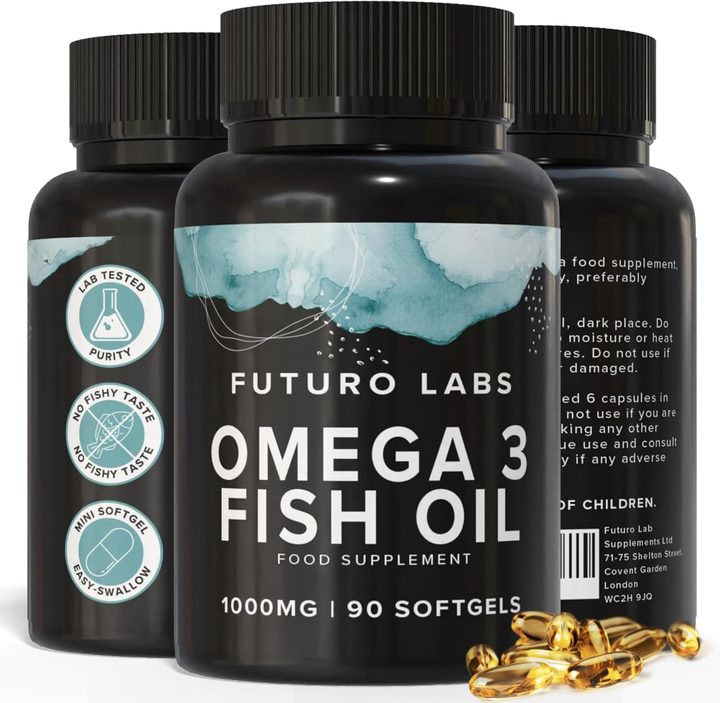
Our brand: the worked example on this page
Futuro Labs Omega 3 Fish Oil
- 17p a day
- 90 softgels, 1 softgel daily
- Lab tested
- Made in the UK
The natural-TG standard lane, where the contest barely applies: Futuro Labs Omega 3 Fish Oil on Amazon UK, 300mg EPA+DHA per softgel, £14.99 for 90 days. Label breakdown. The chemistry sits on the ethyl esters page; the TG worksheet on the triglyceride checklist.
Rounds one and two: absorption and price, the pair that decide most purchases
The absorption round is the contest's headline and its most misread result: the bioavailability work in Dyerberg's line gives triglyceride and re-esterified triglyceride forms a genuine uptake edge over ethyl esters, clearest when doses go down fasted, because EE digestion leans harder on bile and pancreatic machinery that an empty stomach has not summoned; feed the dose properly and the machinery arrives with the meal, the gap narrowing to a margin most users would never detect, which converts the round's verdict into a conditional, TG wins fasted, near-draw fed. The price round runs the other way without conditions: EE concentrates skip the re-esterification step and routinely post the shelf's best pence per 100mg of EPA and DHA, an advantage that compounds at gram-scale doses where concentrates live, so a fed EE buyer banks most of the absorption and all of the discount, which is the arithmetic the rest of the contest orbits.
Rounds three to five, and the reddit consensus examined
Purity: a draw by shared parentage, both forms passing through the same molecular distillation that strips contaminants, the EE stage being where the purification happens and the rTG stage merely converting the finished product back. Stability: close enough to call level for a buyer following normal storage habits, with freshness testing and opaque bottles mattering far more than the backbone. Pedigree: EE's quiet trump card, the prescription omega-3s, Omacor and its generics, being ethyl esters themselves, a fact that retires the inferior-form framing whenever it appears. Which leaves the forum verdict, fish oil ethyl ester vs triglyceride reddit threads converging on always pay for rTG: half right, this page's honest reading, correct for the erratic doser whose capsules land fasted as often as fed and who is buying forgiveness, and an unexamined overpayment for the dinner-habit user, who gets rTG's advantage from the meal for free and should spend the premium on milligrams instead. Convention hardened a conditional into a rule; the conditions still decide.
| Round or buyer | Verdict | The reasoning |
|---|---|---|
| Absorption | TG, fasted only | The fed gap is a margin, not a chasm |
| Price per gram | EE, outright | One less processing step, best denominators |
| Purity | Draw | Same distillation made both |
| Stability | Draw, in practice | Storage habits outweigh the backbone |
| Pedigree | EE, quietly | The prescription products are ethyl esters |
| Erratic doser at gram scale | Buy rTG | Paying for forgiveness the habit lacks |
| Dinner-habit doser | Buy well-priced EE or standard TG | The meal delivers the edge free |
| Everyday 250mg shopper | Neither: standard oil | Natural TG by norm; the contest never applies |
The verdict, and where the worked example leaves the argument
Which form of omega-3 is best, ethyl ester or triglyceride: fasted, triglyceride; fed, functionally either, with the money then deciding, which resolves through the buyer matrix rather than a winner's podium, rTG for erratic gram-scale dosing, well-priced EE for disciplined dinner dosing, and, for the everyday majority, neither, because standard-strength oils like the worked example sit outside the contest entirely, natural triglyceride by manufacturing norm at no form premium: Futuro Labs Omega 3 Fish Oil, one softgel with the evening meal, 180mg EPA and 120mg DHA for 300mg combined, £14.99 for 90 days at 17p, lab-tested, UK made, the with-dinner instruction quietly being the answer to the whole debate. The forms were never rivals so much as pricing tiers of the same distilled commodity, and the meal was always the referee.
What to check on the label
- TG wins fasted; fed is a near-draw: the meal is the referee.
- EE wins price per gram outright: one less processing step.
- Purity and stability: draws: the same distillation made both.
- The prescription products are ethyl esters: the inferior-form story overreaches.
- Buy by habit: rTG for erratic dosing, value EE for dinner discipline, standard oil for everyday.
Our brand
The worked example: Futuro Labs Omega 3 Fish Oil
Futuro Labs Omega 3 Fish Oil: 1 softgel daily with food, 1000mg fish oil providing 180mg EPA and 120mg DHA (300mg combined), 90 softgels for £14.99, 17p a day, lab-tested purity, UK GMP made. Gelatin shell, so not vegetarian.
- Fish oil per softgel
- 1000mg
- EPA / DHA per softgel
- 180mg / 120mg (300mg combined)
- Serving
- 1 softgel a day
- Bottle
- 90 softgels, 90 days
- Price
- £14.99 (17p a day)
- Softgel
- mini softgel, no fishy taste
Questions people also ask
Is triglyceride fish oil really better absorbed than ethyl ester?
Fasted, measurably yes: with a fatty meal the gap narrows to a margin. The condition matters more than the chemistry.
Why is ethyl ester fish oil cheaper?
It skips the re-esterification step after distillation: the same purified oil, one less process, which is why EE wins the pence-per-100mg round.
What does reddit get right about EE vs TG?
The rTG preference is sound for erratic gram-scale dosers buying forgiveness: it becomes an overpayment for anyone whose capsules reliably ride dinner.
Which form is my standard 1000mg fish oil?
Natural triglyceride, by manufacturing norm: the EE-versus-TG contest lives in the concentrate aisle, not the standard one.
So which should I actually buy?
Match the habit: disciplined dinner dosing buys the best-priced honest product of either form; erratic dosing at gram scale pays the rTG premium; everyday 250mg shoppers take the standard oil and skip the debate.
Sources
- Futuro Labs Omega 3 Fish Oil listing: 1000mg fish oil per softgel providing 180mg EPA and 120mg DHA, 90 softgels. Amazon UK, accessed 31 August 2026. https://www.amazon.co.uk/dp/B0CP9T3BTN
- Dyerberg J, Madsen P, Møller JM, Aardestrup I, Schmidt EB. Bioavailability of marine n-3 fatty acid formulations. Prostaglandins, Leukotrienes and Essential Fatty Acids 2010;83(3):137-141. PubMed record
- Electronic medicines compendium (emc): Summaries of Product Characteristics for omega-3-acid ethyl esters 1000mg capsules (Omacor and generics) and icosapent ethyl (Vazkepa). https://www.medicines.org.uk/emc/search?q=omega-3-acid+ethyl+esters
- GOED Voluntary Monograph: the omega-3 industry's quality standard setting limits for heavy metals, dioxins and oxidation (peroxide, anisidine and TOTOX values) in fish oils. https://goedomega3.com
- EFSA Panel on Dietetic Products. Scientific opinion on the substantiation of health claims related to EPA and DHA and normal function of the heart (250mg daily condition of use). EFSA Journal 2010;8(10):1796. https://www.efsa.europa.eu/en/efsajournal/pub/1796
- EFSA Panel on Dietetic Products. Scientific opinion on the tolerable upper intake level of EPA, DHA and DPA: supplemental intakes of EPA and DHA combined up to about 5g/day do not raise safety concerns for adults. EFSA Journal 2012;10(7):2815. https://www.efsa.europa.eu/en/efsajournal/pub/2815