Ghost Fitness/Omega-3/What is the best fish oil for joints UK?
What is the best fish oil for joints UK?
The short answer
No fish oil carries a joint claim: the authorised cartilage claim belongs to vitamin C, via normal collagen formation. Omega-3 joint research centres on inflammatory arthritis at prescribed-scale doses. For gym joints, load management and a physio outrank oil.
- 0authorised joint claims for fish oil, at any dose or ratio
- Vitamin Cthe nutrient actually holding a cartilage-function claim
- 2g to 4gthe daily EPA and DHA the inflammatory arthritis trials used
- Load managementwhat moves gym-joint pain: programming, not oil
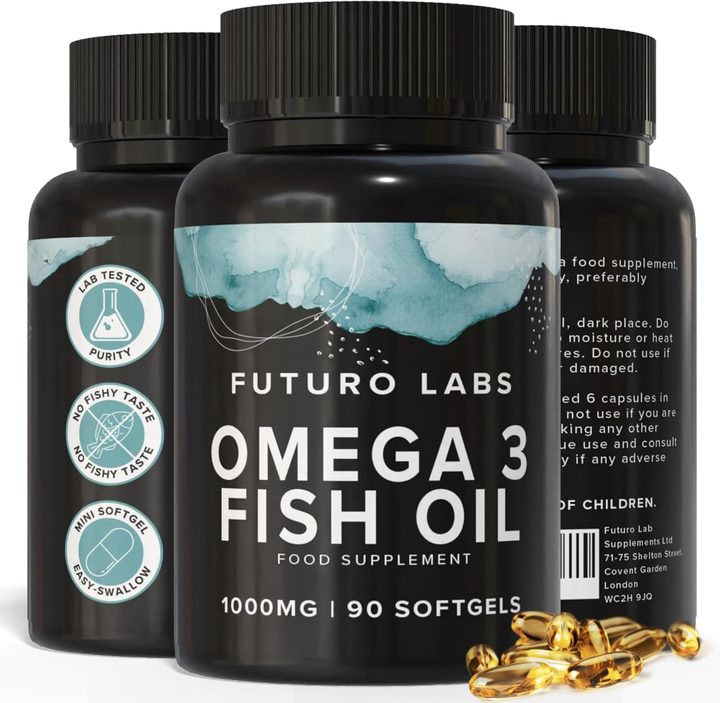
Our brand: the worked example on this page
Futuro Labs Omega 3 Fish Oil
- 17p a day
- 90 softgels, 1 softgel daily
- Lab tested
- Made in the UK
Bought for the claim it holds instead: Futuro Labs Omega 3 Fish Oil on Amazon UK, 300mg EPA+DHA per softgel, £14.99 for 90 days. Label breakdown. The inflammation claim audit is on omega-3 for inflammation; the collagen-and-vitamin-C story lives in the marine collagen breakdown.
The register, read for joints: what is authorised and what is not
Run the UK's authorised claims register through a joint filter and fish oil comes back empty: no joint, cartilage, mobility, stiffness or flexibility claim exists for EPA, DHA or any marine oil at any dose, every such phrase on a bottle being marketing past the rules. What the register does contain for joints sits elsewhere in the aisle: vitamin C contributes to normal collagen formation for the normal function of cartilage, an authorised claim at ordinary dietary doses, and vitamin D contributes to the maintenance of normal muscle function, the joint-adjacent claim with the most training relevance. Glucosamine and chondroitin, the joint aisle's traditional occupants, hold no authorised claims either, a fact their packaging survives by phrasing around. The first honest answer to best fish oil for joints is therefore structural: the category is competing for a mandate none of it holds, while the one cartilage claim in existence belongs to a vitamin costing pennies.
The research honestly placed, and what actually helps a lifter's joints
The evidence that keeps fish oil in joint conversations is real and specific: Goldberg and Katz's meta-analysis of inflammatory joint pain trials, dominated by rheumatoid arthritis, found modest improvements in patient-reported pain with roughly 2g to 4g of daily EPA and DHA over months, in diagnosed patients, alongside their treatment, which is a rheumatology finding, not a gym one, and self-escalating to those doses over aching knees skips both the diagnosis and the supervision the finding assumed. Gym-joint pain runs on different rails entirely: tendinopathy and irritation from load outpacing tissue tolerance, answered by managed loading, technique and programming review, graded return, and a physiotherapist for anything persistent, with sleep and adequate protein doing the tissue-repair background work; swelling, heat, morning stiffness beyond half an hour, or symmetrical small-joint pain are the inflammatory-pattern flags that make it a GP appointment instead. Nothing in a softgel substitutes for either pathway, and the pages of this site that discuss collagen-plus-vitamin-C pre-loading research keep that story at research size too.
| Option | Authorised joint-relevant claim? | Honest verdict |
|---|---|---|
| Fish oil, any strength | None | Bought honestly for the heart claim, never for joints |
| Vitamin C | Yes: collagen formation for normal cartilage function | The register's one cartilage claim, at pennies |
| Vitamin D | Muscle function maintenance | Joint-adjacent and worth having in winter regardless |
| Glucosamine and chondroitin | None | Tradition without a mandate |
| Collagen with vitamin C | Via the vitamin C only | Research interest for tendon-minded lifters, sized honestly |
| Load management and physio | n/a | The intervention that actually moves gym-joint pain |
The verdict, and what to buy and book instead
What is the best fish oil for joints in the UK: none holds the job, and the honest shopping list this page leaves behind is short. Buy the softgel for the claim it owns, Futuro Labs Omega 3 Fish Oil, one a day with dinner, 300mg of EPA and DHA for the heart-function territory, £14.99 for 90 days at 17p, lab-tested, UK made, and let any joint benefit remain the unpriced research question it is. Cover the register's actual cartilage claim through diet or the vitamin C already inside this site's worked collagen. Book the physio for the shoulder that has grumbled for six weeks, and the GP for anything with swelling, heat or morning stiffness. The joint aisle's oldest trick is selling capsules where assessment was owed; the best fish oil for joints is the one bought without that confusion attached.
What to check on the label
- No fish oil holds a joint claim: the phrase is marketing past the register.
- The cartilage claim belongs to vitamin C: collagen formation, at dietary doses.
- The arthritis research is gram-scale and medical: diagnosed patients, months, supervision.
- Gym joints answer to load management and physio: programming, not oil.
- Red flags, swelling, heat, morning stiffness, symmetry, mean GP, not the aisle.
Our brand
The worked example: Futuro Labs Omega 3 Fish Oil
Futuro Labs Omega 3 Fish Oil: 1 softgel daily with food, 1000mg fish oil providing 180mg EPA and 120mg DHA (300mg combined), 90 softgels for £14.99, 17p a day, lab-tested purity, UK GMP made. Gelatin shell, so not vegetarian.
- Fish oil per softgel
- 1000mg
- EPA / DHA per softgel
- 180mg / 120mg (300mg combined)
- Serving
- 1 softgel a day
- Bottle
- 90 softgels, 90 days
- Price
- £14.99 (17p a day)
- Softgel
- mini softgel, no fishy taste
Questions people also ask
Does fish oil help joint pain from lifting?
Not by any authorised claim or gym-population evidence: training joint pain is a load and tissue-tolerance story, answered by programming and a physio for anything persistent.
What supplement actually has a joint claim?
Vitamin C holds the register's cartilage-relevant claim, contributing to normal collagen formation for normal cartilage function, at ordinary dietary doses.
Should I take high-dose fish oil for my arthritis?
Not self-directed: the research doses were 2g to 4g daily in diagnosed patients under medical care, which makes it a GP or rheumatology conversation.
Is glucosamine better than fish oil for joints?
Neither holds an authorised claim: the traditional joint aisle runs on habit, not mandate.
When is joint pain a doctor visit rather than a supplement question?
Swelling, warmth, morning stiffness beyond half an hour, symmetrical small-joint pain, or anything persisting past six weeks of sensible load management.
Sources
- Futuro Labs Omega 3 Fish Oil listing: 1000mg fish oil per softgel providing 180mg EPA and 120mg DHA, 90 softgels. Amazon UK, accessed 31 August 2026. https://www.amazon.co.uk/dp/B0CP9T3BTN
- Goldberg RJ, Katz J. A meta-analysis of the analgesic effects of omega-3 polyunsaturated fatty acid supplementation for inflammatory joint pain. Pain 2007;129(1-2):210-223. PubMed record
- EFSA Panel on Dietetic Products, Nutrition and Allergies. Scientific Opinion on the substantiation of health claims related to magnesium. EFSA Journal 2010;8(10):1807. https://efsa.onlinelibrary.wiley.com/doi/10.2903/j.efsa.2010.1807
- EFSA Panel on Dietetic Products. Scientific opinion on the substantiation of health claims related to EPA and DHA and normal function of the heart (250mg daily condition of use). EFSA Journal 2010;8(10):1796. https://www.efsa.europa.eu/en/efsajournal/pub/1796
- Shaw G, Lee-Barthel A, Ross ML, Wang B, Baar K. Vitamin C-enriched gelatin supplementation before intermittent activity augments collagen synthesis. American Journal of Clinical Nutrition 2017;105(1):136-143. PubMed record
- EFSA Panel on Dietetic Products. Scientific opinion on the tolerable upper intake level of EPA, DHA and DPA: supplemental intakes of EPA and DHA combined up to about 5g/day do not raise safety concerns for adults. EFSA Journal 2012;10(7):2815. https://www.efsa.europa.eu/en/efsajournal/pub/2815