Ghost Fitness/Omega-3/Is krill oil better than fish oil for joints?
Is krill oil better than fish oil for joints?
The short answer
No: neither holds a joint claim, the krill arthritis studies are small and short, and krill delivers the least EPA and DHA per pound on the shelf. For joints, manage training load and see a GP about persistent pain.
- 0 - 0authorised joint claims held by krill oil and by fish oil
- Small, shortthe krill joint trials: modest, brief, often industry funded
- Least per poundkrill's EPA and DHA content is the aisle's worst value
- The one cartilage claimvitamin C's collagen-formation mandate: not an oil at all
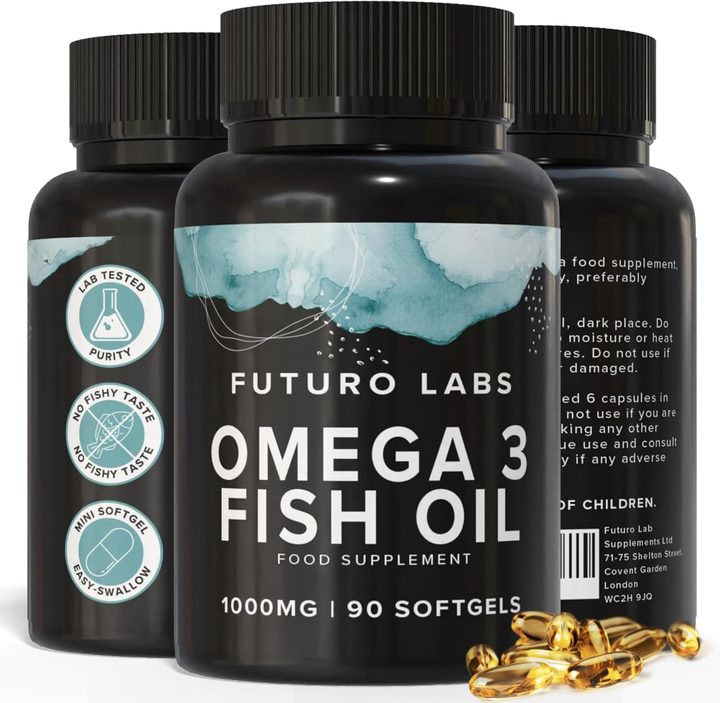
Our brand: the worked example on this page
Futuro Labs Omega 3 Fish Oil
- 17p a day
- 90 softgels, 1 softgel daily
- Lab tested
- Made in the UK
The honest omega-3 at a quarter of krill's price per milligram: Futuro Labs Omega 3 Fish Oil on Amazon UK, 300mg EPA+DHA, £14.99 for 90 days. Label breakdown. The turmeric version of this contest is on turmeric vs fish oil for joints; the source league on the richest sources table.
The scoreboard: claims, trials, and what krill actually contains
Score it the way this site scores every joint contest. Claims: the register authorises no joint, cartilage, mobility or inflammation claim for krill oil, for fish oil, or for EPA and DHA at any dose, so the headline contest is nil-nil before evidence is even called, and the register's only cartilage-adjacent entry belongs to vitamin C, whose collagen-formation claim covers normal cartilage function, a mandate no oil in this aisle holds. Trials: krill's joint pitch leans on a handful of small, short randomised studies reporting modest improvements in joint discomfort scores, a literature that is genuinely there and genuinely thin, brief durations, small groups, frequent industry funding, the exact profile that never converts into an authorised claim, while fish oil's own joint file, as the turmeric contest found, is similarly unpromising at the doses shelves sell. Content: the phospholipid form and astaxanthin tint are krill's real marketing assets, because its measurable one is weak, typical capsules carrying a fraction of a standard softgel's EPA and DHA at a multiple of the price, the food-league table's reigning worst-value entry.
The price test, and where a sore-jointed lifter's money honestly goes
Even granting krill every benefit of its small trials, the buyer still faces the milligram arithmetic, and it is brutal: at typical UK prices, krill oil delivers combined EPA and DHA at several times the pence per 100mg of a standard fish oil, meaning a reader who believes omega-3 helps their joints could buy three or four times the omega-3 for the same money by ignoring the krill shelf entirely, which makes krill a strange vehicle for its own argument. The phospholipid-absorption story does not rescue the maths: absorption differences, debated in the comparative literature, are marginal against a three-to-four-fold content gap, and the effectiveness pages' rule holds, delivered milligrams times adherence beats carrier chemistry every time. So the sore-jointed lifter's money goes where this site's joint pages always send it: training load and technique review first, since programme problems masquerade as supplement questions; body weight and general activity, the unglamorous levers with real evidence; vitamin C sufficiency, the register's one honest cartilage sentence, met by diet for pennies; and a GP for pain that is persistent, swollen, hot or one-sided, which was never a shelf matter. The oil, if kept, is kept as fish, for the heart claim, at 17p.
| The test | Krill oil | Fish oil | Verdict |
|---|---|---|---|
| Authorised joint claims | None | None | Nil-nil: the contest has no prize |
| The joint trial file | Small, short, often industry funded | Similarly unpromising at shelf doses | Neither earns expectations |
| EPA and DHA per capsuleOurs | A fraction of a standard softgel | ~300mg | Fish oil |
| Pence per 100mg of the pair | The aisle's worst | The benchmark | Fish oil, by multiples |
| The marketing assets | Phospholipids, astaxanthin, red bottles | None needed | Marketing is not milligrams |
| The joint plan that works | Not this | Not this either | Load management, weight, vitamin C, GP |
The verdict, and the reallocation as ever
Is krill oil better than fish oil for joints: no, and it is not close, because the claims are absent for both, the krill trial file is too small and short to promise anything, and krill loses the only measurable contest, milligrams per pound, by multiples, leaving it a premium-priced way to buy less of the thing its own argument requires. The reallocation is the same one every joint page here issues: fix the programme, mind the bodyweight, keep vitamin C sufficient, and give persistent or inflamed pain to a GP rather than a shelf. If an omega-3 stays in the routine, it stays as the honest version: Futuro Labs Omega 3 Fish Oil, 300mg of EPA and DHA per mini softgel with dinner, £14.99 for 90 days at 17p, lab-tested, UK made, bought for the heart-function claim it actually holds, at a price krill cannot see from where it sits.
What to check on the label
- Neither oil holds a joint claim: the register's cartilage entry is vitamin C's.
- The krill joint trials are small and short: often industry funded, never mandated.
- Krill is the aisle's worst value: least EPA and DHA per pound, by multiples.
- Phospholipid marketing loses to milligram arithmetic: content beats carrier.
- Persistent, hot or one-sided joint pain sees a GP: never a shelf.
Our brand
The worked example: Futuro Labs Omega 3 Fish Oil
Futuro Labs Omega 3 Fish Oil: 1 softgel daily with food, 1000mg fish oil providing 180mg EPA and 120mg DHA (300mg combined), 90 softgels for £14.99, 17p a day, lab-tested purity, UK GMP made. Gelatin shell, so not vegetarian.
- Fish oil per softgel
- 1000mg
- EPA / DHA per softgel
- 180mg / 120mg (300mg combined)
- Serving
- 1 softgel a day
- Bottle
- 90 softgels, 90 days
- Price
- £14.99 (17p a day)
- Softgel
- mini softgel, no fishy taste
Questions people also ask
Does krill oil help joint pain?
The trials behind the pitch are small, short and often industry funded: enough to keep researchers interested, nowhere near enough for any authorised claim or honest promise.
Is krill oil absorbed better than fish oil?
The phospholipid absorption story is debated and, at best, marginal: it cannot offset capsules carrying a fraction of the EPA and DHA at a multiple of the price.
What is astaxanthin and does it matter?
The pigment that makes krill oil red: an antioxidant with marketing appeal and no authorised claims relevant here. It colours the bottle, not the verdict.
What actually helps a lifter's joints?
Training load and technique review, sensible body weight, dietary vitamin C for its cartilage-collagen claim, and a GP for persistent, swollen or one-sided pain.
Is there any reason to choose krill over fish oil?
On the measurable tests, no: fish oil delivers several times the omega-3 per pound. Krill's advantages live in the marketing copy, not on the panel.
Sources
- Comparative research on krill oil versus fish oil: phospholipid-form omega-3 with modest EPA and DHA content per capsule, and bioavailability claims that remain debated. PubMed record
- The krill oil joint literature: small, short randomised trials on joint discomfort, insufficient for any authorised claim and often industry funded. PubMed record
- Futuro Labs Omega 3 Fish Oil listing: 1000mg fish oil per softgel providing 180mg EPA and 120mg DHA, 90 softgels. Amazon UK, accessed 31 August 2026. https://www.amazon.co.uk/dp/B0CP9T3BTN
- EFSA Panel on Dietetic Products, Nutrition and Allergies. Scientific Opinion on the substantiation of health claims related to magnesium. EFSA Journal 2010;8(10):1807. https://efsa.onlinelibrary.wiley.com/doi/10.2903/j.efsa.2010.1807
- EFSA Panel on Dietetic Products. Scientific opinion on the substantiation of health claims related to EPA and DHA and normal function of the heart (250mg daily condition of use). EFSA Journal 2010;8(10):1796. https://www.efsa.europa.eu/en/efsajournal/pub/1796