Ghost Fitness/Omega-3/Which is better for inflammation turmeric or fish oil?
Which is better for inflammation turmeric or fish oil?
The short answer
Neither: no inflammation claim exists for turmeric or fish oil, and their research files do not overlap, fish oil's sitting in rheumatoid arthritis trials and curcumin's in knee osteoarthritis. Real inflammation routes to a GP; the folklore contest is empty.
- 0 - 0the claims scoreline, again: neither holds an inflammation mandate
- Non-overlapping filesRA trials for fish oil, knee OA trials for curcumin: different diseases
- 2 folkloresresolvins and golden-spice mechanism talk: both real, both early
- The GPwhere any actual inflammation was always headed
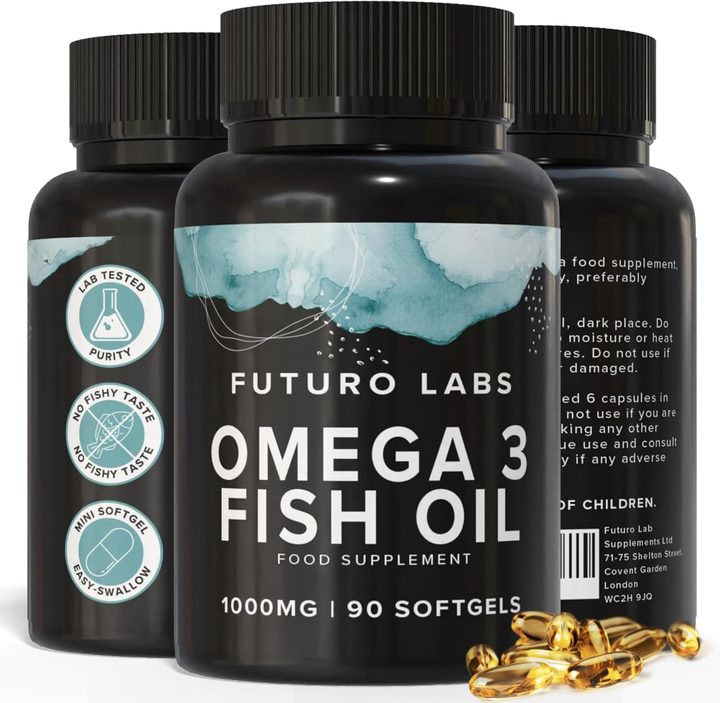
Our brand: the worked example on this page
Futuro Labs Omega 3 Fish Oil
- 17p a day
- 90 softgels, 1 softgel daily
- Lab tested
- Made in the UK
The fish oil corner, sold on its real claim: Futuro Labs Omega 3 Fish Oil on Amazon UK, 300mg EPA+DHA per softgel, £14.99 for 90 days. Label breakdown. The joints version of this contest is on turmeric vs fish oil for joint pain; the blend demolition on the combo page.
Two folklores, each traced to its actual source
Both contestants arrive carrying inflammation folklore, and tracing each to its source is most of the answer. Fish oil's story descends from real biochemistry, EPA and DHA sitting upstream of the resolving mediators studied in how inflammatory processes switch off, plus one real clinical file, the rheumatoid arthritis trials pooled in Goldberg and Katz's meta-analysis, gram-scale daily EPA and DHA over months in diagnosed patients, modest pain improvements alongside treatment. Turmeric's story descends from curcumin's laboratory profile, its interactions with inflammatory signalling pathways generating decades of mechanism papers, plus its own real clinical file, the knee osteoarthritis trials, short randomised studies of bioavailability-enhanced extracts reporting modest pain-score improvements. Neither story survived the claims process: the UK register authorises no inflammation claim for either ingredient at any dose, curcumin's applications sitting in the unresolved botanical limbo and omega-3's having been assessed and rejected, so the folklore contest the question stages is between two pitches neither label may lawfully print.
Why better cannot be scored, and where each reader actually goes
The comparison's quiet fatal flaw is that the two clinical files do not even overlap: fish oil's evidence lives in rheumatoid arthritis, an autoimmune inflammatory disease, while curcumin's lives in knee osteoarthritis, a degenerative joint condition with an inflammatory component, different diseases, different populations, different outcome measures, meaning no trial has ever raced the two against each other and no honest ranking can be assembled from files about different patients. Which converts the question into the routing exercise every inflammation page here performs. Diagnosed rheumatoid or inflammatory arthritis: the fish oil file is a conversation for your rheumatology team, gram doses inside actual treatment. Diagnosed knee osteoarthritis: the curcumin file is likewise a clinician conversation, formulation-specific and modest. Undiagnosed symptoms, swelling, warmth, morning stiffness, persistent pain: a GP appointment before any purchase, because the diagnosis decides which file, if either, is even relevant. And the everyday reader with no symptoms, shopping the word inflammation: neither product, since the background the wellness aisle monetises answers to sleep, activity, weight and not smoking, the quartet no capsule matches.
| Axis | Fish oil | Turmeric / curcumin | Verdict |
|---|---|---|---|
| Authorised inflammation claim | None | None | The contest is empty at the only level that binds |
| Mechanism folklore | Resolvins: real, early | Signalling-pathway papers: real, early | A draw of biochemistry, not products |
| Clinical file | Rheumatoid arthritis, gram-scale, adjunct | Knee OA, enhanced extracts, short trials | Non-overlapping: no race was ever run |
| Transferability to healthy users | None demonstrated | None demonstrated | Neither file leaves its clinic |
| The everyday purchase case | The 250mg heart claim, 17p | The spice rack, claim-free | Each honest at its real size |
| Actual symptoms | n/a | n/a | GP first: diagnosis decides which file matters |
The verdict, and the two products sent to their honest homes
Which is better for inflammation, turmeric or fish oil: neither can be, because the claims scoreline is nil-nil, the research files describe different diseases, and the word better has nothing to grip, which leaves the two products exactly where this site's other pages placed them: turmeric in the kitchen, generous, delicious and claim-free, its capsule-grade questions belonging inside diagnosed osteoarthritis care; and fish oil in its standing role, Futuro Labs Omega 3 Fish Oil, one softgel with dinner for the authorised heart-function territory at 300mg of EPA and DHA, £14.99 for 90 days at 17p, lab-tested, UK made, bought with zero inflammation expectations because zero exist to buy. The contest was two folklores auditioning for a vacant title; the appointment and the early night remain the incumbents.
What to check on the label
- Nil-nil on claims: no inflammation mandate exists for either, at any dose.
- The research files do not overlap: RA for fish oil, knee OA for curcumin.
- No trial ever raced them: better has nothing to score.
- Symptoms route to a GP first: the diagnosis decides which file even applies.
- Everyday buyers take neither for this: sleep, activity, weight and not smoking hold the title.
Our brand
The worked example: Futuro Labs Omega 3 Fish Oil
Futuro Labs Omega 3 Fish Oil: 1 softgel daily with food, 1000mg fish oil providing 180mg EPA and 120mg DHA (300mg combined), 90 softgels for £14.99, 17p a day, lab-tested purity, UK GMP made. Gelatin shell, so not vegetarian.
- Fish oil per softgel
- 1000mg
- EPA / DHA per softgel
- 180mg / 120mg (300mg combined)
- Serving
- 1 softgel a day
- Bottle
- 90 softgels, 90 days
- Price
- £14.99 (17p a day)
- Softgel
- mini softgel, no fishy taste
Questions people also ask
Is turmeric more anti-inflammatory than fish oil?
No ranking exists: neither holds a claim, and their trials concern different diseases, rheumatoid arthritis for fish oil and knee osteoarthritis for curcumin, so no head-to-head was ever run.
Can I take both turmeric and fish oil for inflammation?
Safely, yes; usefully for that word, no: stacking two claim-free products creates no mandate, and real symptoms still route to a GP.
Which helps arthritis more?
It depends which arthritis, which is the point: the fish oil file is rheumatoid and the curcumin file is osteoarthritis, and each belongs inside that diagnosis's care, not on a shelf.
Why do both get sold as anti-inflammatories then?
Both have genuine early mechanism research that marketing generalised past the register: real biochemistry, unlawful labels, the pattern this section's decoder page translates.
What should I actually do about ongoing inflammation?
See a GP for anything persistent, swollen, warm or stiff: and for the background sense of it, the evidenced levers are sleep, activity, weight and not smoking.
Sources
- Futuro Labs Omega 3 Fish Oil listing: 1000mg fish oil per softgel providing 180mg EPA and 120mg DHA, 90 softgels. Amazon UK, accessed 31 August 2026. https://www.amazon.co.uk/dp/B0CP9T3BTN
- Goldberg RJ, Katz J. A meta-analysis of the analgesic effects of omega-3 polyunsaturated fatty acid supplementation for inflammatory joint pain. Pain 2007;129(1-2):210-223. PubMed record
- Randomised trial evidence on curcumin extracts in knee osteoarthritis: pain-score improvements versus placebo in short trials, with bioavailability-enhanced formulations and modest effect sizes. PubMed record
- EFSA Panel on Dietetic Products, Nutrition and Allergies. Scientific Opinion on the substantiation of health claims related to magnesium. EFSA Journal 2010;8(10):1807. https://efsa.onlinelibrary.wiley.com/doi/10.2903/j.efsa.2010.1807
- EFSA Panel on Dietetic Products. Scientific opinion on the substantiation of health claims related to EPA and DHA and normal function of the heart (250mg daily condition of use). EFSA Journal 2010;8(10):1796. https://www.efsa.europa.eu/en/efsajournal/pub/1796