Ghost Fitness/Omega-3/What is better for joint pain, turmeric or fish oil?
What is better for joint pain, turmeric or fish oil?
The short answer
Neither: no joint claim exists for turmeric or fish oil, so the head-to-head is a draw at zero. The register's one cartilage claim belongs to vitamin C, and joint pain answers to load management, physio and, where needed, a GP.
- 0 - 0the claims scoreline: neither contestant holds a joint mandate
- 2 research filesRA trials for fish oil, knee OA trials for curcumin: both medical, both modest
- Vitamin Cthe third contestant holding the register's only cartilage claim
- The real winnersload management and physio: unbeaten, unmarketed
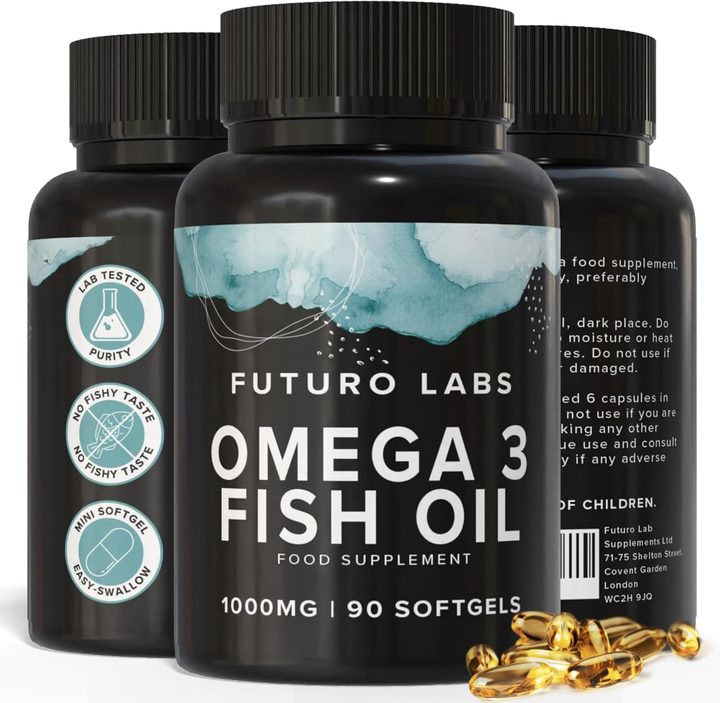
Our brand: the worked example on this page
Futuro Labs Omega 3 Fish Oil
- 17p a day
- 90 softgels, 1 softgel daily
- Lab tested
- Made in the UK
The fish oil corner, sold for its actual claim: Futuro Labs Omega 3 Fish Oil on Amazon UK, 300mg EPA+DHA per softgel, £14.99 for 90 days. Label breakdown. The fish oil joints audit is on the joints page; the blend demolition on the turmeric combo page.
The claims round, and the research files read side by side
Score the mandated round first and it ends nil-nil: the UK register authorises no joint, cartilage, mobility or stiffness claim for fish oil at any dose, and none for turmeric or curcumin either, the botanical claims sitting in unresolved limbo lawful labels cannot draw on, so every bottle of either sold on joints is marketing past its own paperwork, and the head-to-head the question imagines is a contest for a vacant title. The research round is livelier and splits by diagnosis rather than by winner. Fish oil's file is the inflammatory arthritis one: the rheumatoid trials pooled in Goldberg and Katz's meta-analysis, gram-scale daily EPA and DHA over months in diagnosed patients, modest pain improvements alongside treatment. Curcumin's file is the osteoarthritis one: randomised knee OA trials, typically using bioavailability-enhanced extracts at study doses, reporting pain-score improvements versus placebo over short durations, modest effect sizes, an honest and genuinely interesting literature with the standard-powder caveat attached, since kitchen-grade curcumin absorbs at single-digit rates. Two real files, both medical, both dose-and-formulation specific, neither transferring to a gym knee via a shelf.
The contestants nobody mentions, and the sorting that actually helps a sore joint
The honest contest has more entrants than the question named. Vitamin C holds the register's only cartilage-adjacent claim, contributing to normal collagen formation for the normal function of cartilage, at ordinary dietary doses, pennies, mandated, and absent from every turmeric-versus-fish-oil article ever written. And above the whole shelf sit the interventions that actually move joint pain: for the gym joint, load management, graded volume, technique and programming review, strength work around the joint, and a physiotherapist for anything stubborn past six weeks; for the possibly-medical joint, the GP, with the routing signs this section repeats, swelling, warmth, morning stiffness beyond half an hour, symmetrical small-joint pain, night pain, any of which reframes the question from which supplement to which appointment. The sorting for the reader with an actual sore joint therefore runs: red flags to the GP this week; stubborn training pain to the physio; diagnosed OA or RA readers discussing the curcumin or fish oil files inside their existing care, formulations and doses matched to the actual studies; and the healthy curious buying neither on joint grounds, because no grounds exist.
| Contestant | Joint claim | Research file | Honest verdict |
|---|---|---|---|
| Fish oil | None | RA trials: gram-scale, diagnosed, adjunct, modest | Buy for the heart claim or not at all |
| Turmeric / curcumin | None | Knee OA trials: enhanced extracts, short, modest | A medical conversation, not a shelf pick |
| Vitamin C | The one cartilage claim: collagen formation | Mandated at dietary doses | The contestant the articles forget |
| Load management + physio | n/a | The interventions that move gym joints | The real winner for training pain |
| The GP, on red flags | n/a | Swelling, warmth, stiffness, symmetry, night pain | The real winner for medical pain |
The verdict, and where each corner's product honestly lands
What is better for joint pain, turmeric or fish oil: neither, by the only scoring that binds, a nil-nil claims draw beneath two modest, medical, non-transferable research files, with vitamin C quietly holding the register's one relevant mandate and the physio holding the outcomes. The products land where honesty puts them: turmeric in the kitchen, generous and claim-free, its capsule-grade OA questions belonging inside diagnosed care; and fish oil in this section's standing role, Futuro Labs Omega 3 Fish Oil, one softgel with dinner for the authorised heart-function territory at 300mg of EPA and DHA, £14.99 for 90 days, 17p a day, bought with zero joint expectations attached because zero exist to buy. The versus was a contest for a vacant title; the sore knee was always a routing question, and now it is routed.
What to check on the label
- Nil-nil on claims: neither turmeric nor fish oil holds any joint mandate.
- Two medical research files: RA gram-scale for fish oil, enhanced-extract knee OA for curcumin.
- Vitamin C holds the one cartilage claim: the forgotten contestant, at pennies.
- Gym joints answer to load management and physio: the unbeaten interventions.
- Red flags route to the GP: swelling, warmth, stiffness, symmetry, night pain.
Our brand
The worked example: Futuro Labs Omega 3 Fish Oil
Futuro Labs Omega 3 Fish Oil: 1 softgel daily with food, 1000mg fish oil providing 180mg EPA and 120mg DHA (300mg combined), 90 softgels for £14.99, 17p a day, lab-tested purity, UK GMP made. Gelatin shell, so not vegetarian.
- Fish oil per softgel
- 1000mg
- EPA / DHA per softgel
- 180mg / 120mg (300mg combined)
- Serving
- 1 softgel a day
- Bottle
- 90 softgels, 90 days
- Price
- £14.99 (17p a day)
- Softgel
- mini softgel, no fishy taste
Questions people also ask
Is turmeric or fish oil better for arthritis?
Neither holds a claim, and each has a different medical file: fish oil in rheumatoid trials, curcumin in knee osteoarthritis trials, both modest, both belonging inside diagnosed care rather than shelf decisions.
Does curcumin actually help knee pain?
Short randomised trials with bioavailability-enhanced extracts report modest pain improvements in knee OA: interesting, formulation-specific, and a conversation for diagnosed patients with their clinicians.
Can I take turmeric and fish oil together for my joints?
You can take both safely, but stacking two claim-free products does not manufacture a mandate: the joint itself still answers to load management, physio or a GP.
What supplement actually has a joint-related claim?
Vitamin C: contributing to normal collagen formation for the normal function of cartilage, at ordinary dietary doses, the register's one relevant sentence.
My knee hurts after training: turmeric, fish oil, or what?
Neither first: manage the load, check the programming, and see a physio if it persists past six weeks, or a GP promptly for swelling, warmth or morning stiffness.
Sources
- Futuro Labs Omega 3 Fish Oil listing: 1000mg fish oil per softgel providing 180mg EPA and 120mg DHA, 90 softgels. Amazon UK, accessed 31 August 2026. https://www.amazon.co.uk/dp/B0CP9T3BTN
- Goldberg RJ, Katz J. A meta-analysis of the analgesic effects of omega-3 polyunsaturated fatty acid supplementation for inflammatory joint pain. Pain 2007;129(1-2):210-223. PubMed record
- Randomised trial evidence on curcumin extracts in knee osteoarthritis: pain-score improvements versus placebo in short trials, with bioavailability-enhanced formulations and modest effect sizes. PubMed record
- EFSA Panel on Dietetic Products, Nutrition and Allergies. Scientific Opinion on the substantiation of health claims related to magnesium. EFSA Journal 2010;8(10):1807. https://efsa.onlinelibrary.wiley.com/doi/10.2903/j.efsa.2010.1807
- EFSA Panel on Dietetic Products. Scientific opinion on the substantiation of health claims related to EPA and DHA and normal function of the heart (250mg daily condition of use). EFSA Journal 2010;8(10):1796. https://www.efsa.europa.eu/en/efsajournal/pub/1796