Ghost Fitness/Omega-3/Can fish oil cause joint pain?
Can fish oil cause joint pain?
The short answer
No: omega-3 does not cause joint pain, no trial or cohort linking it to any joint symptom. A reader whose joint began hurting after starting fish oil has a differential: the training block or the coincidence at the top; a medicine started at the same time; and the one real exception, too much vitamin A from a cod liver oil taken in quantity, above whose upper level bone and joint pain is a symptom. A refined fish oil contains no purines.
- Omega-3 and joint painno trial or cohort links it to any joint symptom; the joint file runs the other way
- The top of the differentiala training block, a new movement, a coincidence: a new ache and a new tub in the same week
- The real exceptiontoo much preformed vitamin A from a cod liver oil in quantity or stacked with a multivitamin: bone and joint pain above the 3000 microgram level
- Goutoily fish is high in purines; a refined fish oil supplement contains none
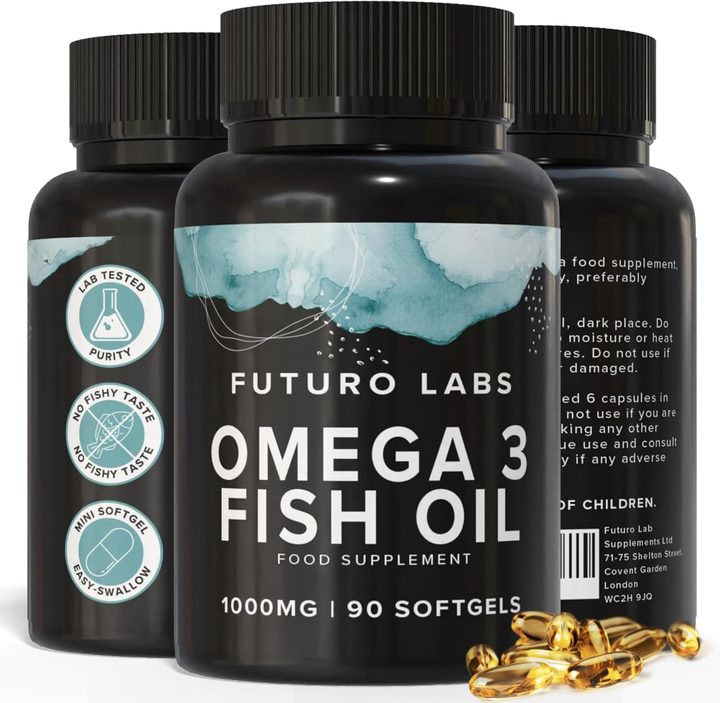
Our brand: the worked example on this page
Futuro Labs Omega 3 Fish Oil
- 17p a day
- 90 softgels, 1 softgel daily
- Lab tested
- Made in the UK
A body oil with no vitamin A and no purines: Futuro Labs Omega 3 Fish Oil on Amazon UK, 1 softgel with food, 180mg EPA and 120mg DHA, 90 for £14.99 at 17p. Full label breakdown. The four joints are on the joint pain page; cod liver oil versus fish oil on the cod liver oil page.
No, and the differential for the reader whose joint began hurting the week they started, the top of it first
Can fish oil cause joint pain is answered no, and the useful page is a differential for the reader who started fish oil and whose joint began hurting, because the two events arrive together often enough to be blamed on each other and are almost never connected. Omega-3's own file: no trial or cohort links omega-3 intake or supplementation to any joint symptom, the cardiovascular outcome trials recording no musculoskeletal signal at a gram a day over years, and the only joint file for omega-3 runs the other way, modestly less pain and stiffness in inflammatory arthritis at several grams a day for months, so a fat that builds into membranes has no mechanism by which to hurt a joint and no record of doing so. The top of the differential, where most of these readers are: a training block, a new movement or a load that outran a joint's tolerance, the loaded joint that hurts because it was loaded and settles on a deload in a fortnight; a tendon that had been warming up and worsening for weeks before the tub arrived; and plain coincidence, since a reader who starts a supplement tends to start it alongside a new programme, a new gym or a new resolve, and a new ache and a new tub landing in the same week are related by the calendar and nothing else, the four-joints page's routes applying whatever the tub. A medicine started at the same time sits next: a statin, whose myalgia is muscle rather than joint but is often reported as both, a fluoroquinolone antibiotic, whose tendon effects are real, or a medicine review at a pharmacist for anything else new.
The one real exception, too much vitamin A from a liver oil, the gout note, the reader who stops and restarts, and the question filed
The one real exception belongs to a particular product and a different molecule: a cod liver oil is a liver oil, and each capsule or teaspoon carries hundreds of micrograms of preformed vitamin A, retinol, so a reader taking cod liver oil in quantity, several capsules or spoons a day, or stacking it with a multivitamin's vitamin A or a separate vitamin A supplement, can push sustained intake toward and past the adult upper level of 3000 micrograms a day, and chronic excess of preformed vitamin A produces bone and joint pain among its recognised symptoms, alongside headache, dry skin and, at the extreme, liver damage, the vitamin A advice's file and the one way a product on the fish oil shelf causes a joint to ache. A body-oil fish oil carries no vitamin A and raises no such question, which is why the worked example on every page here is a body oil and why a reader on cod liver oil with a new joint pain reads the two labels together, adds the vitamin A, and switches to a body oil if the sum is high, the pain resolving over weeks as the vitamin A clears. The gout note, since a reader with gout may fear fish: oily fish is high in purines, the compounds that raise uric acid, and a large intake of sardines, anchovies or mackerel can trigger a flare in someone with gout, but a refined fish oil supplement contains no purines, the distillation that removes contaminants removing them too, and omega-3 has been studied as a possible help in gout rather than a trigger, so a reader with gout takes a softgel without concern and watches the fish on the plate rather than the oil in the capsule. The reader who wants proof stops the fish oil for a fortnight and restarts: a joint that stayed the same was never the fish oil's, and a joint that improved on stopping has, almost always, improved on the fortnight's rest from whatever loaded it, the restart being the test that shows it. The question filed: fish oil does not cause joint pain, the differential running the training block and the coincidence at the top and a new medicine next, the one real exception being too much vitamin A from a cod liver oil taken in quantity, and gout being a fish question rather than a fish oil one, with the worked example being a body oil with no vitamin A and no purines, one softgel at 17p, £14.99 for 90.
| The cause | The finding | The action |
|---|---|---|
| Omega-3 itself | No trial or cohort links it to any joint symptom; the joint file runs the other way | Not the cause |
| A training block or a new movement | A loaded joint or a tendon that predates the tub | A deload; a physiotherapist |
| Coincidence | A new tub and a new ache in the same week | Related by the calendar only |
| A medicine started at the same time | A statin's myalgia; a fluoroquinolone's tendons | A pharmacist's review |
| Too much vitamin A from a cod liver oil | Bone and joint pain above the 3000 microgram level | Add the vitamin A across labels; switch to a body oil |
| Gout | Oily fish is high in purines; a refined fish oil has none | Watch the fish on the plate, not the oil in the capsule |
The verdict, not the fish oil, with one liver-oil exception and a gout note
Can fish oil cause joint pain: no, omega-3 having no mechanism to hurt a joint and no record of doing so in any trial or cohort, with the reader whose joint began hurting after starting fish oil having a differential that runs the training block, the new movement and plain coincidence at the top, a statin or a fluoroquinolone started at the same time next, and one real exception, too much preformed vitamin A from a cod liver oil taken in quantity or stacked with a multivitamin, above whose 3000 microgram upper level bone and joint pain is a recognised symptom, while gout is a fish question, oily fish being high in purines and a refined fish oil containing none. A body oil with no vitamin A and no purines: Futuro Labs Omega 3 Fish Oil, one softgel with food, 180mg EPA and 120mg DHA, 90 for £14.99 at 17p a day.
What to check on the label
- Clear the fish oil: no mechanism, no record.
- Look at the training block first: a loaded joint or a tendon settles on its own clock.
- Check what else started that week: a statin, an antibiotic, a programme.
- Add up the vitamin A if it is a cod liver oil: the one real exception.
- Watch the fish, not the oil, for gout: a refined oil has no purines.
Our brand
The worked example: Futuro Labs Omega 3 Fish Oil
Futuro Labs Omega 3 Fish Oil: 1 softgel daily with food, 1000mg fish oil providing 180mg EPA and 120mg DHA (300mg combined), 90 softgels for £14.99, 17p a day, lab-tested purity, UK GMP made. Gelatin shell, so not vegetarian.
- Fish oil per softgel
- 1000mg
- EPA / DHA per softgel
- 180mg / 120mg (300mg combined)
- Serving
- 1 softgel a day
- Bottle
- 90 softgels, 90 days
- Price
- £14.99 (17p a day)
- Softgel
- mini softgel, no fishy taste
Questions people also ask
Can omega-3 make your joints hurt?
No: no trial or cohort links omega-3 to any joint symptom, the outcome trials at a gram a day over years recording no musculoskeletal signal, and the only joint file for omega-3 runs the other way, modestly less pain and stiffness in inflammatory arthritis at high doses.
Why do my joints hurt since I started taking fish oil?
Almost always the calendar: a new supplement tends to arrive with a new programme, a new movement or a new load, and a loaded joint or a tendon that predates the tub is the cause, settling on a deload or a physiotherapist's clock; a medicine started the same week is the next thing to check.
Can cod liver oil cause joint pain?
Through its vitamin A, in quantity: a cod liver oil carries hundreds of micrograms of preformed vitamin A a capsule, and sustained intake above the 3000 microgram adult upper level, from several capsules a day or a stack with a multivitamin, produces bone and joint pain among its symptoms, resolved by switching to a body oil.
Is fish oil safe if I have gout?
Yes: oily fish is high in purines and can trigger a flare when eaten in quantity, but a refined fish oil supplement contains no purines, and omega-3 has been studied as a possible help in gout rather than a trigger, so the fish on the plate is watched and the softgel is not.
How do I check whether fish oil is causing my joint pain?
Stop it for a fortnight and restart: a joint that stays the same was never the fish oil's, and a joint that improved on stopping has almost always improved on the fortnight's rest from whatever loaded it, which the restart shows when the pain does not return.
Sources
- The cod liver oil and vitamin A literature: cod liver oil carries preformed vitamin A at hundreds of micrograms per teaspoon or capsule, the adult upper level for preformed vitamin A being 3000 micrograms a day and pregnancy advice being to avoid liver oils, so a cod liver oil stacked with a multivitamin or a vitamin A supplement is the one combination in which a fish oil can push a vitamin over its limit. https://www.gov.uk/government/publications/sacn-vitamin-a-and-health
- The purine and gout literature: oily fish is high in purines and raises gout risk when eaten in quantity, while refined fish oil supplements contain no purines, and omega-3 has been studied as a possible help in gout rather than a trigger. PubMed record
- Goldberg RJ, Katz J. A meta-analysis of the analgesic effects of omega-3 polyunsaturated fatty acid supplementation for inflammatory joint pain. Pain 2007;129(1-2):210-223. PubMed record
- The statin-associated muscle symptoms literature: muscle aches, weakness and cramps are the commonest reason for stopping statins, are managed by the prescriber through dose, drug or timing changes, and have no established prevention from supplements, coenzyme Q10 trials being mixed and magnesium untested. PubMed record