Ghost Fitness/Omega-3/What is the richest source of DHA and EPA?
What is the richest source of DHA and EPA?
The short answer
Oily fish: mackerel and herring lead at roughly 2 to 3g of EPA and DHA per 100g, with sardines, salmon and anchovies close behind. Among supplements, concentrated fish oils and cod liver oil are the densest everyday sources.
- 2 to 3g per 100gmackerel and herring: the league's top tier
- One portiona serving of oily fish out-delivers a week of standard softgels
- The tuna trapcanned tuna is not an oily fish: a fraction of the headline figures
- 2 portions weeklythe UK advice this table exists to serve, one of them oily
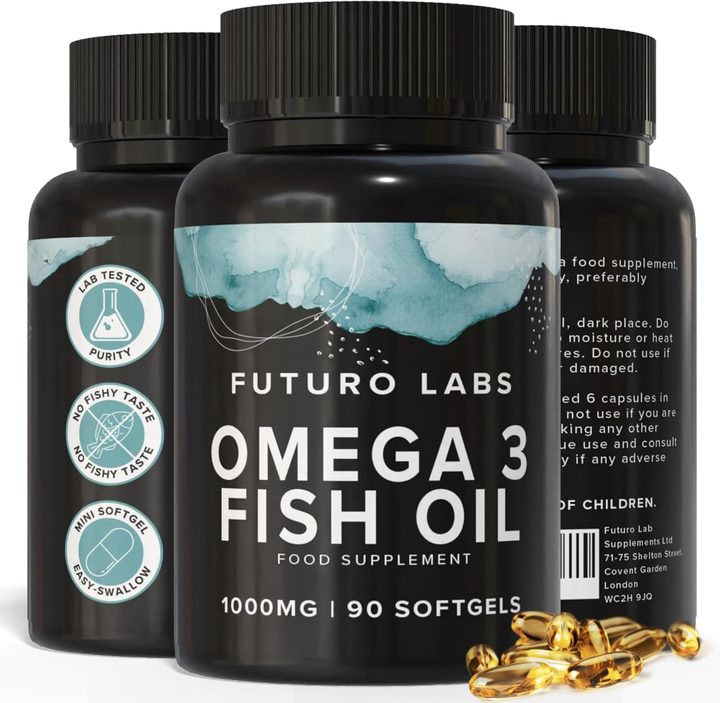
Our brand: the worked example on this page
Futuro Labs Omega 3 Fish Oil
- 17p a day
- 90 softgels, 1 softgel daily
- Lab tested
- Made in the UK
For the weeks the league table stays theoretical: Futuro Labs Omega 3 Fish Oil on Amazon UK, 300mg EPA+DHA per softgel, £14.99 for 90 days. Label breakdown. Which oils contain both molecules is on the source map; the food-first advice on the daily intake page.
The league table, and how to read the figures honestly
By the UK's own food-composition reference, the richest everyday sources of EPA and DHA are the cold-water oily fish, and the top of the league is consistent: mackerel and herring lead at roughly 2g-to-3g of combined EPA and DHA per 100g, with sardines, pilchards, anchovies, salmon and fresh trout typically delivering somewhere between 1.5g and 2.5g, figures that move with season, feed and whether the fish was farmed or wild, which is why this table deals in ranges rather than decimal places. Two honest footnotes stop the table misleading. The tuna trap: fresh tuna carries modest omega-3 and the canning process strips most of what remains, so the tinned tuna many readers count as their oily portion delivers a small fraction of the headline figures, sardines or mackerel in a tin being the swap that actually scores. And the exotica: fish roe and some organ preparations technically out-rank fillets per gram, trivia rather than shopping advice, the league existing to serve the standing UK guidance of two fish portions weekly with one oily, not to send anyone hunting caviar.
Foods against capsules: what richest means across the aisle
Cross to the supplement aisle and richest changes units, per capsule rather than per 100g, and the honest rankings read: concentrated fish oils lead, 500mg-to-900mg of EPA and DHA per 1g capsule in the rTG and EE formats, the prescription-grade product topping out around 840mg; standard fish oil and cod liver oil sit at the everyday tier, roughly 300mg per 1000mg softgel, cod liver adding vitamins A and D with the pregnancy caution that follows vitamin A everywhere; algae oil matches the standard-to-concentrate range fish-free at its honest premium; and krill trails on content while leading on price, the aisle's worst richest-per-pound performer. The two-column comparison lands where the healthiest-form page landed: one 140g portion of grilled mackerel delivers around 3g-to-4g of the pair, more than a week of standard softgels in a single dinner, which is why the advice is written in portions and the capsule's honest job is the weeks the portions do not happen, a stand-in priced at 17p rather than a rival to the fish.
| Source | Typical EPA + DHA | The honest note |
|---|---|---|
| Mackerel, herring | ~2-3g per 100g | The league leaders: grilled, smoked or tinned |
| Sardines, anchovies, salmon, trout | ~1.5-2.5g per 100g | The strong tier: tins count fully |
| Fresh tuna | Modest; canned, a small fraction | The trap: tinned tuna is not your oily portion |
| White fish (cod, haddock) | Low | Good food, wrong column for this table |
| Concentrated fish oil capsules | 500-900mg per 1g capsule | The aisle's densest: judged by the concentrate checklist |
| Standard fish oil / cod liver oil | ~300mg per 1000mg softgel | The everyday tier; vitamin A caution on cod liver |
| Algae oil | Standard to concentrate range | Fish-free at an honest premium |
| Krill oil | Low per capsule | Rich in marketing, poor in milligrams per pound |
The verdict, and the two-tier answer restated
What is the richest source of DHA and EPA: mackerel and herring on a plate, concentrated fish oils in a capsule, and the useful answer is the two-tier routine those winners imply rather than either trophy alone: eat the oily portion in the weeks you will, tinned sardines being the cheap, shelf-stable way to score it, and run the honest softgel in the weeks you will not. The worked example is the second tier priced for its role: Futuro Labs Omega 3 Fish Oil, one softgel with dinner, 300mg of EPA and DHA, £14.99 for 90 days at 17p, lab-tested, UK made, never claiming to out-rank the mackerel, only to turn up on the days the mackerel does not. Richest was always a food question; the capsule's word is reliable.
What to check on the label
- Mackerel and herring top the food league: roughly 2-3g per 100g.
- Tinned sardines score fully; tinned tuna barely scores: the table's big trap.
- One oily portion out-delivers a week of standard softgels: portions rule.
- Concentrates top the capsule column: 500-900mg, judged by the checklist.
- The routine: fish when you can, 17p softgel when you cannot.
Our brand
The worked example: Futuro Labs Omega 3 Fish Oil
Futuro Labs Omega 3 Fish Oil: 1 softgel daily with food, 1000mg fish oil providing 180mg EPA and 120mg DHA (300mg combined), 90 softgels for £14.99, 17p a day, lab-tested purity, UK GMP made. Gelatin shell, so not vegetarian.
- Fish oil per softgel
- 1000mg
- EPA / DHA per softgel
- 180mg / 120mg (300mg combined)
- Serving
- 1 softgel a day
- Bottle
- 90 softgels, 90 days
- Price
- £14.99 (17p a day)
- Softgel
- mini softgel, no fishy taste
Questions people also ask
Which fish has the most EPA and DHA?
Mackerel and herring lead the everyday league at roughly 2 to 3g per 100g, with sardines, anchovies, salmon and trout close behind.
Does canned tuna count as oily fish?
No: canning strips most of tuna's already modest omega-3. Tinned sardines, mackerel or pilchards are the swaps that genuinely count.
What supplement has the highest EPA and DHA?
Concentrated fish oils: 500mg to 900mg per 1g capsule in rTG and EE formats, with the prescription-grade product around 840mg. Judge them by the concentrate checklist.
Is cod liver oil richer than fish oil?
Similar EPA and DHA at standard strength, with vitamins A and D added: the vitamin A is why pregnancy guidance says ask first.
How does a portion of fish compare with capsules?
A 140g grilled mackerel delivers around 3 to 4g of the pair, more than a week of standard softgels: which is why the advice is written in portions and the capsule covers the gaps.
Sources
- McCance and Widdowson's Composition of Foods integrated dataset (CoFID): the UK reference figures for nutrient content of foods, including EPA and DHA in fish. https://www.gov.uk/government/publications/composition-of-foods-integrated-dataset-cofid
- Scientific Advisory Committee on Nutrition and Committee on Toxicity. Advice on fish consumption: benefits and risks (two portions of fish a week, one oily). TSO, 2004. https://www.gov.uk/government/publications/sacn-advice-on-fish-consumption-benefits-and-risks
- Futuro Labs Omega 3 Fish Oil listing: 1000mg fish oil per softgel providing 180mg EPA and 120mg DHA, 90 softgels. Amazon UK, accessed 31 August 2026. https://www.amazon.co.uk/dp/B0CP9T3BTN
- Electronic medicines compendium (emc): Summaries of Product Characteristics for omega-3-acid ethyl esters 1000mg capsules (Omacor and generics) and icosapent ethyl (Vazkepa). https://www.medicines.org.uk/emc/search?q=omega-3-acid+ethyl+esters
- EFSA Panel on Dietetic Products. Scientific opinion on the substantiation of health claims related to EPA and DHA and normal function of the heart (250mg daily condition of use). EFSA Journal 2010;8(10):1796. https://www.efsa.europa.eu/en/efsajournal/pub/1796