Ghost Fitness/Omega-3/What is the best EPA DHA ratio fish oil?
What is the best EPA DHA ratio fish oil?
The short answer
The best ratio fish oil depends on the job: any ratio serves the combined 250mg heart claim, DHA-rich products serve the 250mg DHA brain and vision claims, and high-EPA formulas serve no authorised claim. Standard 18:12 covers most people.
- 18:12the standard split: 1.5 to 1, the shelf's default and most people's answer
- Any ratioserves the combined heart claim: the condition is split-blind
- DHA-richthe one ratio family with its own claim mandate, at 250mg DHA
- High-EPAthe ratio family sold hardest and mandated least
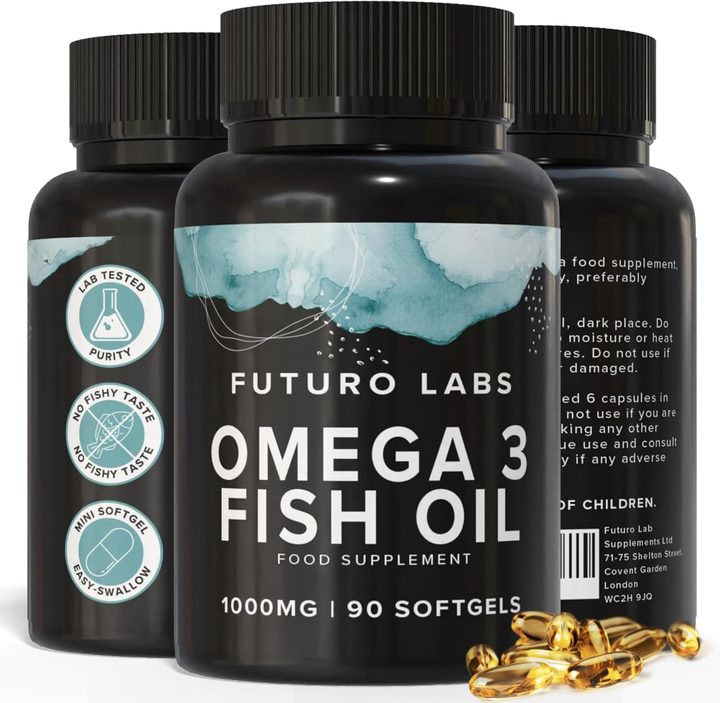
Our brand: the worked example on this page
Futuro Labs Omega 3 Fish Oil
- 17p a day
- 90 softgels, 1 softgel daily
- Lab tested
- Made in the UK
The 18:12 standard, worked: Futuro Labs Omega 3 Fish Oil on Amazon UK, 180mg EPA + 120mg DHA per softgel, £14.99 for 90 days. Label breakdown. The regulatory audit is on the ratio recommendation page; the evidence verdict on does the ratio matter.
The shelf's ratio families, named and sized
Ratios on real products cluster into four families. The standard split, roughly 18% EPA to 12% DHA, the 1.5-to-1 profile of ordinary refined fish oil, delivering 180mg and 120mg from a 1000mg softgel, is the shelf's default because it is approximately what the source fish contain. Balanced and DHA-rich formulas, 1:1 through 1:2, arrive via concentration choices or algae, whose oils run DHA-heavy by nature. High-EPA formulas, 2:1 up to purified near-EPA-only products, are engineered concentrates built around the research areas EPA dominates. And cod liver sits near the standard split at slightly lower totals. The family a bottle belongs to is printed in its EPA and DHA lines, and the entire best-ratio question reduces to matching family to job, because, as the recommendation audit shows, no authority ranks the families for you.
Matching family to job: the only ranking that exists
Job one, the everyday authorised territory: the heart-function claim's 250mg condition reads EPA and DHA combined, which every family clears at adequate totals, making the standard 18:12 softgel the correct answer for most buyers on price alone, the ratio contributing nothing the condition can measure. Job two, the DHA-specific claims: brain function and vision at 250mg of DHA daily is the one job with a ratio-shaped mandate, met by DHA-rich concentrates and most algae oils and not by a standard softgel's 120mg, the single legitimate reason to shop by split. Job three, the high-EPA hopes: mood, inflammation and the ratio theories, research areas with genuine papers and zero authorised claims, meaning an EPA-forward premium buys participation in an open question, priced accordingly on the per-gram denominator if bought at all. Job four, gram-scale quantified claims and medical territory, where the 2g and 3g conditions again read combined and the products are concentrates of any competent split. Four jobs, one family per job, and no job that ranks a family best outright.
| Family | Typical split | The job it serves | Verdict |
|---|---|---|---|
| Standard fish oilOurs | 18:12 (1.5:1) | The combined 250mg heart claim, cheapest | Most people's answer |
| DHA-rich / algae | 1:1 to 1:2, DHA-forward | The 250mg DHA brain and vision claims; vegetarians | The one split with a mandate |
| High-EPA concentrates | 2:1 to near-pure EPA | Research areas: no authorised claims | A priced hypothesis, not a ranking |
| Cod liver oil | Near-standard, lower totals | Traditionalists wanting vitamins A and D | Fine; pregnancy asks first |
| Any family at gram scale | Split-indifferent | The 2g and 3g combined claims, GP-adjacent | Concentrates by dose, not ratio |
The verdict, and the default that keeps winning
What is the best EPA DHA ratio fish oil: for the everyday buyer, the standard 18:12 softgel, not because the ratio is magic but because the job it serves is ratio-blind and the family is cheapest; for the reader whose genuine target is the DHA claims, a DHA-rich or algae product that actually reaches 250mg of DHA; and for the high-EPA shelf, an honest label reading that says research hypothesis at concentrate prices. The default in product form: Futuro Labs Omega 3 Fish Oil, the 18:12 family's arithmetic printed plainly, 180mg EPA and 120mg DHA per softgel, 300mg combined for the split-blind claim, one a day with dinner, £14.99 for 90 days at 17p, lab-tested, UK made. The best ratio was always the job's ratio, and most people's job never had one.
What to check on the label
- Four families: standard 18:12, DHA-rich, high-EPA, cod liver: the whole shelf.
- The heart claim is split-blind: standard wins its job on price.
- DHA-rich is the one mandated split: 250mg of DHA for the brain and vision claims.
- High-EPA is a priced hypothesis: real research, zero claims.
- Match family to job: no authority ranks them for you.
Our brand
The worked example: Futuro Labs Omega 3 Fish Oil
Futuro Labs Omega 3 Fish Oil: 1 softgel daily with food, 1000mg fish oil providing 180mg EPA and 120mg DHA (300mg combined), 90 softgels for £14.99, 17p a day, lab-tested purity, UK GMP made. Gelatin shell, so not vegetarian.
- Fish oil per softgel
- 1000mg
- EPA / DHA per softgel
- 180mg / 120mg (300mg combined)
- Serving
- 1 softgel a day
- Bottle
- 90 softgels, 90 days
- Price
- £14.99 (17p a day)
- Softgel
- mini softgel, no fishy taste
Questions people also ask
Is a 2:1 EPA to DHA fish oil better than standard?
Not for any authorised job: the combined claim is split-blind and the EPA-forward research areas carry no claims. It is a hypothesis at concentrate prices.
Which ratio is best for brain health?
The one official split-shaped answer: 250mg of DHA daily, the brain-function claim's condition, met by DHA-rich and algae products rather than standard softgels.
Why is most fish oil 18:12?
Because that is roughly the profile of the source fish: the standard split is the oil's natural arithmetic, not a formulation decision.
Does the ratio matter at gram-scale doses?
The quantified 2g and 3g claims read combined DHA and EPA: dose is what those jobs measure, with the split again uncounted.
What ratio should I look for on a label?
Look past the ratio to two numbers: combined EPA and DHA against 250mg for the everyday claim, and DHA alone against 250mg only if the brain and vision claims are your actual target.
Sources
- Futuro Labs Omega 3 Fish Oil listing: 1000mg fish oil per softgel providing 180mg EPA and 120mg DHA, 90 softgels. Amazon UK, accessed 31 August 2026. https://www.amazon.co.uk/dp/B0CP9T3BTN
- EFSA Panel on Dietetic Products. Scientific opinion on the substantiation of health claims related to EPA and DHA and normal function of the heart (250mg daily condition of use). EFSA Journal 2010;8(10):1796. https://www.efsa.europa.eu/en/efsajournal/pub/1796
- EFSA Panel on Dietetic Products. Scientific opinion on health claims related to DHA: maintenance of normal brain function and normal vision (250mg DHA daily condition of use). EFSA Journal 2010;8(10):1734. https://www.efsa.europa.eu/en/efsajournal/pub/1734
- Commission Regulation (EU) No 536/2013 authorising health claims for DHA and EPA: maintenance of normal blood triglyceride concentrations (2g DHA+EPA/day) and normal blood pressure (3g DHA+EPA/day), with a supplemental limit note of 5g/day. https://eur-lex.europa.eu/legal-content/EN/TXT/?uri=CELEX%3A32013R0536
- Scientific Advisory Committee on Nutrition and Committee on Toxicity. Advice on fish consumption: benefits and risks (two portions of fish a week, one oily). TSO, 2004. https://www.gov.uk/government/publications/sacn-advice-on-fish-consumption-benefits-and-risks