Ghost Fitness/Omega-3/What should you look for in EPA + DHA ratio 3 1?
What should you look for in EPA + DHA ratio 3 1?
The short answer
A 3:1 product is an EPA-heavy concentrate, born from mood research formulas: check the combined EPA and DHA total against your target, note the low DHA line cannot serve the DHA claims, and price it per gram like any concentrate.
- 3:1what it means on a panel: roughly 600mg EPA to 200mg DHA per 1000mg concentrate
- The parentageEPA-predominant mood research formulas: real trials, no claims
- The DHA costa skewed line that cannot reach the 250mg DHA claims
- Concentrate rulescombined total, form declaration, pence per 100mg: the usual three
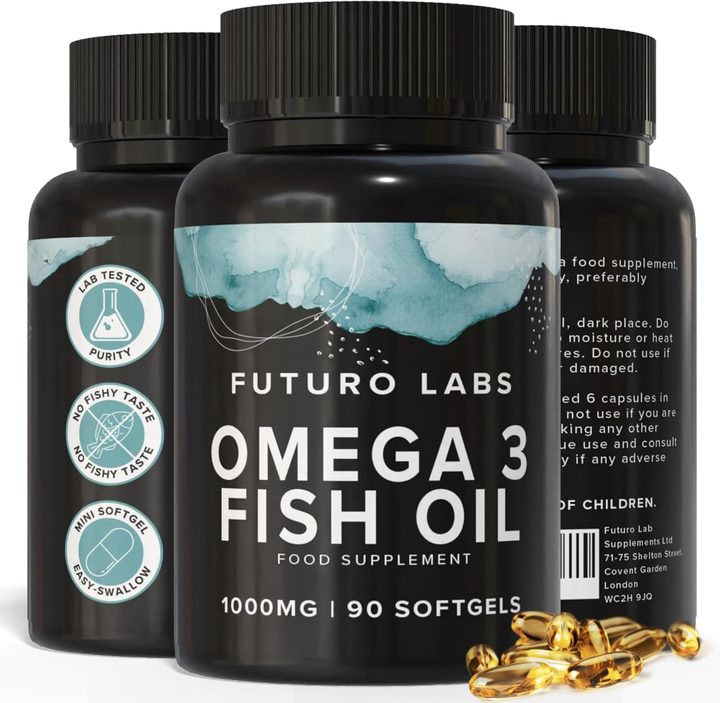
Our brand: the worked example on this page
Futuro Labs Omega 3 Fish Oil
- 17p a day
- 90 softgels, 1 softgel daily
- Lab tested
- Made in the UK
The unskewed baseline to price against: Futuro Labs Omega 3 Fish Oil on Amazon UK, 180mg EPA + 120mg DHA per softgel, £14.99 for 90 days. Label breakdown. The ratio families are mapped on the product taxonomy; the evidence verdict on does the ratio matter.
What a 3:1 product actually is, and where the number came from
A 3:1 EPA-to-DHA product is, in manufacturing terms, an EPA-weighted concentrate: source oil taken through the ethyl-ester concentration route with the EPA fraction preferentially retained, typically landing around 600mg EPA and 200mg DHA in a 1000mg capsule, sometimes steeper, and always a deliberate formulation rather than anything a fish provides, the natural profile running nearer 3:2. The number's parentage is specific and worth knowing: EPA-predominant formulations are what the depression research literature kept favouring, meta-analyses of clinical trials repeatedly noting better signals for EPA-heavy preparations in patient populations, and the purified-EPA prescription product carrying its own cardiovascular trial, from which supplement marketing generalised a clinical pattern into a shelf ratio, 2:1 and 3:1 becoming the aisle's shorthand for the serious formula. The research is real; the generalisation is the part no claims assessor has endorsed, and a 3:1 label is best read as a concentrate wearing a research citation, to be judged by concentrate rules.
The checks to run, and who a 3:1 honestly serves
Concentrate rules, applied to the 3:1 panel in order. The combined total: add the two lines, roughly 800mg in the classic layout, and hold it against your actual target, since the everyday 250mg territory never needed the strength and the gram-scale territories are where an 800mg capsule earns its place. The DHA cost: 200mg per capsule sits under the 250mg-of-DHA condition on the brain-function and vision claims, so a buyer holding those targets is better served by a balanced or DHA-rich product, the skew actively working against them, and a single 3:1 capsule serves only the combined heart claim, which any 17p softgel also serves. The form declaration: at this concentration the product is ethyl ester unless rTG is stated, with the with-a-fatty-meal instruction doing its usual work. The price: pence per 100mg of combined EPA and DHA against ordinary concentrates, where the ratio branding often carries a premium the arithmetic cannot justify. Who it honestly serves: the deliberate research-participation buyer running EPA-forward gram doses with open eyes, ideally inside a professional conversation if the interest is clinical, and almost nobody else, which is a smaller market than the shelf space suggests.
| Panel item | The typical 3:1 reading | Your check |
|---|---|---|
| EPA per capsule | ~600mg | Real strength: judge it at concentrate prices |
| DHA per capsule | ~200mg | Under the 250mg DHA claims: the skew's cost |
| Combined total | ~800mg | Against your target: gram-scale jobs only |
| Form | EE unless rTG declared | The fatty-meal instruction applies |
| The ratio itself | A research citation, not a mandate | No claim attaches to the split at any number |
| Price per 100mg | Often premium-branded | Compare against plain concentrates; walk past unjustified gaps |
The verdict, and where the 3:1 sits on this site's shelf
What should you look for in an EPA plus DHA ratio of 3:1: a concentrate first and a ratio second, judged by the combined total, the form declaration and the per-gram price like every strong capsule, with two honest footnotes attached, that the skew disqualifies it from the DHA-specific claims and that the number it advertises descends from clinical research no register has converted into advice. For the everyday reader the 3:1 aisle is a detour: the combined claim it can serve is already served at a fraction of the price by the standard shelf, where the worked example sits, Futuro Labs Omega 3 Fish Oil at the fish's own near-3:2, 180mg EPA and 120mg DHA per softgel, 300mg combined, £14.99 for 90 days at 17p, lab-tested, UK made, its ratio unadvertised because unmandated. The 3:1 is a legitimate tool for a narrow, deliberate job; the checks above exist so nobody buys it for any other.
What to check on the label
- A 3:1 is an EPA-weighted concentrate: ~600mg EPA, ~200mg DHA, deliberately formulated.
- Its parentage is mood research: real clinical trials, zero shelf mandates.
- The skew costs the DHA claims: 200mg sits under the 250mg condition.
- Judge it by concentrate rules: combined total, form, pence per 100mg.
- The everyday job never needed it: the combined claim is a 17p softgel's territory.
Our brand
The worked example: Futuro Labs Omega 3 Fish Oil
Futuro Labs Omega 3 Fish Oil: 1 softgel daily with food, 1000mg fish oil providing 180mg EPA and 120mg DHA (300mg combined), 90 softgels for £14.99, 17p a day, lab-tested purity, UK GMP made. Gelatin shell, so not vegetarian.
- Fish oil per softgel
- 1000mg
- EPA / DHA per softgel
- 180mg / 120mg (300mg combined)
- Serving
- 1 softgel a day
- Bottle
- 90 softgels, 90 days
- Price
- £14.99 (17p a day)
- Softgel
- mini softgel, no fishy taste
Questions people also ask
What does a 3:1 EPA to DHA ratio mean?
Roughly 600mg EPA to 200mg DHA per 1000mg capsule: an EPA-weighted concentrate, deliberately formulated well away from the fish's natural near-3:2 profile.
Is a 3:1 ratio better than the standard ratio?
For no authorised purpose: the combined claims are split-blind and the DHA claims need 250mg of DHA, which the skew moves away from. The 3:1's appeal is clinical research, not mandate.
Why do mood-focused fish oils use 3:1?
The depression trial literature repeatedly favoured EPA-predominant formulations in patient populations: a genuine clinical pattern that marketing generalised into a shelf number.
What should I check before buying a 3:1 product?
The combined milligrams against your target, the form declaration at that strength, and pence per 100mg against plain concentrates: ratio branding often carries an unearned premium.
Who should actually buy a 3:1?
The deliberate EPA-forward research-participation buyer at gram doses, ideally inside a professional conversation: for everyday use the standard 300mg softgel already does the mandated job.
Sources
- Futuro Labs Omega 3 Fish Oil listing: 1000mg fish oil per softgel providing 180mg EPA and 120mg DHA, 90 softgels. Amazon UK, accessed 31 August 2026. https://www.amazon.co.uk/dp/B0CP9T3BTN
- Meta-analytic evidence on EPA-predominant omega-3 formulations in depression research: better signals for EPA-heavy preparations in clinical trial populations, with no authorised claims arising. PubMed record
- EFSA Panel on Dietetic Products. Scientific opinion on health claims related to DHA: maintenance of normal brain function and normal vision (250mg DHA daily condition of use). EFSA Journal 2010;8(10):1734. https://www.efsa.europa.eu/en/efsajournal/pub/1734
- Electronic medicines compendium (emc): Summaries of Product Characteristics for omega-3-acid ethyl esters 1000mg capsules (Omacor and generics) and icosapent ethyl (Vazkepa). https://www.medicines.org.uk/emc/search?q=omega-3-acid+ethyl+esters
- Dyerberg J, Madsen P, Møller JM, Aardestrup I, Schmidt EB. Bioavailability of marine n-3 fatty acid formulations. Prostaglandins, Leukotrienes and Essential Fatty Acids 2010;83(3):137-141. PubMed record
- EFSA Panel on Dietetic Products. Scientific opinion on the substantiation of health claims related to EPA and DHA and normal function of the heart (250mg daily condition of use). EFSA Journal 2010;8(10):1796. https://www.efsa.europa.eu/en/efsajournal/pub/1796