Ghost Fitness/Omega-3/What should you look for in omega-3 ethyl esters 1 gm cap?
What should you look for in omega-3 ethyl esters 1 gm cap?
The short answer
Check the lane first: a PL licence number on the pack means a prescription medicine; food supplement wording means retail. Then the EPA and DHA milligrams, 500 to 750mg in retail 1g concentrates, the form declaration, and the fatty-meal instruction.
- The PL numberthe medicine's tell: a product licence code printed on every UK prescription pack
- ~840mgEPA and DHA in the pharma-grade 1g capsule, versus 500-750mg retail
- The 1gcapsule fill weight: the container, never the content
- Fed, alwaysthe instruction every EE capsule shares, whichever lane
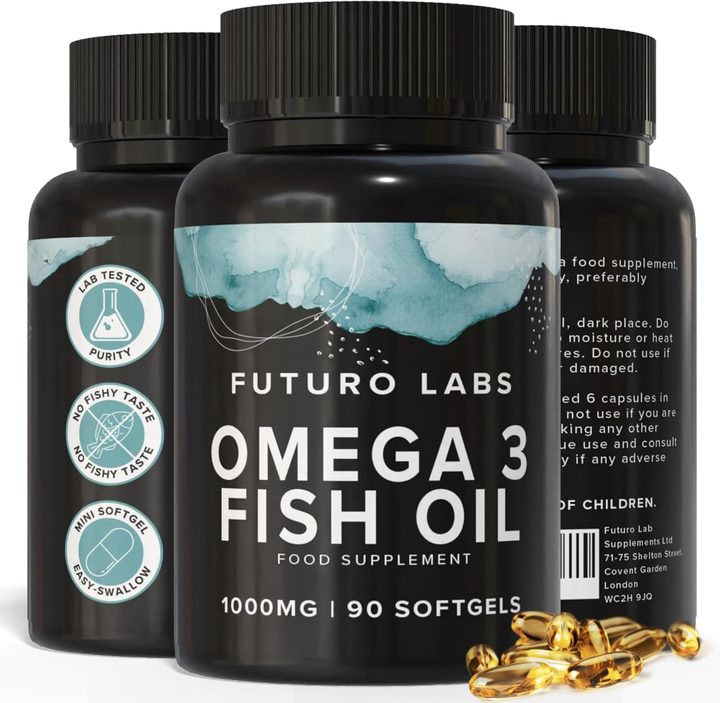
Our brand: the worked example on this page
Futuro Labs Omega 3 Fish Oil
- 17p a day
- 90 softgels, 1 softgel daily
- Lab tested
- Made in the UK
The everyday lane's simpler capsule: Futuro Labs Omega 3 Fish Oil on Amazon UK, 300mg EPA+DHA per softgel, £14.99 for 90 days. Label breakdown. The medicine itself is explained on the Omacor page; the concentrate checks on high EPA and DHA.
Check one, the lane: how a UK pack tells you what you are holding
A 1-gram omega-3 ethyl esters capsule exists in two lanes, and UK packaging settles which in seconds. The prescription lane announces itself with a PL number, the product licence code every licensed UK medicine must print on its pack, alongside pharmacy-style labelling, a patient information leaflet, and, on the Omacor-class products, the pharmacopoeial specification delivering roughly 460mg EPA and 380mg DHA, about 840mg combined per 1g capsule; a pack carrying those marks is a medicine for severe hypertriglyceridaemia, taken exactly as prescribed, judged by follow-up bloods, and never a shelf decision. The retail lane says food supplement, carries a nutrition panel instead of a leaflet, and its 1g EE capsules are concentrates typically declaring 500mg to 750mg of combined EPA and DHA, bought under this section's ordinary concentrate rules. The lane check matters because the two objects rhyme physically while living under different law, and every subsequent check on this page assumes you have made it: found a PL number, and the rest of this page hands over to your prescriber; found supplement wording, and the inspection continues.
Checks two to five: the numbers and words that grade the retail 1g cap
Check two, the content against the container: 1g names the capsule's oil fill, never its value, so add the declared EPA and DHA lines, expect 500mg-plus from anything calling itself an EE concentrate, and treat a 1g capsule declaring only 300mg as a standard oil wearing concentrate branding, priced accordingly. Check three, the form honesty: at these strengths the oil is ethyl ester by manufacture, so the label should either say so plainly or declare rTG if it paid for conversion, with silence read as EE and a natural triglyceride claim at 70%-plus strength read as chemically confused. Check four, the instruction: with a fatty meal, printed or not, is non-negotiable for EE, the fasted-absorption gap being the form's one real cost, and a brand that prints it has understood its own product. Check five, the denominator: pence per 100mg of combined EPA and DHA against other concentrates and against the standard shelf, where a good 1g EE cap should post the market's best figures, that being the whole point of the format, and a premium-priced one has surrendered its only argument.
| Check | What to look for | The reading |
|---|---|---|
| The lane | A PL number and leaflet, or food supplement wording | Medicine: prescriber's territory. Supplement: continue |
| Content vs container | EPA + DHA milligrams, added; 1g is only the fill | 500-750mg expected retail; ~840mg is pharma grade |
| Form honesty | EE stated, or rTG declared with the premium | Silence means EE; natural TG at this strength is confusion |
| The instruction | With a fatty meal | Non-negotiable for EE: the form's one real cost |
| The denominator | Pence per 100mg vs concentrates and standard oil | A 1g EE cap should win it, or it has no argument |
The verdict, and who the 1g capsule honestly serves
What should you look for in an omega-3 ethyl esters 1g cap: the lane before anything, because a PL number reroutes the entire question to a prescriber, and then, in the retail lane, the four checks that grade any concentrate, content over container, form honesty, the fed instruction, and the per-gram price the format exists to win. Who it serves: the deliberate gram-scale user compressing 2g targets into two fed capsules at the shelf's best rates, and essentially nobody else, since the everyday territory this site writes for was always the standard softgel's job, Futuro Labs Omega 3 Fish Oil, one capsule, 300mg of EPA and DHA in natural-form oil, £14.99 for 90 days at 17p, lab-tested, UK made, no lane check required because the label says food supplement and means it. The 1g EE cap is a good tool wearing a medicine's silhouette; the inspection above keeps the two from ever being confused.
What to check on the label
- The lane check comes first: a PL number means medicine, prescriber's territory.
- 1g is the fill, not the value: add the EPA and DHA lines, expect 500mg-plus retail.
- Form honesty: EE stated or rTG declared: natural TG at this strength is confusion.
- With a fatty meal, always: the EE form's one real cost, managed at dinner.
- The format must win the denominator: pence per 100mg is its whole argument.
Our brand
The worked example: Futuro Labs Omega 3 Fish Oil
Futuro Labs Omega 3 Fish Oil: 1 softgel daily with food, 1000mg fish oil providing 180mg EPA and 120mg DHA (300mg combined), 90 softgels for £14.99, 17p a day, lab-tested purity, UK GMP made. Gelatin shell, so not vegetarian.
- Fish oil per softgel
- 1000mg
- EPA / DHA per softgel
- 180mg / 120mg (300mg combined)
- Serving
- 1 softgel a day
- Bottle
- 90 softgels, 90 days
- Price
- £14.99 (17p a day)
- Softgel
- mini softgel, no fishy taste
Questions people also ask
How do I know if my 1g omega-3 capsule is the prescription one?
The pack: UK medicines carry a PL product licence number and a patient leaflet. Food supplement wording and a nutrition panel mean the retail lane.
How much EPA and DHA is in a 1 gram ethyl ester capsule?
Retail concentrates typically declare 500mg to 750mg combined; the pharma-grade Omacor-class capsule delivers about 840mg. The 1g itself is only the oil fill.
Do 1g ethyl ester capsules need to be taken with food?
Yes, with a fatty meal: EE absorption drops meaningfully fasted, which is the form's one real cost and the instruction every good label prints.
Is a 1g capsule better value than standard softgels?
Per delivered gram, usually: winning pence per 100mg is the format's entire argument. Per everyday need, no: the 250mg territory never required the strength.
Can I use retail 1g EE caps instead of my prescription?
No: the medicine's specification, dose and monitoring are the treatment. Any change is your prescriber's call, never a shelf substitution.
Sources
- Futuro Labs Omega 3 Fish Oil listing: 1000mg fish oil per softgel providing 180mg EPA and 120mg DHA, 90 softgels. Amazon UK, accessed 31 August 2026. https://www.amazon.co.uk/dp/B0CP9T3BTN
- Electronic medicines compendium (emc): Summaries of Product Characteristics for omega-3-acid ethyl esters 1000mg capsules (Omacor and generics) and icosapent ethyl (Vazkepa). https://www.medicines.org.uk/emc/search?q=omega-3-acid+ethyl+esters
- Dyerberg J, Madsen P, Møller JM, Aardestrup I, Schmidt EB. Bioavailability of marine n-3 fatty acid formulations. Prostaglandins, Leukotrienes and Essential Fatty Acids 2010;83(3):137-141. PubMed record
- EFSA Panel on Dietetic Products. Scientific opinion on the substantiation of health claims related to EPA and DHA and normal function of the heart (250mg daily condition of use). EFSA Journal 2010;8(10):1796. https://www.efsa.europa.eu/en/efsajournal/pub/1796
- EFSA Panel on Dietetic Products. Scientific opinion on the tolerable upper intake level of EPA, DHA and DPA: supplemental intakes of EPA and DHA combined up to about 5g/day do not raise safety concerns for adults. EFSA Journal 2012;10(7):2815. https://www.efsa.europa.eu/en/efsajournal/pub/2815