Ghost Fitness/Omega-3/Which omega-3 has DHA and EPA?
Which omega-3 has DHA and EPA?
The short answer
Every fish oil and algal omega-3 contains both DHA and EPA; only the ratio varies, with standard fish oil around 18% EPA and 12% DHA. Plant ALA oils like flaxseed contain neither. Read the per-capsule EPA and DHA line.
- All marine oilscontain both: fish, cod liver, krill, algae
- 18/12the standard fish oil split: 180mg EPA, 120mg DHA per 1000mg
- 0mg of eitherin flaxseed, chia and other ALA plant oils
- The panel linewhere the answer always is: EPA and DHA, per capsule
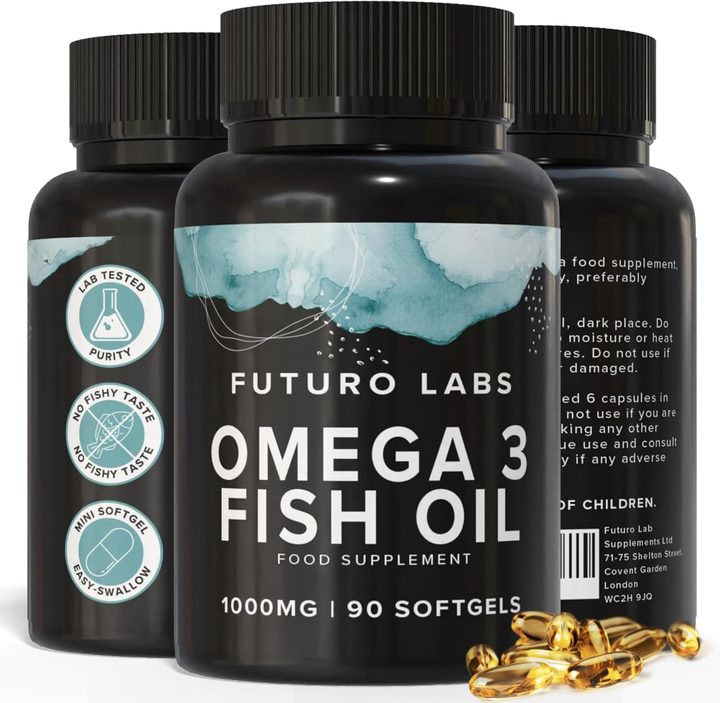
Our brand: the worked example on this page
Futuro Labs Omega 3 Fish Oil
- 17p a day
- 90 softgels, 1 softgel daily
- Lab tested
- Made in the UK
A label that prints both plainly: Futuro Labs Omega 3 Fish Oil on Amazon UK, 180mg EPA + 120mg DHA per softgel, £14.99 for 90 days. Label breakdown. The concentrate version of the question is on high EPA and DHA; the full buying logic in the lifters pillar.
The source map: who has both, who has neither
The dividing line runs between sea and field. Every marine omega-3 contains both EPA and DHA because the marine food chain builds both: standard fish oil from anchovy, sardine and mackerel stock, cod liver oil, krill oil, and algae oil, the vegan option that goes straight to the microorganisms the fish were eating, all deliver the pair, differing only in proportion and price. Every purely plant omega-3, flaxseed, chia, hemp, rapeseed, contains neither: their omega-3 is ALA, a shorter-chain cousin the body converts to EPA and DHA at single-digit percentages, useful as food, incapable of doing a capsule's job, and the reason a flaxseed oil bottle wearing the omega-3 banner answers this page's question with a quiet no. The one-word test at the shelf: if the nutrition panel has EPA and DHA lines with milligrams beside them, it has them; if it only says omega-3 or ALA, it does not.
The ratios across the marine shelf, and when the split matters
Among the products that have both, the ratio is the remaining variable, and it is less consequential than the marketing implies. Standard fish oil runs the classic 18/12 split, 180mg EPA and 120mg DHA per 1000mg softgel, 300mg combined, the profile behind the 250mg heart-function claim that reads combined EPA and DHA and is indifferent to the split. Concentrates skew by design, high-EPA formulas marketed around mood and inflammation stories that carry no authorised claims, and DHA-rich formulas, algae oils prominently, that can matter for one concrete reason: the authorised brain-function and vision claims require 250mg of DHA specifically, a line the standard 120mg softgel cannot cross and a DHA-weighted product can. Cod liver sits near standard strength with vitamins aboard; krill runs modest totals at premium prices. For the ordinary buyer the rule compresses to one sentence: the combined number does the claim work, and the split only matters when the DHA-specific claims are the actual target.
| Product | Has EPA and DHA? | Typical content per capsule | Note |
|---|---|---|---|
| Standard fish oil, 1000mg | Yes | 180mg EPA + 120mg DHA | The 18/12 classic; clears the combined claim |
| Fish oil concentrate | Yes | 500mg to 750mg combined, ratio varies | Where DHA-specific claim doses live |
| Cod liver oil | Yes | ~200mg to 250mg combined | Vitamins A and D aboard; pregnancy asks first |
| Krill oil | Yes | Modest totals | Premium price per delivered milligram |
| Algae oil | Yes | Often DHA-rich | The vegan and fish-allergy answer |
| Flaxseed, chia, hemp oils | No: ALA only | 0mg EPA, 0mg DHA | Conversion runs single-digit percentages |
Reading a real label, and the example that shows its working
Which omega-3 has DHA and EPA, answered at the shelf in ten seconds: turn the bottle, find the nutrition panel, and look for the two named lines with per-capsule milligrams, adding them for the combined figure the claims run on; a label offering only fish oil 1000mg or omega-3 blend without the breakdown has failed the only question this page asks of it. The worked example shows the format done properly: Futuro Labs Omega 3 Fish Oil declares 1000mg of fish oil providing 180mg EPA and 120mg DHA per softgel, the 18/12 standard split, 300mg combined clearing the heart-claim threshold in one capsule, 90 softgels for £14.99 at 17p a day, lab-tested and UK made, gelatin shell declared for the vegetarians it therefore is not for, who have the algae column of the table above. Both letters, both numbers, printed where the question can check them: which is all any label ever needed to do.
What to check on the label
- All marine omega-3s have both: fish, cod liver, krill, algae; only ratios differ.
- Plant ALA oils have neither: flaxseed and chia convert at single-digit rates.
- The combined number does the claim work: 250mg EPA and DHA, split-indifferent.
- The split matters only for DHA-specific claims: 250mg of DHA alone.
- The test is the panel: named EPA and DHA lines with milligrams, or walk away.
Our brand
The worked example: Futuro Labs Omega 3 Fish Oil
Futuro Labs Omega 3 Fish Oil: 1 softgel daily with food, 1000mg fish oil providing 180mg EPA and 120mg DHA (300mg combined), 90 softgels for £14.99, 17p a day, lab-tested purity, UK GMP made. Gelatin shell, so not vegetarian.
- Fish oil per softgel
- 1000mg
- EPA / DHA per softgel
- 180mg / 120mg (300mg combined)
- Serving
- 1 softgel a day
- Bottle
- 90 softgels, 90 days
- Price
- £14.99 (17p a day)
- Softgel
- mini softgel, no fishy taste
Questions people also ask
Does all fish oil contain both EPA and DHA?
Yes: every genuine fish oil carries both, standard products near the 18/12 split. The check is that the label declares the milligrams rather than hiding behind the oil weight.
Is flaxseed oil a good source of EPA and DHA?
No: it contains neither. Its ALA converts to the marine pair at single-digit percentages, which is why plant oils cannot do a fish oil capsule's job.
Which omega-3 is highest in DHA?
Algae oils and DHA-weighted concentrates: the products that can reach the 250mg-of-DHA threshold behind the brain-function and vision claims.
Does the EPA to DHA ratio matter for the heart claim?
No: the authorised condition is 250mg of EPA and DHA combined, indifferent to the split. Ratio marketing beyond that carries no claims.
What should a vegan take for EPA and DHA?
Algae oil: the one archetype delivering both without fish, typically DHA-rich, with the EPA line worth checking per label.
Sources
- Futuro Labs Omega 3 Fish Oil listing: 1000mg fish oil per softgel providing 180mg EPA and 120mg DHA, 90 softgels. Amazon UK, accessed 31 August 2026. https://www.amazon.co.uk/dp/B0CP9T3BTN
- EFSA Panel on Dietetic Products. Scientific opinion on the substantiation of health claims related to EPA and DHA and normal function of the heart (250mg daily condition of use). EFSA Journal 2010;8(10):1796. https://www.efsa.europa.eu/en/efsajournal/pub/1796
- EFSA Panel on Dietetic Products. Scientific opinion on health claims related to DHA: maintenance of normal brain function and normal vision (250mg DHA daily condition of use). EFSA Journal 2010;8(10):1734. https://www.efsa.europa.eu/en/efsajournal/pub/1734
- Scientific Advisory Committee on Nutrition and Committee on Toxicity. Advice on fish consumption: benefits and risks (two portions of fish a week, one oily). TSO, 2004. https://www.gov.uk/government/publications/sacn-advice-on-fish-consumption-benefits-and-risks
- EFSA Panel on Dietetic Products. Scientific opinion on the tolerable upper intake level of EPA, DHA and DPA: supplemental intakes of EPA and DHA combined up to about 5g/day do not raise safety concerns for adults. EFSA Journal 2012;10(7):2815. https://www.efsa.europa.eu/en/efsajournal/pub/2815