Ghost Fitness/Omega-3/Is EPA and DHA the same as omega-3?
Is EPA and DHA the same as omega-3?
The short answer
Not quite: omega-3 is the family name, and EPA and DHA are its two marine members, with plant ALA the third. Every EPA and DHA is omega-3; not every omega-3 is EPA and DHA, which is the label trap.
- The familyomega-3: a chemical class, not a single substance
- 2 marine membersEPA and DHA: where the claims and the evidence live
- The third memberALA: plant-based, converting at single-digit rates
- The traplabels selling the family name while shorting the members
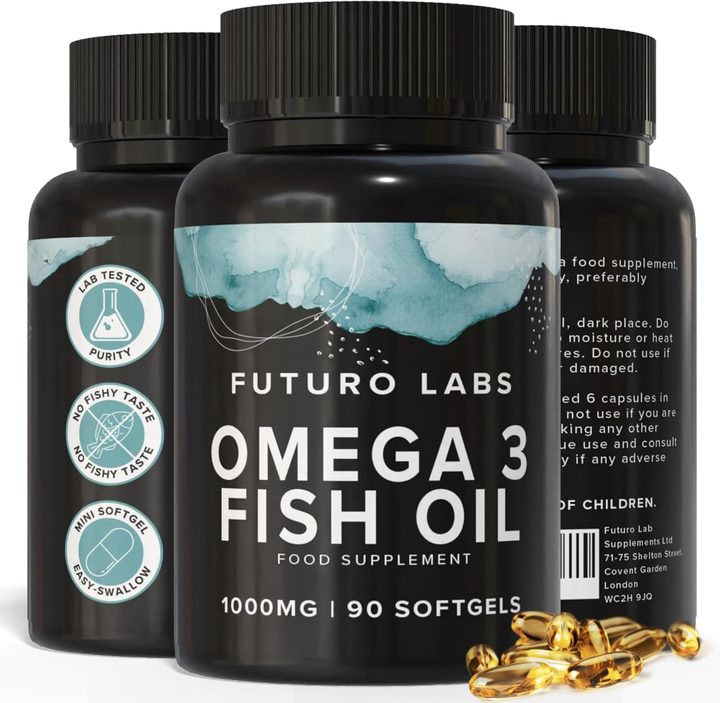
Our brand: the worked example on this page
Futuro Labs Omega 3 Fish Oil
- 17p a day
- 90 softgels, 1 softgel daily
- Lab tested
- Made in the UK
A label naming the members, not just the family: Futuro Labs Omega 3 Fish Oil on Amazon UK, 180mg EPA + 120mg DHA per softgel, £14.99 for 90 days. Label breakdown. The source map is on which omega-3 has both; the both-buying page on contains both EPA and DHA.
The taxonomy in one paragraph, and why the naming matters
Omega-3 is a family name: a class of polyunsaturated fatty acids defined by where their first double bond sits, and the class has three members a shopper ever meets. EPA and DHA are the long-chain marine pair, made by algae, concentrated up the fish chain, and the exclusive holders of every authorised claim and every meaningful trial in the category, which is why this entire section is really about them. ALA is the short-chain plant member, abundant in flaxseed, chia, walnuts and rapeseed, essential in the textbook sense, nutritious as food, and converted to the marine pair at single-digit percentages, too little to do a capsule's job. So the direct answer holds a precise shape: EPA and DHA are omega-3, fully and always, but omega-3 is not always EPA and DHA, because the family name also covers the member the claims ignore, and everything practical about this page follows from that asymmetry.
The label trap, and the two-line habit that defeats it
The asymmetry becomes money at the shelf, where the family name does work the member names cannot. A front label reading omega-3 1000mg is technically satisfied by a capsule of flaxseed ALA containing not a milligram of EPA or DHA, and less egregiously by a fish oil whose 1000mg is oil weight around a 300mg member content, two different products and two different values wearing the same headline, which is the trap the naming hides and the reason the phrase rich in omega-3 decorates so many bottles that would fail a member count. The defence is the two-line habit this section teaches everywhere: turn the panel and find EPA and DHA as named lines with milligrams beside each, add them, and hold the sum against your target, 250mg-plus for the everyday claims; a panel offering only the family name, or only ALA, has answered the question, and the walk-away rule applies. The same habit sorts food talk too: walnuts and flax are genuinely rich in omega-3, the ALA kind, valuable as food and irrelevant to the claims, while the oily fish the UK advice names carry the members themselves, which is why the advice names them.
| Name | What it is | Claims held | Where it lives |
|---|---|---|---|
| Omega-3 (the family) | A fatty acid class: the umbrella term | None as a class: claims attach to members | Every label, honestly or otherwise |
| EPA | Long-chain marine member: signalling precursor | The combined claims, with DHA | Fish, algae, every honest capsule |
| DHA | Long-chain marine member: structural fat | Brain and vision solo at 250mg; combined claims | Fish, algae; richest in DHA-weighted oils |
| ALA | Short-chain plant member | None relevant here; converts at single digits | Flax, chia, walnuts: food, not a capsule's job |
| 'Omega-3 1000mg' on a front label | The family name doing sales work | n/a | The trap: check the member lines behind it |
The verdict, and the label that names its members
Is EPA and DHA the same as omega-3: they are its working heart and not its whole name, a subset relationship the supplement aisle monetises whenever the family word can hide a thin member count, and the whole practical content of the answer is the two-line habit, named EPA and DHA milligrams, added, held against the target. The worked example is the habit rewarded: Futuro Labs Omega 3 Fish Oil wears the family name on the front and prints the members on the panel, 180mg EPA and 120mg DHA per softgel, 300mg combined clearing the everyday claim territory, one a day with dinner, £14.99 for 90 days at 17p, lab-tested, UK made. The family name tells you the aisle; the member lines tell you the value; and now the naming works for you instead of on you.
What to check on the label
- Omega-3 is the family; EPA and DHA are members: a subset, not a synonym.
- The claims and evidence live with the marine members: EPA and DHA only.
- ALA is the third member: real food, single-digit conversion, no capsule job.
- The trap: family-name labels over thin member counts: 1000mg of what, exactly.
- The defence: two named lines, added, against 250mg: the habit that ends it.
Our brand
The worked example: Futuro Labs Omega 3 Fish Oil
Futuro Labs Omega 3 Fish Oil: 1 softgel daily with food, 1000mg fish oil providing 180mg EPA and 120mg DHA (300mg combined), 90 softgels for £14.99, 17p a day, lab-tested purity, UK GMP made. Gelatin shell, so not vegetarian.
- Fish oil per softgel
- 1000mg
- EPA / DHA per softgel
- 180mg / 120mg (300mg combined)
- Serving
- 1 softgel a day
- Bottle
- 90 softgels, 90 days
- Price
- £14.99 (17p a day)
- Softgel
- mini softgel, no fishy taste
Questions people also ask
Are EPA and DHA just other names for omega-3?
They are two members of the omega-3 family, the marine pair holding all the claims: omega-3 also covers plant ALA, which is where the naming stops being interchangeable.
Is a product labelled omega-3 guaranteed to contain EPA and DHA?
No: the family name is satisfied by ALA alone, and by oil weights far above member content. Only named EPA and DHA lines with milligrams guarantee anything.
Is ALA omega-3 as good as fish oil omega-3?
As food, flax and walnuts are excellent: as a supplement doing EPA and DHA's job, no, conversion runs at single-digit percentages.
What should omega-3 1000mg actually mean to me?
Usually 1000mg of oil around 300mg of members in a standard fish oil, and possibly 0mg of members in a plant capsule: the panel's two lines settle which.
So what exactly should I look for on a label?
EPA and DHA as named lines with per-capsule milligrams, summed against 250mg or your target: the one habit that makes the whole naming question harmless.
Sources
- Futuro Labs Omega 3 Fish Oil listing: 1000mg fish oil per softgel providing 180mg EPA and 120mg DHA, 90 softgels. Amazon UK, accessed 31 August 2026. https://www.amazon.co.uk/dp/B0CP9T3BTN
- EFSA Panel on Dietetic Products. Scientific opinion on the substantiation of health claims related to EPA and DHA and normal function of the heart (250mg daily condition of use). EFSA Journal 2010;8(10):1796. https://www.efsa.europa.eu/en/efsajournal/pub/1796
- EFSA Panel on Dietetic Products. Scientific opinion on health claims related to DHA: maintenance of normal brain function and normal vision (250mg DHA daily condition of use). EFSA Journal 2010;8(10):1734. https://www.efsa.europa.eu/en/efsajournal/pub/1734
- Scientific Advisory Committee on Nutrition and Committee on Toxicity. Advice on fish consumption: benefits and risks (two portions of fish a week, one oily). TSO, 2004. https://www.gov.uk/government/publications/sacn-advice-on-fish-consumption-benefits-and-risks
- EFSA Panel on Dietetic Products. Scientific opinion on the tolerable upper intake level of EPA, DHA and DPA: supplemental intakes of EPA and DHA combined up to about 5g/day do not raise safety concerns for adults. EFSA Journal 2012;10(7):2815. https://www.efsa.europa.eu/en/efsajournal/pub/2815