Ghost Fitness/Omega-3/What is the best omega-3 supplement for lifters in the UK?
What is the best omega-3 supplement for lifters in the UK?
The short answer
The best omega-3 for lifters is a fish oil declaring at least 300mg of EPA and DHA per softgel, daily with a meal: that clears the 250mg heart-function claim threshold at pennies a day. Concentration, not capsule count, decides it.
- 300mgEPA and DHA combined per softgel: the number that decides everything
- 250mgthe daily threshold for the authorised heart-function claim
- 2 portionsof fish a week, one oily: the UK food-first advice
- 17pa day for the worked example: the honest price of the category
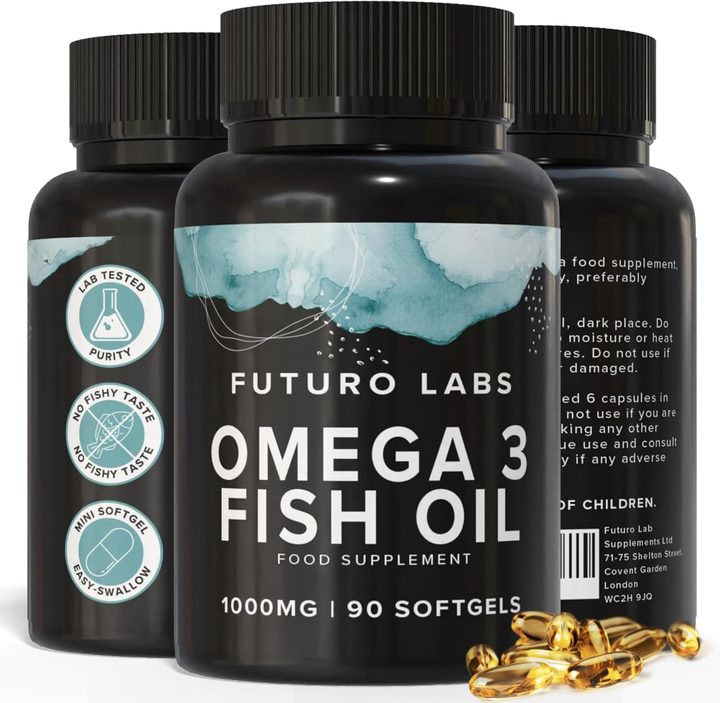
Our brand: the worked example on this page
Futuro Labs Omega 3 Fish Oil
- 17p a day
- 90 softgels, 1 softgel daily
- Lab tested
- Made in the UK
The worked example throughout: Futuro Labs Omega 3 Fish Oil on Amazon UK, 180mg EPA + 120mg DHA per softgel, 90 days for £14.99. Full label breakdown. The market map is on the best omega-3 on the market; concentrates on high EPA and DHA.
What omega-3 actually is, and the two letters that matter
Omega-3 on a UK shelf means three fatty acids wearing one name, and only two of them are worth your money in capsule form. EPA and DHA are the long-chain marine pair, the molecules the entire evidence base and every authorised claim concern, found in oily fish and the algae the fish got them from. ALA is the plant cousin in flaxseed and chia, nutritionally fine as food but converted to EPA and DHA at single-digit percentages, which is why an ALA capsule is not an omega-3 supplement in any sense the claims recognise. The instant consequence for a shopper: the only number that matters on any label is combined EPA and DHA milligrams per serving, and the big friendly 1000mg fish oil on the front is the bottle's weight, not its value, a decode this guide returns to below because it is where most omega-3 money is lost.
The honest evidence for a lifter, tier by tier
Tier one is authorised and specific: EPA and DHA contribute to the normal function of the heart, at a condition of 250mg combined per day, which one properly-dosed softgel clears, and which is a claim a training life has every reason to bank cheaply given what cardiovascular health underwrites. DHA separately holds brain-function and vision claims at 250mg of DHA alone, a threshold standard-strength products do not meet and concentrates can. Tier two is research interest, described as research: work like Smith's randomised trial found higher muscle protein synthesis rates with gram-scale fish oil in older adults, and the turnover literature McGlory reviews keeps the muscle question alive with mixed results in the young and trained, while soreness and recovery studies run genuinely inconclusive. Tier three is the marketing fog, joints, inflammation, testosterone, fat loss, none of it carrying an authorised claim, all of it addressed and retired on this section's dedicated pages. A lifter buys omega-3 for tier one at pennies, watches tier two with interest, and leaves tier three on the shelf.
Food first: the two-portions rule, and who genuinely needs the capsule
The UK's standing advice, from the SACN and toxicity committees' fish review, is two portions of fish a week with at least one oily, mackerel, sardines, salmon, herring, and a lifter who actually does that is averaging several hundred milligrams of EPA and DHA a day from food, with protein riding along, and needs no capsule at all, the same food-first verdict this site gives magnesium. The capsule's honest constituency is everyone else: the fish-averse, the canteen-dependent, the physique dieter whose protein rotates through chicken and whey and never the sea, and the simply forgetful, for whom one softgel a day replaces the oily portion that was never going to happen. The audit is one question, did I eat oily fish this week, and the answer most training diets give is the reason this category exists.
Reading the label: the 30-second decode that saves the most money
Every omega-3 label yields to three reads. First, find the EPA and DHA lines and add them: a standard 1000mg fish oil softgel typically declares 180mg EPA and 120mg DHA, 300mg combined at 30% concentration, which clears the claim threshold; a concentrate declares 500mg to 750mg combined from the same-sized capsule; and a label that shows only fish oil 1000mg with no EPA and DHA breakdown is hiding the one number that matters, the tell to walk away. Second, check the serving arithmetic: some bottles reach their advertised totals only across two or three softgels, quietly multiplying the cost per day. Third, price it properly: pence per 100mg of EPA and DHA, not per capsule, is the only cross-brand comparison that means anything, and it routinely reverses which bottle looks cheap.
| Product type | EPA+DHA per capsule | Best for | Watch for |
|---|---|---|---|
| Standard fish oil, 1000mg | ~300mg (18% EPA, 12% DHA) | The claim threshold at the lowest price: most lifters | Labels hiding the EPA+DHA breakdown |
| Concentrated fish oil | 500mg to 750mg | Gram-scale targets in fewer capsules; DHA claims | Price per gram; ethyl ester forms want fatty meals |
| Cod liver oil | ~200mg to 250mg | Traditionalists; adds vitamins A and D | Vitamin A: not for pregnancy without advice |
| Krill oil | Modest, at premium prices | Marketing stories about phospholipids | Cost per gram is the category's worst |
| Algae oil | Varies; often DHA-rich | Vegans and the fish-allergic | Check EPA content; usually pricier |
| Omega 3-6-9 blends | Diluted | Nobody | The 6 and 9 are padding; see the dedicated page |
The gym, athletes, workouts: why every version of the question gets one answer
The variants of this search, best omega-3 for the gym, for athletes, for bodybuilding, for a workout, all collapse into the page above, because omega-3 is a status nutrient with no session-day behaviour: the best omega-3 capsules for gym use are the same softgels an athlete takes on rest days, there is no pre-workout omega-3, no gym-specific formula that survives a label read, and the sports-branded bottles differ from the pharmacy ones mainly in price and font. What athletes genuinely change is the surrounding arithmetic, more training meals to hang the softgel on and, for the fish-eaters among them, more chances to make the capsule redundant, and what they do not change is the number that decides everything: declared EPA and DHA per capsule. Which fish oil is best for athletes is therefore the question this whole guide already answered, and the workout it belongs to is dinner.
The worked example, judged by its own label
The example this section runs throughout is Futuro Labs Omega 3 Fish Oil, chosen because its label prints the numbers this guide says to demand: one softgel daily with food delivers 1000mg of fish oil providing 180mg EPA and 120mg DHA, 300mg combined, clearing the 250mg heart-claim threshold with margin; the bottle holds 90 softgels, a full quarter-year, for £14.99, which is 17p a day and roughly 5.5p per 100mg of EPA and DHA, the honest price of the standard-strength category; purity is lab-tested and the oil is UK GMP made, with the listing's no-fishy-burps promise resting on capsule quality; and the shell is gelatin, stated plainly, which rules it out for vegetarians, who belong with algae oil instead. What it is not is a concentrate: anyone chasing gram-scale research doses or the 250mg-DHA brain claim needs a different archetype, and this guide would rather say so than stretch a label.
The decision path, and the routine that ends the question
Assembled: eat oily fish twice a week and skip the aisle entirely; otherwise buy a fish oil whose label declares at least 300mg of combined EPA and DHA per daily serving, from a brand that shows purity testing and prices sanely per gram, take it with dinner where the meal's fat helps it along, and treat everything beyond the heart claim as research you are not paying extra for. The routine in product form: Futuro Labs Omega 3 Fish Oil, one softgel with the evening meal, 300mg EPA and DHA at 17p a day, sat beside the magnesium this site's other pillar covers, judged not by feel, omega-3 status has no Tuesday sensation, but by the simple fact of the box being ticked cheaply and daily. Fish allergy rules the category out entirely; anticoagulant medication and pregnancy are ask-first conversations before gram-scale dosing; and the best omega-3 supplement for lifters in the UK remains, unglamorously, the honest standard softgel taken every day it replaces the fish you did not eat.
What to check on the label
- Buy the EPA and DHA number, not the oil weight: 300mg combined per serving minimum.
- The authorised claim is heart function at 250mg daily: one proper softgel clears it.
- Two oily-fish portions a week beats any capsule: the food-first audit comes first.
- Price per 100mg of EPA and DHA: the only honest cross-brand comparison.
- Muscle, joints and inflammation are research or fog: never pay claim prices for them.
Our brand
The worked example: Futuro Labs Omega 3 Fish Oil
Futuro Labs Omega 3 Fish Oil: 1 softgel daily with food, 1000mg fish oil providing 180mg EPA and 120mg DHA (300mg combined), 90 softgels for £14.99, 17p a day, lab-tested purity, UK GMP made. Gelatin shell, so not vegetarian.
- Fish oil per softgel
- 1000mg
- EPA / DHA per softgel
- 180mg / 120mg (300mg combined)
- Serving
- 1 softgel a day
- Bottle
- 90 softgels, 90 days
- Price
- £14.99 (17p a day)
- Softgel
- mini softgel, no fishy taste
Questions people also ask
Is fish oil still recommended, or has the advice changed?
The UK position is steady: oily fish first, two portions a week, with a 250mg EPA and DHA supplement as the recognised stand-in when the fish does not happen. The authorised claim set has not moved.
Which omega-3 is best for bodybuilding specifically?
The same honest softgel: the muscle protein synthesis research is interesting but mixed, so buy the 300mg standard for the heart claim and treat any training benefit as an unpriced bonus.
How much omega-3 should a lifter take per day?
250mg to 300mg of combined EPA and DHA covers the authorised territory. Research doses run 1g to 3g, and EFSA places the supplemental comfort ceiling around 5g.
Should I take omega-3 on rest days?
Yes: like every status nutrient it works on weekly averages, and the trials dosed daily. One softgel with dinner, seven days.
Can I just eat fish instead of taking capsules?
Ideally, yes: two portions a week with one oily is the UK advice and beats the capsule on every count. The softgel exists for the weeks that plan fails.
Sources
- Futuro Labs Omega 3 Fish Oil listing: 1000mg fish oil per softgel providing 180mg EPA and 120mg DHA, 90 softgels. Amazon UK, accessed 31 August 2026. https://www.amazon.co.uk/dp/B0CP9T3BTN
- EFSA Panel on Dietetic Products. Scientific opinion on the substantiation of health claims related to EPA and DHA and normal function of the heart (250mg daily condition of use). EFSA Journal 2010;8(10):1796. https://www.efsa.europa.eu/en/efsajournal/pub/1796
- EFSA Panel on Dietetic Products. Scientific opinion on health claims related to DHA: maintenance of normal brain function and normal vision (250mg DHA daily condition of use). EFSA Journal 2010;8(10):1734. https://www.efsa.europa.eu/en/efsajournal/pub/1734
- Scientific Advisory Committee on Nutrition and Committee on Toxicity. Advice on fish consumption: benefits and risks (two portions of fish a week, one oily). TSO, 2004. https://www.gov.uk/government/publications/sacn-advice-on-fish-consumption-benefits-and-risks
- Smith GI, Atherton P, Reeds DN, et al. Dietary omega-3 fatty acid supplementation increases the rate of muscle protein synthesis in older adults: a randomized controlled trial. American Journal of Clinical Nutrition 2011;93(2):402-412. PubMed record
- McGlory C, Calder PC, Nunes EA. The influence of omega-3 fatty acids on skeletal muscle protein turnover in health, disuse, and disease. Frontiers in Nutrition 2019;6:144. PubMed record
- EFSA Panel on Dietetic Products. Scientific opinion on the tolerable upper intake level of EPA, DHA and DPA: supplemental intakes of EPA and DHA combined up to about 5g/day do not raise safety concerns for adults. EFSA Journal 2012;10(7):2815. https://www.efsa.europa.eu/en/efsajournal/pub/2815