Ghost Fitness/Omega-3/Best omega-3 supplement UK Boots review: is it worth it for lifters?
Best omega-3 supplement UK Boots review: is it worth it for lifters?
The short answer
Review the shelf, not the shop: a pharmacy's omega-3 shelf usually holds four types, a standard 1000mg fish oil at around 30% actives, a high-strength concentrate, a krill oil and a vegan algal oil, and the first read on all of them is the decode, the front's 1000mg being oil weight and the back's EPA and DHA line being what you are buying. Then the form, the softgels to your target, the pence per hundred milligrams and the testing.
- The decode1000mg on the front is fish oil; the EPA and DHA line on the back is the actives, around 300mg for a standard oil
- The four shelf typesstandard fish oil; high-strength concentrate; krill oil; vegan algal oil
- The arithmeticpence per hundred milligrams of EPA and DHA: a standard own-brand at 10p a day for 300mg is about 3.3p; the benchmark 5.7p
- The testing readown-brands rarely state oxidation or contaminant testing: ask the retailer the four questions
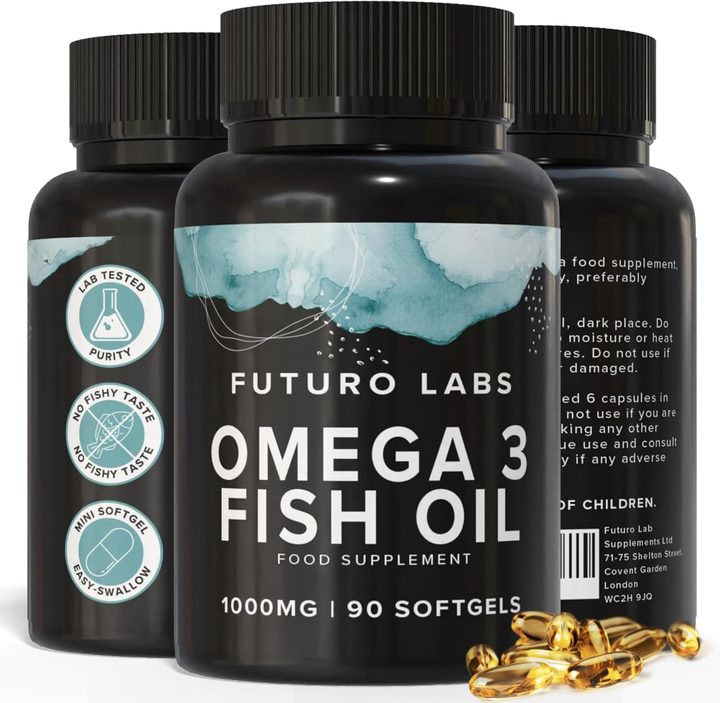
Our brand: the worked example on this page
Futuro Labs Omega 3 Fish Oil
- 17p a day
- 90 softgels, 1 softgel daily
- Lab tested
- Made in the UK
The benchmark the shelf is read against: Futuro Labs Omega 3 Fish Oil on Amazon UK, 1 softgel a day, 180mg EPA and 120mg DHA, lab-tested purity, 90 for £14.99 at 17p. Full label breakdown. The 1000mg decode is on the 1000mg page; the store checks on the store guide.
Why this review is a template, the decode that comes before every read, and the four shelf types
A high-street pharmacy's omega-3 shelf is something this site can teach a lifter to review but will not review for them, because own-brand ranges reformulate, relabel and reprice without notice, so this page is the template applied to the four product types a pharmacy shelf usually holds, with a decode that comes before every read. The decode: the front of nearly every fish oil on the shelf says 1000mg, and 1000mg is the weight of oil in the softgel, not the amount of omega-3, the actives being EPA and DHA on the nutrient line on the back, around 300mg combined in a standard fish oil at 30% and more in a concentrate, so a reader who buys the biggest number on the front has bought oil weight and a reader who turns the tub has bought actives, the 1000mg pages' first lesson. The four shelf types, each decoded. Standard fish oil: 1000mg softgels at around 30% actives, 300mg of EPA and DHA or a little less, often ethyl ester or an unstated form, one or two a day directed, the cheapest per day and the product most readers on rung one need. High strength: a concentrate at 50 to 70% actives, 500 to 700mg per softgel, sometimes re-esterified triglyceride and sometimes ethyl ester, the phrase high strength having no legal meaning and the actives line being the only measure of it. Krill oil: a phospholipid-form oil at low actives per capsule, often 100 to 200mg of EPA and DHA in a 500mg capsule with astaxanthin, marketed on absorption and small joint trials, the krill pages' finding that it delivers little omega-3 per pound and needs several capsules to reach even rung one. Vegan algal oil: DHA with little or no EPA in most, sometimes both, at 200 to 400mg per capsule in a vegetable shell, the only shelf option for a vegan and priced highest per milligram.
The five reads across the four types, the arithmetic, the testing question, and the verdict the reader writes
The five reads run across all four types. The actives, decoded above, being the first and largest read. The form: stated or not, triglyceride absorbing well at any meal and ethyl ester needing a fatty one, own-brand standard oils often leaving the form unstated, which is read as ethyl ester and taken with the fattiest meal. The softgels to the target: a standard oil reaches the 250mg claim dose in one softgel and a gram in three or four, a high-strength concentrate reaches a gram in two, krill needs five or more for rung one and is not a rung-two product, and algal oil reaches the 250mg DHA claim in one or two. The arithmetic, pence per hundred milligrams of EPA and DHA: a standard own-brand at around 10p a day for 300mg is about 3.3p per hundred, the cheapest on the shelf and honestly so if the form suits and the testing question is answered, a high-strength own-brand at 25 to 40p for 600mg is 4 to 7p, krill at 40 to 60p for 150mg is 25 to 40p and the worst value for omega-3 on the shelf, and algal at 30 to 50p for 300mg of DHA is 10 to 17p, the vegan's price, all against the benchmark's 5.7p. The testing question: own-brand omega-3 labels rarely state oxidation or contaminant testing, and freshness is the read a label cannot give, so the reader asks the retailer's customer service the four questions the tested brands guide sets out, whether the oil is tested for peroxide and anisidine values, what the TOTOX limit is, whether heavy metals, dioxins and PCBs are tested against the contaminant regulation, and whether a certificate can be seen, the reply being the testing read whatever the shelf ticket says. The verdict the reader writes: a standard own-brand fish oil is worth it for a rung-one reader at the cheapest price on the shelf if the form is taken with a fatty meal and the testing question is answered, a high-strength own-brand is worth it for a rung-two reader at a fair per-milligram price, krill is not worth it for omega-3 at any rung, and algal is worth it for a vegan and nobody else. The benchmark: Futuro Labs Omega 3 Fish Oil, one softgel, 180mg EPA and 120mg DHA, lab-tested purity, UK GMP made, 90 for £14.99 at 17p, the standard oil with the testing question already answered.
| The type | The actives and form | Pence per hundred milligrams, and the verdict |
|---|---|---|
| Standard fish oil | About 300mg per 1000mg softgel; form often unstated, read as ethyl ester | About 3.3p; worth it for rung one with a fatty meal and the testing answered |
| High strength | 500 to 700mg per softgel; sometimes re-esterified triglyceride | 4 to 7p; worth it for rung two |
| Krill oil | 100 to 200mg per capsule; phospholipid form | 25 to 40p; not worth it for omega-3 |
| Vegan algal oil | 200 to 400mg DHA per capsule; little or no EPA | 10 to 17p; worth it for a vegan |
| The testing question | Rarely stated on own-brands | Ask the retailer the four questions |
| The benchmarkOurs | 300mg per softgel, fish oil triglyceride, lab-tested | About 5.7p; the testing answered |
The verdict, a decode, four types and a question for the counter
Is a high-street pharmacy's omega-3 worth it for lifters: reviewed by a decode and five reads the reader applies to the shelf, the front's 1000mg being oil weight and the back's EPA and DHA line the actives, then the form, the softgels to the reader's target, the pence per hundred milligrams against 5.7p and the testing question the own-brand label rarely answers and the retailer must, with the four shelf types landing where the reads put them, a standard own-brand worth it for rung one at the cheapest price if taken with a fatty meal and the testing answered, a high-strength own-brand worth it for rung two, krill not worth it for omega-3 and algal worth it for a vegan. The benchmark: Futuro Labs Omega 3 Fish Oil, one softgel, 180mg EPA and 120mg DHA, lab-tested purity, 90 for £14.99 at 17p a day.
What to check on the label
- Decode the front: 1000mg is oil; the back's EPA and DHA is the buy.
- Name the shelf type: standard, high strength, krill, algal.
- Divide by hundreds of milligrams: 3.3p for a standard own-brand; 5.7p the benchmark.
- Take an unstated form with a fatty meal: read it as ethyl ester.
- Ask the retailer the four testing questions: the reply is the freshness read.
Our brand
The worked example: Futuro Labs Omega 3 Fish Oil
Futuro Labs Omega 3 Fish Oil: 1 softgel daily with food, 1000mg fish oil providing 180mg EPA and 120mg DHA (300mg combined), 90 softgels for £14.99, 17p a day, lab-tested purity, UK GMP made. Gelatin shell, so not vegetarian.
- Fish oil per softgel
- 1000mg
- EPA / DHA per softgel
- 180mg / 120mg (300mg combined)
- Serving
- 1 softgel a day
- Bottle
- 90 softgels, 90 days
- Price
- £14.99 (17p a day)
- Softgel
- mini softgel, no fishy taste
Questions people also ask
What does 1000mg mean on a fish oil from a pharmacy?
The weight of oil in the softgel, not the omega-3: the actives are EPA and DHA on the nutrient line on the back, around 300mg combined in a standard fish oil at 30% and more in a concentrate, and a reader who buys the front's number has bought oil weight.
Is a cheap own-brand fish oil good enough for a lifter?
For the 250mg claim dose, often yes, at around 3.3p per hundred milligrams of EPA and DHA it is the cheapest on the shelf, taken with a fatty meal since the form is usually unstated and read as ethyl ester, and worth it only if the retailer answers the testing question.
Is krill oil from a pharmacy worth it?
Not for omega-3: a krill capsule carries 100 to 200mg of EPA and DHA at 25 to 40p per hundred milligrams, the worst value on the shelf and needing five or more capsules to reach even the 250mg claim dose.
Which pharmacy omega-3 should a vegan buy?
The algal oil, DHA at 200 to 400mg per capsule in a vegetable shell, reaching the 250mg DHA brain and vision claims in one or two capsules at 10 to 17p per hundred milligrams, the only vegan option and priced accordingly.
What should I ask the pharmacy about their fish oil?
The four testing questions: whether the oil is tested for peroxide and anisidine values, what the TOTOX limit is, whether heavy metals, dioxins and PCBs are tested against the contaminant regulation, and whether a certificate can be seen, since own-brand labels rarely say.
Sources
- The omega-3 concentrate literature: standard fish oil is around thirty percent EPA and DHA by weight, concentrates raise that to sixty percent or more by removing other fats, and re-esterified triglyceride concentrates are absorbed better than ethyl ester concentrates, especially without a fatty meal. PubMed record
- Comparative research on krill oil versus fish oil: phospholipid-form omega-3 with modest EPA and DHA content per capsule, and bioavailability claims that remain debated. PubMed record
- The fish oil oxidation literature: oxidation is measured by peroxide value, anisidine value and their combination as TOTOX, with the industry monograph setting limits of 5, 20 and 26 respectively, and surveys of retail fish oils finding a meaningful share above those limits, freshness being a quality dimension a label rarely shows and a certificate does. PubMed record
- Assimilated Regulation (EC) No 1881/2006 setting maximum levels for certain contaminants in foodstuffs, including mercury in fishery products: the contaminant-limits framework retained in UK food law. https://eur-lex.europa.eu/legal-content/EN/TXT/?uri=CELEX%3A32006R1881