Ghost Fitness/Omega-3/Nordic Naturals omega-3 review: is it worth it for lifters?
Nordic Naturals omega-3 review: is it worth it for lifters?
The short answer
Review the tub, not the brand: read the EPA and DHA per softgel rather than the fish oil weight, the form, the softgels per day to reach your target, the pence per hundred milligrams of EPA and DHA rather than per day, and the freshness certificates. A premium concentrate costs more per day and often less per hundred milligrams, so the reader's target dose decides which tub wins.
- Read one: EPA and DHA per softgelthe actives line, not the fish oil weight; concentrates run 60% or more, standard oils around 30%
- Read two: the formre-esterified triglyceride absorbs best; ethyl ester needs a fatty meal
- Read three: the arithmeticpence per hundred milligrams of EPA and DHA: the benchmark's 300mg at 17p is about 5.7p
- Reads four and fivesoftgels per day to your target; freshness and contaminant certificates, TOTOX under 26
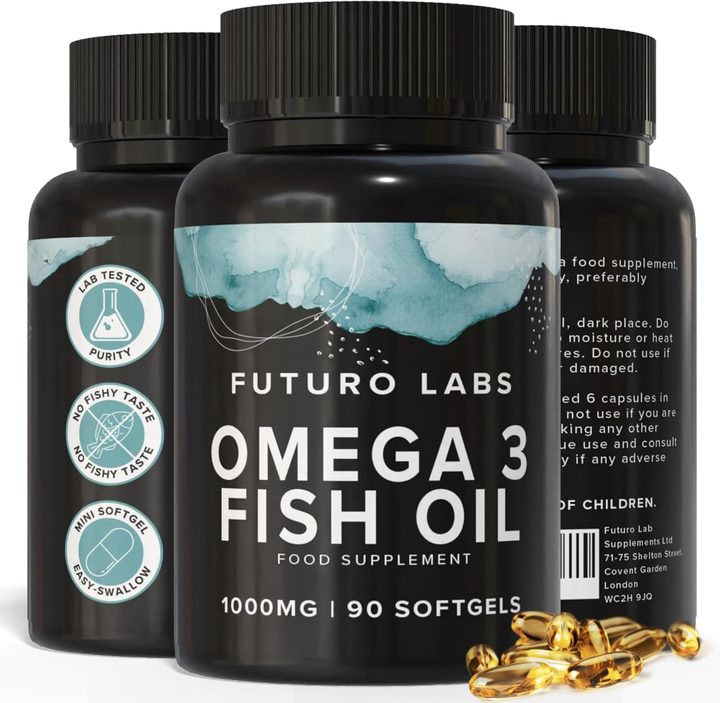
Our brand: the worked example on this page
Futuro Labs Omega 3 Fish Oil
- 17p a day
- 90 softgels, 1 softgel daily
- Lab tested
- Made in the UK
The benchmark the arithmetic runs against: Futuro Labs Omega 3 Fish Oil on Amazon UK, 1 softgel a day, 180mg EPA and 120mg DHA, 90 for £14.99 at 17p, about 5.7p per hundred milligrams. Full label breakdown. The form comparison is on the omega-3 section; the label reads on the label-check page.
Why this review is a template, and the first three reads applied to a premium concentrate
A premium concentrated fish oil from a well-known brand is a product this site can teach a lifter to review but will not review for them, because premium ranges reformulate, change softgel counts and reprice without notice and a verdict written today describes a tub that may differ next month, so this page is the template, the five reads that review any omega-3, applied by the reader to the one in their hand, with a premium concentrate's typical pattern described so the reads land. Read one, the EPA and DHA per softgel: the front of a fish oil says a weight of oil, 1000mg or 1250mg, and the nutrient line says the actives, and only the actives matter, a standard fish oil being around 30% EPA and DHA so that 1000mg of oil delivers around 300mg of actives, and a premium concentrate being 60% or more so that the same-sized softgel delivers 600mg or more, two softgels of a typical premium concentrate delivering over a gram, the 1000mg-fish-oil pages' decode. Read two, the form: the nutrient line or the ingredients say whether the oil is a natural or re-esterified triglyceride or an ethyl ester, and premium concentrates are usually re-esterified triglyceride, which absorbs well with or without a fatty meal, while cheaper concentrates are often ethyl ester, which absorbs markedly better with a high-fat meal and poorly without, the concentrate literature's finding and a reason the premium's price buys something real. Read three, the arithmetic, which is the read that decides a premium: the honest comparison is not pence per day but pence per hundred milligrams of EPA and DHA, calculated as the price divided by the tub's total EPA and DHA in hundreds of milligrams, and the benchmark's 300mg a day at 17p is about 5.7p per hundred, while a premium concentrate at 60 to 90p a day delivering 1000 to 1300mg is 5 to 7p per hundred, so a premium that looks four times the price is often the same price or cheaper per milligram of the thing being bought.
Reads four and five, the target that decides which tub wins, and the verdict the reader writes
Read four, softgels per day to the target: the target is the reader's, and the omega-3 pages give the rungs, 250mg of EPA and DHA a day for the register's heart-function claim and 250mg of DHA for the brain and vision claims, around a gram for the omega-3 index research target, two grams for the triglyceride claim and three for the blood pressure claim, and the four grams a day the muscle protein synthesis research used, with five grams the safe upper level, so a reader whose target is 250mg reaches it with one standard softgel and a reader whose target is one to three grams needs two to four premium concentrate softgels or four to ten standard ones, the softgel count and not the price being what makes a standard oil impractical at high targets. Read five, freshness and testing: fish oil oxidises, the industry monograph sets peroxide, anisidine and TOTOX limits of 5, 20 and 26, retail surveys find a meaningful share of oils over them, and a premium brand usually publishes certificates of analysis showing oxidation and contaminant results by batch, heavy metals, dioxins and PCBs against the contaminant regulation, which is the second thing the premium's price buys and the thing a reader asks any brand for, alongside a sustainability logo, a UK or EU responsible address and a shell that suits them, most fish oils being gelatin. The verdict the reader writes follows from the target: a reader targeting the 250mg claim dose is served by a standard oil at 17p, a premium concentrate delivering four times what they need at four times the daily price and no better per milligram; a reader targeting one to three grams for the research doses is often served better by a premium concentrate, fewer softgels, a better form and certificates at the same or lower price per hundred milligrams; and a reader who buys the premium for 250mg has paid a premium for nothing. The benchmark the arithmetic runs against: Futuro Labs Omega 3 Fish Oil, one softgel a day, 180mg EPA and 120mg DHA, lab-tested purity, UK GMP made, 90 for £14.99 at 17p, about 5.7p per hundred milligrams, the tub for the 250mg reader and the number the premium is measured against.
| The read | What to look for | The benchmark |
|---|---|---|
| EPA and DHA per softgel | The actives line, not the oil weight; 60% or more for a concentrate | 300mg per softgel at 30% |
| The formOurs | Re-esterified triglyceride or ethyl ester | Fish oil triglyceride, taken with food |
| Pence per hundred milligrams | Price over the tub's total EPA and DHA in hundreds of milligrams | About 5.7p |
| Softgels to the target | 250mg for the claims; one to three grams for the research doses | One softgel to 250mg |
| Freshness and testing | Certificates by batch: TOTOX under 26, contaminants within limits | Lab-tested purity; certificates askable |
| The verdict | Written by the reader from their target | The tub for the 250mg reader |
The verdict, a template with the target as the deciding read
Is a premium concentrated fish oil worth it for lifters: reviewed by five reads the reader applies to the tub in their hand, the EPA and DHA per softgel rather than the oil weight, the form with re-esterified triglyceride the premium's usual and better one, the pence per hundred milligrams of EPA and DHA rather than per day, the softgels needed to reach the reader's own target and the freshness and contaminant certificates the premium usually publishes, worth it for a reader targeting one to three grams a day, where a concentrate is fewer softgels, a better form and certificates at the same or lower price per milligram, and not worth it for a reader targeting the 250mg claim dose, who buys four times what they need. The benchmark: Futuro Labs Omega 3 Fish Oil, one softgel, 180mg EPA and 120mg DHA, 90 for £14.99 at 17p a day.
What to check on the label
- Read the actives, not the oil weight: EPA and DHA per softgel.
- Read the form: re-esterified triglyceride beats ethyl ester.
- Divide by hundreds of milligrams: not by days.
- Set your target first: 250mg or one to three grams.
- Ask for the certificates: oxidation and contaminants by batch.
Our brand
The worked example: Futuro Labs Omega 3 Fish Oil
Futuro Labs Omega 3 Fish Oil: 1 softgel daily with food, 1000mg fish oil providing 180mg EPA and 120mg DHA (300mg combined), 90 softgels for £14.99, 17p a day, lab-tested purity, UK GMP made. Gelatin shell, so not vegetarian.
- Fish oil per softgel
- 1000mg
- EPA / DHA per softgel
- 180mg / 120mg (300mg combined)
- Serving
- 1 softgel a day
- Bottle
- 90 softgels, 90 days
- Price
- £14.99 (17p a day)
- Softgel
- mini softgel, no fishy taste
Questions people also ask
Is a premium fish oil worth the price for a lifter?
It depends on the target: per hundred milligrams of EPA and DHA a premium concentrate at 60 to 90p a day delivering a gram or more is often the same price or cheaper than a standard oil at 17p delivering 300mg, so it wins for a reader targeting one to three grams and loses for a reader targeting the 250mg claim dose.
How do I compare fish oil prices properly?
Divide the price by the tub's total EPA and DHA in hundreds of milligrams, softgels times actives per softgel, rather than by days: the benchmark's 300mg at 17p is about 5.7p per hundred milligrams, and any tub is compared on that number.
What form of omega-3 do premium brands use?
Usually re-esterified triglyceride, which absorbs well with or without a fatty meal, against the ethyl ester of many cheaper concentrates, which absorbs markedly better with a high-fat meal and poorly without, one of the two things the premium's price buys.
How much EPA and DHA should a lifter aim for?
250mg a day for the register's heart-function claim and 250mg of DHA for the brain and vision claims, around a gram for the omega-3 index research target, two to three grams for the triglyceride and blood pressure claims, and four grams in the muscle protein synthesis research, with five grams the safe upper level.
Why won't this site give a verdict on the named brand?
Because premium ranges reformulate, change softgel counts and reprice without notice, so a verdict describes a tub that may have changed; the five reads and the per-hundred-milligram arithmetic let the reader review the actual tub against a stated benchmark.
Sources
- The omega-3 concentrate literature: standard fish oil is around thirty percent EPA and DHA by weight, concentrates raise that to sixty percent or more by removing other fats, and re-esterified triglyceride concentrates are absorbed better than ethyl ester concentrates, especially without a fatty meal. PubMed record
- The fish oil oxidation literature: oxidation is measured by peroxide value, anisidine value and their combination as TOTOX, with the industry monograph setting limits of 5, 20 and 26 respectively, and surveys of retail fish oils finding a meaningful share above those limits, freshness being a quality dimension a label rarely shows and a certificate does. PubMed record
- Commission Regulation (EU) No 536/2013 authorising health claims for DHA and EPA: maintenance of normal blood triglyceride concentrations (2g DHA+EPA/day) and normal blood pressure (3g DHA+EPA/day), with a supplemental limit note of 5g/day. https://eur-lex.europa.eu/legal-content/EN/TXT/?uri=CELEX%3A32013R0536
- Futuro Labs Omega 3 Fish Oil listing: 1000mg fish oil per softgel providing 180mg EPA and 120mg DHA, 90 softgels. Amazon UK, accessed 31 August 2026. https://www.amazon.co.uk/dp/B0CP9T3BTN