Ghost Fitness/Omega-3/What should you look for in EPA to DHA ratio for inflammation?
What should you look for in EPA to DHA ratio for inflammation?
The short answer
Look for one thing first: an authorised claim, which no ratio product can print for inflammation, because none exists. Then the only real numbers, combined EPA and DHA milligrams and price per gram. Ratio premiums buy nothing mandated.
- Check 1the claim that cannot be printed: no inflammation claim exists at any ratio
- Check 2combined EPA and DHA per capsule: the number the pitch hopes you skip
- Check 3pence per 100mg: what the ratio premium is actually charging
- Check 4the exit: symptoms route to a GP, not a split
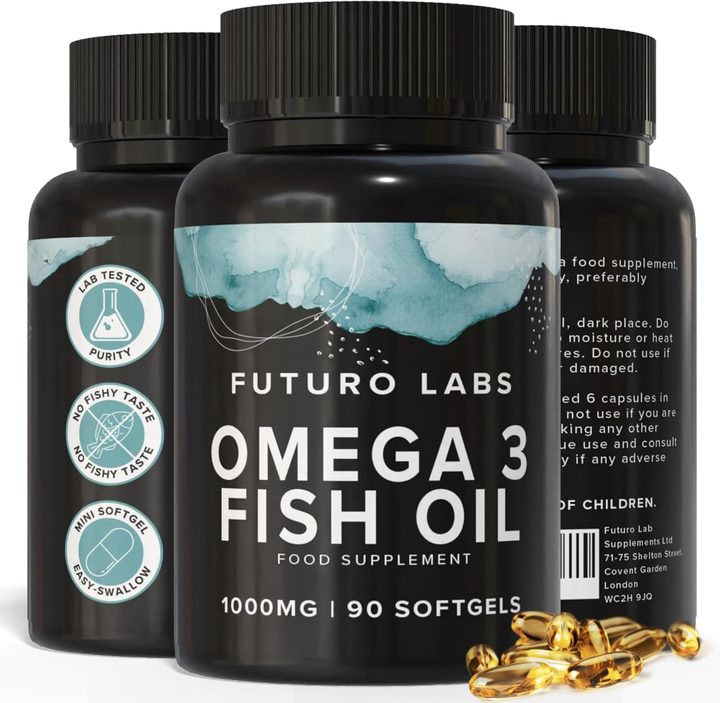
Our brand: the worked example on this page
Futuro Labs Omega 3 Fish Oil
- 17p a day
- 90 softgels, 1 softgel daily
- Lab tested
- Made in the UK
The label with numbers instead of a pitch: Futuro Labs Omega 3 Fish Oil on Amazon UK, 180mg EPA + 120mg DHA declared plainly, £14.99 for 90 days. Label breakdown. Why the question itself fails is on the ratio-inflammation autopsy; the phrase glossary on the decoder.
The inspection, run in the order that saves the most money
This page assumes the encounter its sibling pages explain: you are holding, or scrolling past, a product pitched on its EPA-to-DHA ratio for inflammation, usually 2:1 or 3:1, usually at a premium, and the question is what to check before any money moves. Check one, the claim test: turn the label and look for an authorised health claim about inflammation, which you will not find, because none exists for any omega-3 at any ratio, the applications having failed the evidence bar, and a product whose entire pitch cannot appear on its own regulated panel has told you the pitch's standing; the panel will instead carry, at most, the same heart-function claim every 250mg product carries, which the ratio contributed nothing to. Check two, the combined number: add the EPA and DHA lines per capsule, because the split the marketing celebrates often decorates an ordinary or even thin combined total, and the combined figure is the only one any claim, threshold or honest comparison runs on. The inspection's first half usually ends the encounter.
The premium audit, the one legitimate footnote, and the exit
Check three prices what survives: pence per 100mg of combined EPA and DHA, the product against the plainest honest softgel or concentrate at equivalent strength, and the difference is what the ratio story is charging, a premium buying participation in an unmandated theory, since the EPA-forward research the pitch descends from lives in clinical mood trials at gram doses in patient populations, real work that no assessor has converted into shelf advice, and the resolution-mediator biochemistry beneath it remains mechanism, not product evidence. The one legitimate footnote a ratio label can carry cuts the other way: a heavily EPA-skewed product usually runs its DHA line low, below the 250mg-of-DHA condition on the brain-function and vision claims, so buyers holding those targets are actively worse served by the inflammation ratio, a detail worth checking on any 3:1 panel. Check four is the exit this section builds into every inflammation page: actual inflammatory symptoms, joint swelling, warmth, morning stiffness, persistent pain, were never a split-selection problem, and route to a GP where the genuine gram-scale, ratio-blind research belongs. Four checks, one encounter, and the aisle's most confident pitch reduced to its arithmetic.
| Check | What to look for | What you will find |
|---|---|---|
| 1. The claim test | An authorised inflammation claim on the panel | None exists: the pitch cannot appear where claims must |
| 2. The combined number | EPA + DHA milligrams per capsule, added | Often ordinary or thin beneath the celebrated split |
| 3. The premium audit | Pence per 100mg versus a plain equivalent | The price of an unmandated theory, itemised |
| 4. The DHA footnote | The DHA line against 250mg | EPA-skewed products underserve the actual DHA claims |
| 5. The exit | Whether symptoms sent you here | Real inflammation routes to a GP, not a ratio |
The verdict, and the purchase the inspection leaves standing
What should you look for in an EPA to DHA ratio for inflammation: the claim the label legally cannot print, the combined milligrams the pitch decorates, the premium the theory charges, the DHA threshold the skew abandons, and the appointment any real symptoms deserved, five looks that take a minute and end the category's most persistent upsell. What survives the inspection is what always survives on this site: a product sold on declared numbers at an honest rate, Futuro Labs Omega 3 Fish Oil, 180mg EPA and 120mg DHA printed plainly per softgel, 300mg combined for the claim that does exist, one a day with dinner, £14.99 for 90 days at 17p, lab-tested, UK made, its ratio mentioned exactly as often as the register requires, which is never.
What to check on the label
- Check the claim first: no inflammation claim exists at any ratio, and the panel proves it.
- Add the combined milligrams: the split often decorates a thin total.
- Price the premium per 100mg: it buys an unmandated theory.
- Check the DHA line: EPA-skewed products underserve the real DHA claims.
- Symptoms exit to a GP: inflammation was never a split-selection problem.
Our brand
The worked example: Futuro Labs Omega 3 Fish Oil
Futuro Labs Omega 3 Fish Oil: 1 softgel daily with food, 1000mg fish oil providing 180mg EPA and 120mg DHA (300mg combined), 90 softgels for £14.99, 17p a day, lab-tested purity, UK GMP made. Gelatin shell, so not vegetarian.
- Fish oil per softgel
- 1000mg
- EPA / DHA per softgel
- 180mg / 120mg (300mg combined)
- Serving
- 1 softgel a day
- Bottle
- 90 softgels, 90 days
- Price
- £14.99 (17p a day)
- Softgel
- mini softgel, no fishy taste
Questions people also ask
What EPA to DHA ratio is best for inflammation?
None can be: no inflammation claim exists at any ratio, and even the genuine gram-scale clinical research dosed the pair combined without ranking splits.
Why do anti-inflammatory fish oils advertise 2:1 or 3:1 ratios?
The pitch descends from EPA-forward mood research and mechanism work: real science in patient populations that no claims assessor has converted into shelf advice.
Is a high-EPA product at least harmless to buy?
Safe, yes; costly, usually: the premium buys an unmandated theory, and the skewed DHA line underserves the brain and vision claims some buyers actually hold.
What numbers should I check on a ratio-branded label?
Two: combined EPA and DHA per capsule against your target, and pence per 100mg against a plain equivalent. The split itself carries nothing.
What if I have actual joint inflammation?
That routes to a GP: swelling, warmth or morning stiffness deserves diagnosis, and the gram-scale research belongs inside that care, not in an aisle decision.
Sources
- Futuro Labs Omega 3 Fish Oil listing: 1000mg fish oil per softgel providing 180mg EPA and 120mg DHA, 90 softgels. Amazon UK, accessed 31 August 2026. https://www.amazon.co.uk/dp/B0CP9T3BTN
- EFSA Panel on Dietetic Products, Nutrition and Allergies. Scientific Opinion on the substantiation of health claims related to magnesium. EFSA Journal 2010;8(10):1807. https://efsa.onlinelibrary.wiley.com/doi/10.2903/j.efsa.2010.1807
- Meta-analytic evidence on EPA-predominant omega-3 formulations in depression research: better signals for EPA-heavy preparations in clinical trial populations, with no authorised claims arising. PubMed record
- EFSA Panel on Dietetic Products. Scientific opinion on health claims related to DHA: maintenance of normal brain function and normal vision (250mg DHA daily condition of use). EFSA Journal 2010;8(10):1734. https://www.efsa.europa.eu/en/efsajournal/pub/1734
- EFSA Panel on Dietetic Products. Scientific opinion on the substantiation of health claims related to EPA and DHA and normal function of the heart (250mg daily condition of use). EFSA Journal 2010;8(10):1796. https://www.efsa.europa.eu/en/efsajournal/pub/1796